Local insulation pros in 63 Los Angeles-area neighborhoods. Each request goes to up to four of them.
Insulation contractors add or replace attic insulation, seal air leaks, insulate walls and raised floors, install radiant barriers and remove old or damaged material. In Greater Los Angeles, many 1920s to 1960s houses have little or no attic insulation and leaky ducts, which makes Valley summers expensive to cool. In Greater San Antonio, attics get extremely hot for months, so insulation and radiant barriers help the AC keep up. We send your request to insulation companies serving your neighborhood.
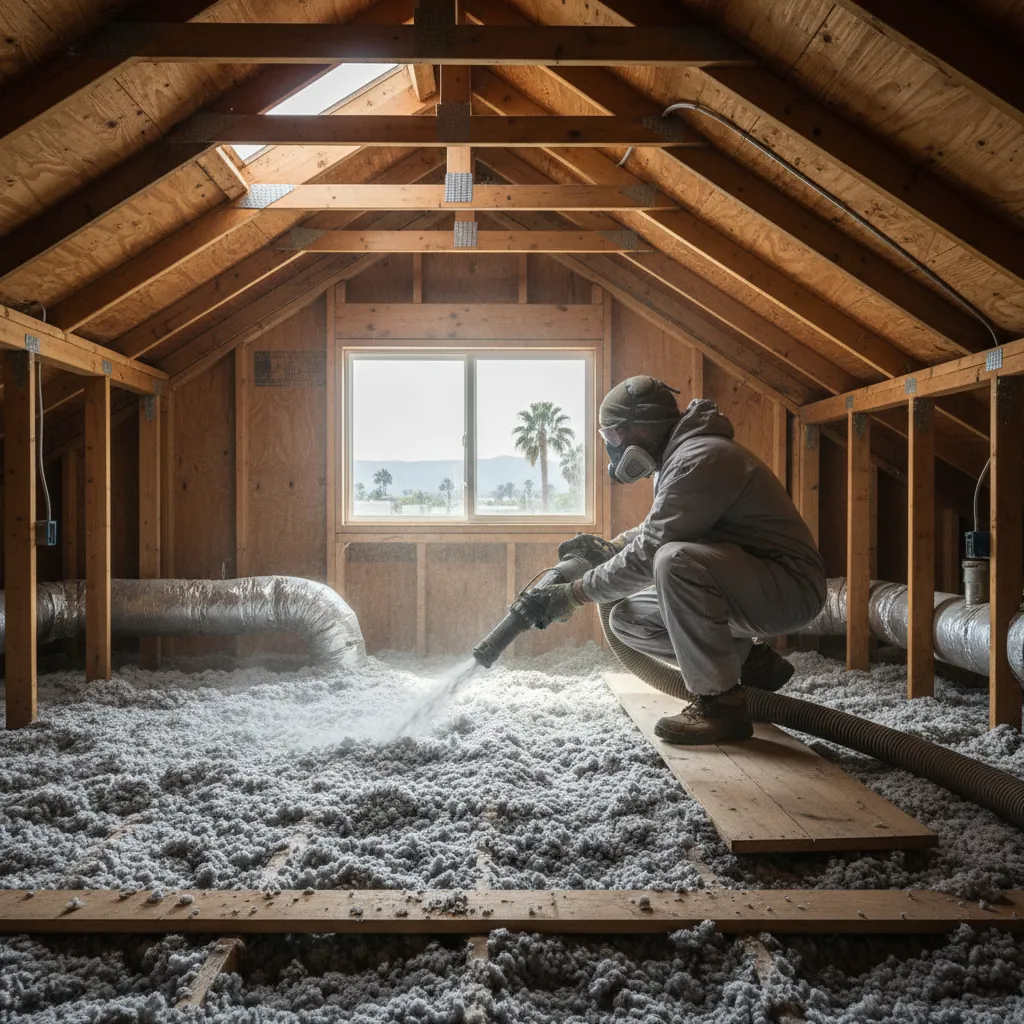
Most jobs focus on the attic. Crews inspect for gaps, rodent damage and old insulation, remove anything contaminated, air seal top plates and the holes around plumbing and wiring, then blow in fiberglass or cellulose to the target depth. Baffles keep soffit vents open so the attic still breathes. In older houses, closed wall cavities are usually filled by blowing material through small holes that get patched afterward. Raised floors get batts between the joists. Spray foam suits special cases but costs more. A typical attic takes one day; removal and air sealing add a second.
Housing and climate change the priorities. Older LA homes may have vermiculite or loose fill that could contain asbestos, which needs testing before anyone disturbs it, and knob-and-tube wiring that an electrician should evaluate before it is buried. Rodent droppings in attics are common. Valley and inland homes gain most of their heat through the attic, while coastal homes benefit more from air sealing. In San Antonio, attics can get well over 120 degrees in summer, so deep insulation, radiant barriers and sealed attic ducts make a big difference, and older central homes on pier and beam need floor insulation too.
Adding insulation usually needs no permit, though some California jurisdictions treat it as part of larger energy upgrades. Title 24 sets insulation levels for new construction and additions, and alterations may trigger requirements, so ask your contractor what applies. LADWP, SoCal Edison, SoCalGas and CPS Energy have offered insulation or weatherization incentives at times; check what is current before you sign. Spring and fall are the comfortable seasons for attic work, since summer attics are dangerous for crews. Expect some dust and a crew working overhead most of the day.
| Job | Typical range | What moves the price |
|---|---|---|
| Blown attic insulation | $1.50 - $3.50 / sq ft | Target R-value, existing depth, attic access and whether air sealing is part of the package. |
| Old insulation removal | $1.50 - $4 / sq ft | Rodent contamination, vacuum truck disposal fees and the size of the attic set this price. |
| Air sealing package | $500 - $2,000 | The number of penetrations, top plates and older recessed lights that need sealing or covers. |
| Radiant barrier | $1 - $2.50 / sq ft | Foil stapled to rafters versus laid over insulation; widely used in San Antonio attics. |
| Wall insulation in existing homes | $2 - $5 / sq ft of wall | Drilling, blowing and patching holes, with plaster walls taking longer than drywall. |
| Spray foam insulation | $3 - $7 / sq ft | Open versus closed cell and thickness; often used on roof decks or rim joists. |
Typical market ranges, not a quote. Your price depends on the house, the scope and the season; compare written quotes.
Type your ZIP code and we take you to the insulation page for your neighborhood. If we do not cover that ZIP yet, you go to the request form with it filled in.
We also match insulation requests in 81 San Antonio neighborhoods.
Blown attic insulation commonly costs about $1.50 to $3.50 per square foot, so a 1,500 square foot attic might run roughly $2,000 to $5,000. Removing old insulation, air sealing and hard-to-reach attics add to that. Prices in San Antonio and Los Angeles are broadly similar for the same scope.
Common guidance for hot climates like the Valley and San Antonio points to roughly R-38 to R-49 in the attic, which is often 12 to 16 inches of blown material. Many older homes have R-11 or less. Your contractor can measure what you have and explain the target for your house.
In hot climates with ducts in the attic, a radiant barrier can cut heat gain and help the AC work less, which is why it is common in San Antonio. Results depend on roof type, ventilation and duct location. It works best paired with good insulation and air sealing.
Usually not for adding attic insulation. Some California jurisdictions may want one when insulation is part of larger energy or remodel work, and Title 24 rules may apply. In San Antonio, DSD generally does not require a permit for insulation alone. Ask your contractor to confirm for your address.
Remove it if it is contaminated with rodent waste, wet, moldy, or might contain asbestos, in which case test vermiculite first. Clean, dry insulation can usually stay and be topped up. Removal adds cost but is often recommended in older LA homes with a history of rodent activity.
Spring and fall are best, since summer attics get dangerously hot for crews and LA winters bring rain. In San Antonio, getting insulation in before summer gives the most benefit in the first year. Scheduling outside peak heat also makes it easier to find an open slot.
