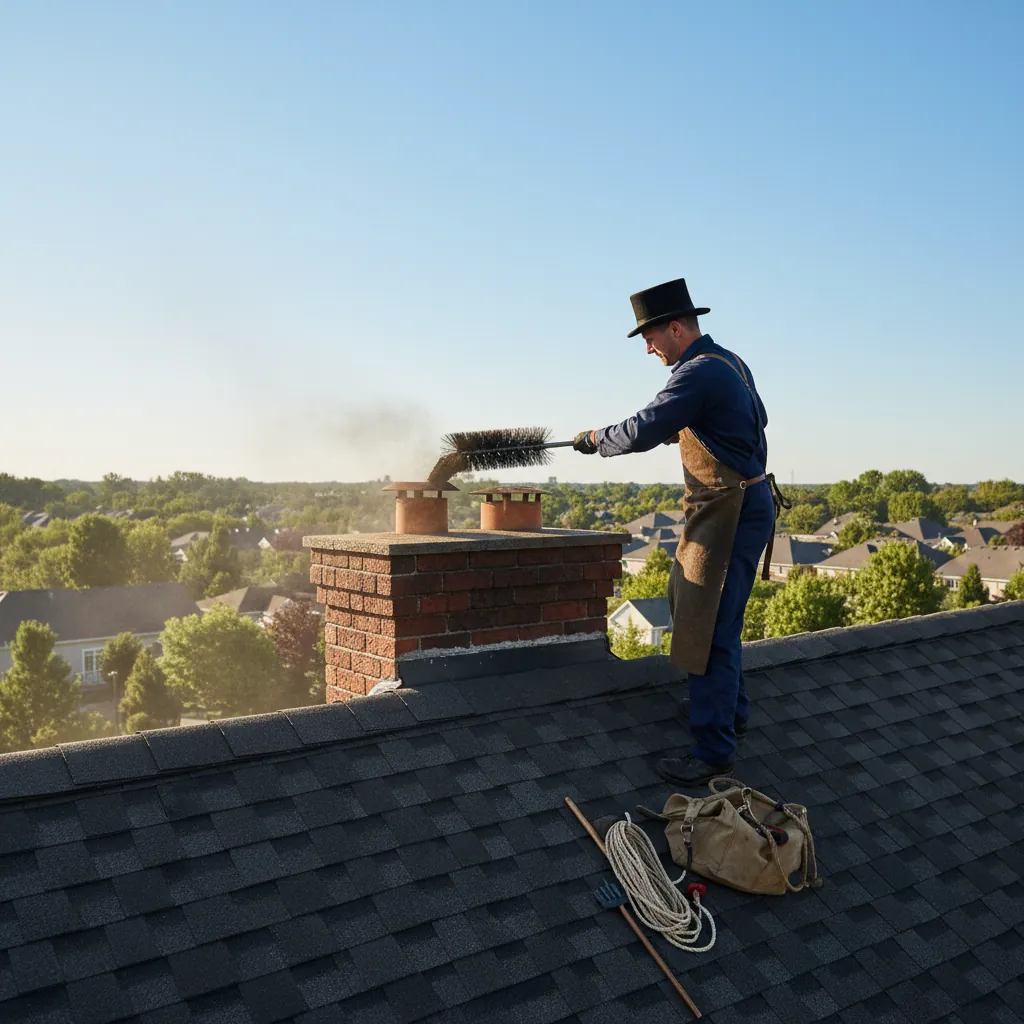
Local chimney cleaning pros in 0 Los Angeles-area neighborhoods. Each request goes to up to four of them.
Chimney cleaning covers sweeping creosote and soot from the flue, clearing nests and debris, and inspecting the firebox, damper, crown and cap. In Greater Los Angeles plenty of fireplaces belong to 1920s to 1950s houses with brick chimneys that have lived through the Sylmar and Northridge earthquakes. In Greater San Antonio, more homes have prefabricated metal fireplaces or gas logs used a few weeks a year. Either way, a sweep and inspection before the first fire of winter is the usual reason people call.
A typical visit starts with a look from the firebox and the roof, then a sweep using rods and brushes sized to the flue, with a vacuum and drop cloths keeping soot inside the fireplace. Many sweeps run a camera up the liner to look for cracked clay tiles, gaps at the joints or glazed creosote that brushing will not remove. Follow-up work can include a stainless cap with spark screen, crown repair, a new damper or a top-sealing damper, or relining the flue with a stainless steel liner sized to the appliance.
Local building history matters here. Unreinforced brick chimneys on older LA homes, from Hancock Park to the Valley, often cracked at the roofline in past quakes; some were rebuilt above the roof with a lighter framed chase, others still lean or have pulled away from the wall. Homes in hillside fire zones need a working spark arrestor to keep embers off dry brush. Coastal air rusts caps and dampers faster. Around San Antonio, the common problems are animals in the flue, rusted chase covers on factory-built units and water staining under hail-dented caps, plus settling cracks tied to clay soils.
Sweeping needs no permit. Rebuilding a chimney, adding a liner or insert, or converting to gas usually does, through LADBS, LA County Public Works for unincorporated areas such as Altadena, a separate city like Glendale or San Marino, or San Antonio DSD. Fall is peak season, so late summer or spring booking is easier. In Los Angeles, remember that South Coast AQMD can call winter no-burn days. Most sweeps take one to two hours; masonry or liner repairs can take a few days plus material lead time.
| Job | Typical range | What moves the price |
|---|---|---|
| Chimney sweep and Level 1 inspection | $175 - $400 | Chimney height, roof pitch and how much creosote has built up decide the time spent on site. |
| Level 2 camera inspection | $250 - $600 | Suggested when buying a home, after an earthquake or chimney fire, or before changing the appliance. |
| Chimney cap or spark arrestor | $200 - $600 | Stainless steel lasts longer near the coast; oversized or multi-flue caps on wide crowns cost more. |
| Crown repair or rebuild | $500 - $2,500 | Cracked mortar crowns let water into the masonry; a full new crown needs forms and curing time. |
| Stainless steel flue liner | $2,000 - $5,500 | Flue size, height and whether the liner must be insulated are the main price drivers. |
| Rebuild above the roofline | $4,000 - $15,000 | Quake-damaged brick, roof access and choosing a framed chase versus new masonry swing this widely. |
Typical market ranges, not a quote. Your price depends on the house, the scope and the season; compare written quotes.
Type your ZIP code and we take you to the chimney cleaning page for your neighborhood. If we do not cover that ZIP yet, you go to the request form with it filled in.
We also match chimney cleaning requests in 81 San Antonio neighborhoods.
A standard sweep with a basic inspection usually runs about $175 to $400 in both metros. Tall two-story chimneys, steep or tile roofs and heavy creosote raise it. Camera inspections and repairs are priced separately, so ask for the sweep total and any repair estimate as separate lines before agreeing to extra work.
NFPA 211 calls for a yearly inspection, with sweeping when deposits build up. A wood fireplace used most winter weekends often needs a sweep every year. Many San Antonio gas log fireplaces need only an inspection and a nest check every year or two. Burning soft or unseasoned wood speeds up creosote buildup.
Not necessarily, even if it looks fine from the yard. Cracks at the roofline and gaps between chimney and house are common after shaking in Los Angeles. A Level 2 inspection with a camera is the usual next step. Avoid lighting fires until a sweep or engineer has looked it over and given you a written finding.
Usually yes. Rebuilding masonry, installing an insert or adding a liner generally goes through LADBS, LA County or your own city building department, and through San Antonio DSD in Texas. Sweeping and simple cap replacement normally do not. The contractor should pull the permit and book the required inspections.
Black flaky or tar-like deposits are creosote, the main fuel for chimney fires. White staining on brick is often efflorescence, salts left behind as water moves through masonry, which points to a missing cap or cracked crown. A sweep can tell you which one you have and whether water is getting in.
Late spring through August is easiest, since crews are less busy and there is time for repairs before cool nights. October and November fill up fast in Los Angeles. In San Antonio, book before the first strong cold front of the season, often in November, to avoid a wait.
