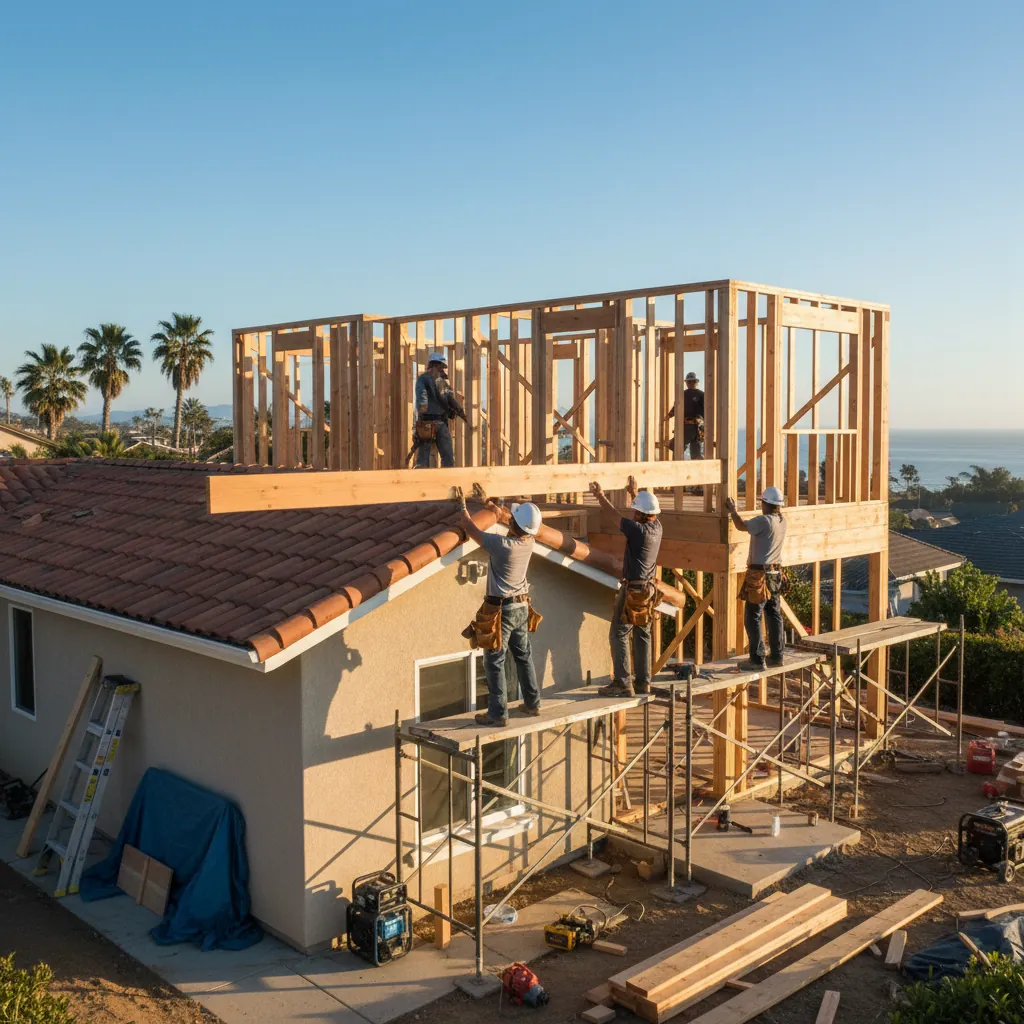
Local general construction pros in 63 Los Angeles-area neighborhoods. Each request goes to up to four of them.
General contractors manage projects that involve several trades: whole-house remodels, structural repairs, foundation work, seismic retrofits, additions and repairs after water or fire damage. In Greater Los Angeles, many projects involve older houses that need foundation bolting, framing upgrades or fixes to decades of past remodels. In Greater San Antonio, foundation repair on expansive clay, storm damage and full remodels of 1970s to 1990s homes are common. We send your project to general contractors who work in your area.
A general contractor plans the work, hires and schedules trades, orders materials, pulls permits, coordinates inspections and keeps the site safe and on budget. On a large remodel that might mean demolition, framing, plumbing, electrical, HVAC, insulation, drywall, finishes and cleanup, in sequence. Many work from an architect's drawings; others offer design-build. A clear contract, written change orders and a shared schedule keep projects on track. Smaller repairs may take a few weeks, while a whole-house remodel often takes four to nine months of construction.
Housing stock drives the scope. Many LA homes built before 1980 sit on raised foundations that may need anchor bolts and cripple wall bracing to ride out earthquakes, and hillside homes may need engineered foundations. Unpermitted past additions are common and may need to be legalized before a sale or remodel. Fire hazard zones call for specific materials on exterior work. In San Antonio, expansive clay moves slabs, which leads to foundation repair with piers, drainage corrections and drywall and door adjustments, while hail and storms bring roof and exterior repairs.
Most general construction requires permits through LADBS, LA County, separate cities such as Burbank and Pasadena, or San Antonio DSD, with plan check and inspections. California's Earthquake Brace + Bolt program has offered grants toward seismic retrofits in eligible ZIP codes; check whether your area qualifies before you sign. Plan time for design and permits before construction starts. Larger projects may require moving out for a period. Expect regular site meetings, change orders for hidden conditions and a punch list walk at the end.
| Job | Typical range | What moves the price |
|---|---|---|
| Seismic retrofit, bolting and bracing | $4,000 - $12,000 | House size, crawlspace height, cripple wall length and whether an engineer's plan is required. |
| Foundation repair with piers | $5,000 - $20,000 | Number of piers, access under or around the house, and drainage corrections. |
| Whole-house remodel | $150 - $350 / sq ft | Scope, finish level, structural changes and how many plumbing, electrical and HVAC systems are replaced. |
| Water or fire damage repair | $10,000 - $80,000 | Extent of damage, the insurance scope and code upgrades triggered by the rebuild. |
| Legalizing unpermitted work | $5,000 - $40,000 | Plans, opening walls for inspection and correcting code issues the inspector finds. |
| Drywall and door fixes after foundation work | $1,000 - $5,000 | Number of cracks, doors to rehang, and matching texture and paint afterward. |
Typical market ranges, not a quote. Your price depends on the house, the scope and the season; compare written quotes.
Published Los Angeles renovation costs, LADBS plan check fees and LA construction labor rates are collected in our Los Angeles Home Remodeling Costs 2026 guide, with a source for every number.
Type your ZIP code and we take you to the general construction page for your neighborhood. If we do not cover that ZIP yet, you go to the request form with it filled in.
We also match general construction requests in 5 San Antonio neighborhoods.
A general contractor manages the whole project: hiring and scheduling trades, ordering materials, pulling permits, arranging inspections and keeping budget and schedule. They are responsible for the work meeting code and the contract. For multi-trade projects, a GC is usually simpler than managing each trade yourself.
Many general contractors build overhead and profit of roughly 10 to 20 percent into their price, either as a fee or within line items. Whole-house remodels often run $150 to $350 per square foot depending on scope. Compare bids by scope and allowances rather than the bottom line alone.
If your LA-area home sits on a raised foundation and was built before about 1980, it may lack anchor bolts or cripple wall bracing. A retrofit helps keep the house on its foundation in a strong quake. Earthquake Brace + Bolt has offered grants in some ZIP codes, so check eligibility first.
Signs include wide or growing cracks in walls or slabs, doors and windows that stick, sloping floors and gaps around trim. In San Antonio, expansive clay often causes these symptoms. A structural engineer's evaluation before hiring a repair company gives you an independent plan to price against.
Often yes. You apply for a permit for the existing work, and inspectors may require opening walls to check wiring, plumbing and framing. Plans and corrections add cost and time. Your local building department sets the process, and a contractor who has handled these cases can guide you through it.
Plan on roughly two to six months for design and permitting, then four to nine months of construction depending on scope. Structural work, custom materials and inspection delays can stretch that. A detailed schedule with milestones helps you track progress and spot slippage early.
