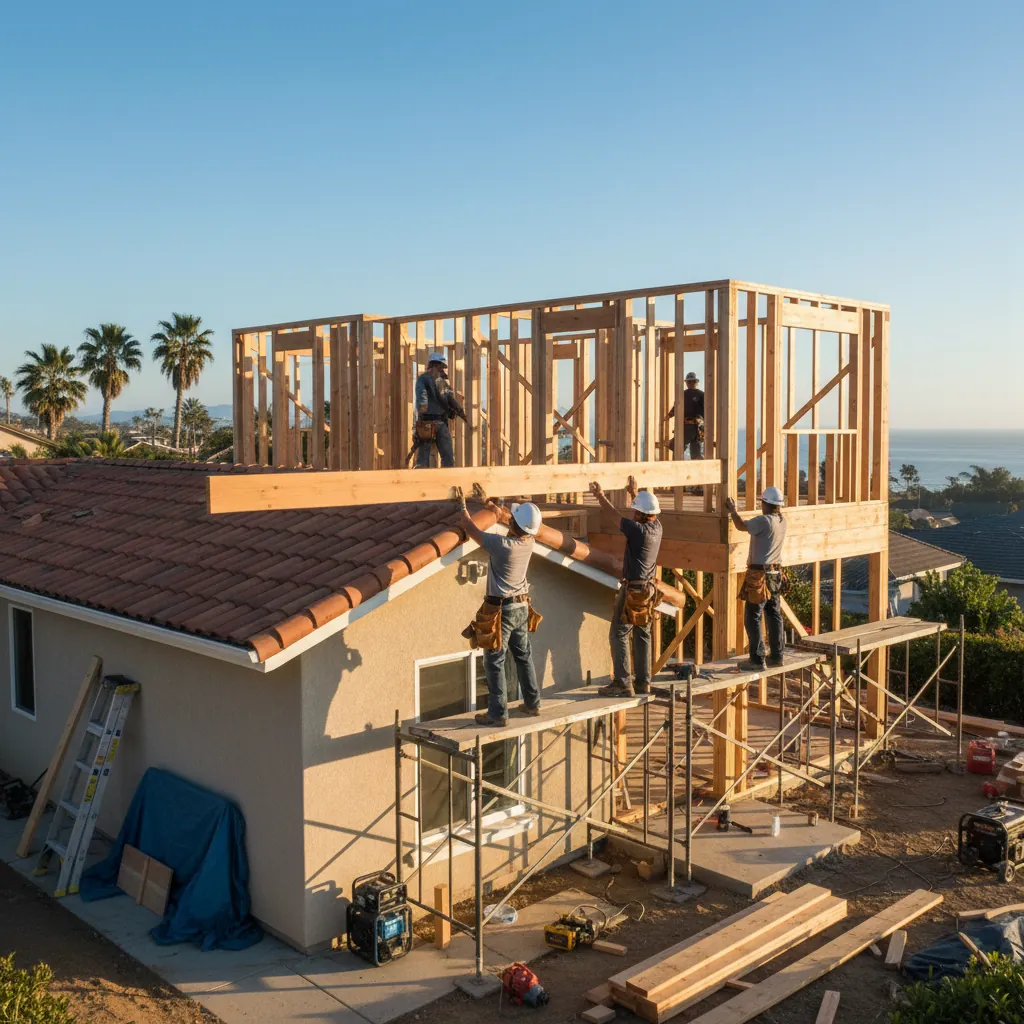
Typical Shadow Hills costs, permit steps and timelines are below. When you are ready, describe your project and up to four local general contractors serving Shadow Hills will contact you. You compare and decide.
Initial site evaluation including soil assessment and property boundary verification
Drafting architectural plans that comply with LADBS building codes and Shadow Hills equestrian zoning restrictions
Submission of plans and securing necessary grading and building permits from LADBS
Excavation and foundation installation, incorporating proper drainage for foothill terrain
Structural framing using fire-rated materials and specialized ignition-resistant detailing
Final inspections with City of Los Angeles inspectors and utility sign-offs
Prices vary based on equestrian design requirements, ventilation needs, and whether utilities or wash racks are integrated.
Steep slopes, decomposed granite soil, and LADBS structural engineering requirements for earthquake and fire safety drive these costs.
Essential for stabilizing terraced canyon lots; price depends heavily on slope steepness and soil composition.
Typical market ranges for the Greater Los Angeles area, not a quote or a guarantee. The price of your job depends on its scope, so ask each pro for a written estimate before you decide.
Property ownership in Shadow Hills offers a rare semi-rural escape within the Los Angeles city limits, blending a relaxed equestrian lifestyle with rugged canyon terrain. Whether you are building an accessory dwelling unit, upgrading a horse arena, or structurally retrofitting a hillside home, matching your project with contractors who understand local zoning is essential. We connect you with local construction professionals who specialize in building resilient structures tailored to the unique demands of the Verdugo Mountains foothill community.
Building in Shadow Hills requires addressing unique environmental hazards, including the Very High Fire Hazard Severity Zone and complex hillside soils.
Foundations must navigate the transition between sandy, rocky wash soils near the Hansen Dam basin and shifting decomposed granite on the steeper canyon slopes. Navigating the City of Los Angeles Department of Building and Safety (LADBS) requirements for equestrian zoning and fire-hardened materials is critical to ensuring a safe, legally compliant build.
ContractorPro.Leads doesn't do the work itself. We pass your Shadow Hills project to up to four local general contractors who take this kind of job, and you decide whether to hire any of them.
From the horse properties tucked along La Tuna Canyon Road to the ranch-style estates off Sunland Boulevard, Shadow Hills has a distinct architectural and agricultural heritage. Projects here often involve long irrigation lines, detached paddocks, or retaining walls bordering the Hansen Dam Recreation Area, requiring a deep understanding of local watershed and grading patterns.
Tell us what you have in mind. We'll pass it to up to four local pros, and they'll contact you to talk it through.
For straightforward additions, permits can take several weeks, but complex hillside projects or equestrian builds requiring grading reviews by the Los Angeles Department of Building and Safety (LADBS) often take 3 to 6 months for complete plan check and approval.
Yes. Shadow Hills is largely mapped within the City of Los Angeles Very High Fire Hazard Severity Zone (VHFHSZ). Any new construction or major remodel must comply with strict Chapter 7A California Building Code requirements, including multi-pane tempered glass, non-combustible exterior siding, and specialized roof venting.
Absolutely. The K-overlay dictates specific setbacks for horse keeping, barn placements, and property line clearances. Local contractors must design structures to maintain these clearances and ensure compliance with Los Angeles Municipal Code equestrian guidelines.
Shadow Hills features diverse soils, from sandy wash near Hansen Dam to decomposed granite on the hillsides. Slope stability and erosion control plans are almost always required by LADBS, which can increase engineering and excavation costs compared to flat basin builds.
Yes. If your construction project involves reworking large acreage, paddocks, or irrigation runs, you can leverage LADWP rebates for turf replacement, smart controllers, and efficient rotating nozzles to manage water costs on large 91040 lots.
