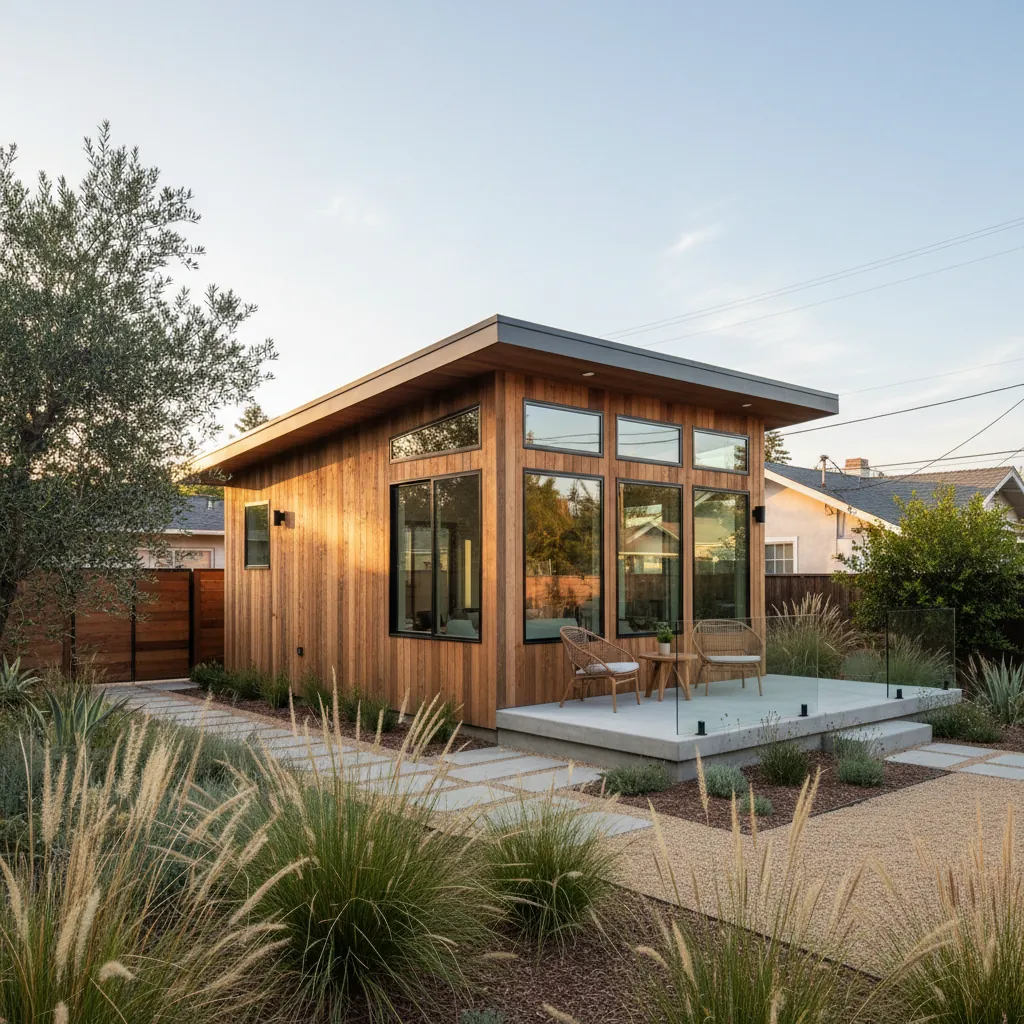
Typical Shadow Hills costs, permit steps and timelines are below. When you are ready, describe your project and up to four local ADU builders serving Shadow Hills will contact you. You compare and decide.
Feasibility study and zoning assessment, checking RA zoning, K-overlay, and protected oak trees.
Soil testing to evaluate decomposed granite or rocky wash conditions for foundation engineering.
Architectural design and drafting of fire-resistant, LADBS-compliant construction plans.
Permit submission and correction management through the Los Angeles Department of Building and Safety.
Site preparation, including grading, equestrian area protection, and utility trenching.
Framing, utility hookups, interior finishing, and final LADBS building inspection.
Typical construction cost in Greater Los Angeles, driven by high-quality materials and standard LADBS-compliant foundations.
Soil conditions on slopes (decomposed granite) or wash zones require engineered footings or retaining walls to ensure structural stability.
Mandatory upgrades in the Very High Fire Hazard Severity Zone, including non-combustible siding, boxed eaves, and fire-rated windows.
Large Shadow Hills lots often require extensive underground trenching to connect power, water, and sewer from the street or main house to the ADU.
Typical market ranges for the Greater Los Angeles area, not a quote or a guarantee. The price of your job depends on its scope, so ask each pro for a written estimate before you decide. Bars share one scale, so you can compare project sizes.
Nestled in the equestrian-friendly foothills of the Verdugo Mountains, Shadow Hills properties offer the rare luxury of space, making them ideal for accessory dwelling units. Whether you want to build a guest house near your horse paddocks or a modern rental unit, adding an ADU requires navigating unique local terrain and zoning. We connect you with local contractors who understand how to design and build ADUs tailored to the distinct character of the 91040 area.
Building an ADU in Shadow Hills requires addressing specific geological and environmental factors, such as balancing foundation stability on either the sandy, rocky wash soils of the flats or the decomposed granite of the steeper slopes.
Because much of the foothill terrain is classified as a Very High Fire Hazard Severity Zone (VHFHSZ) by the City of Los Angeles, structures must incorporate strict wildfire-resistant materials and defensible space clearances. Furthermore, properties with horse keeping (RA zoning) must ensure ADU setbacks do not interfere with designated equine keeping areas and trail access.
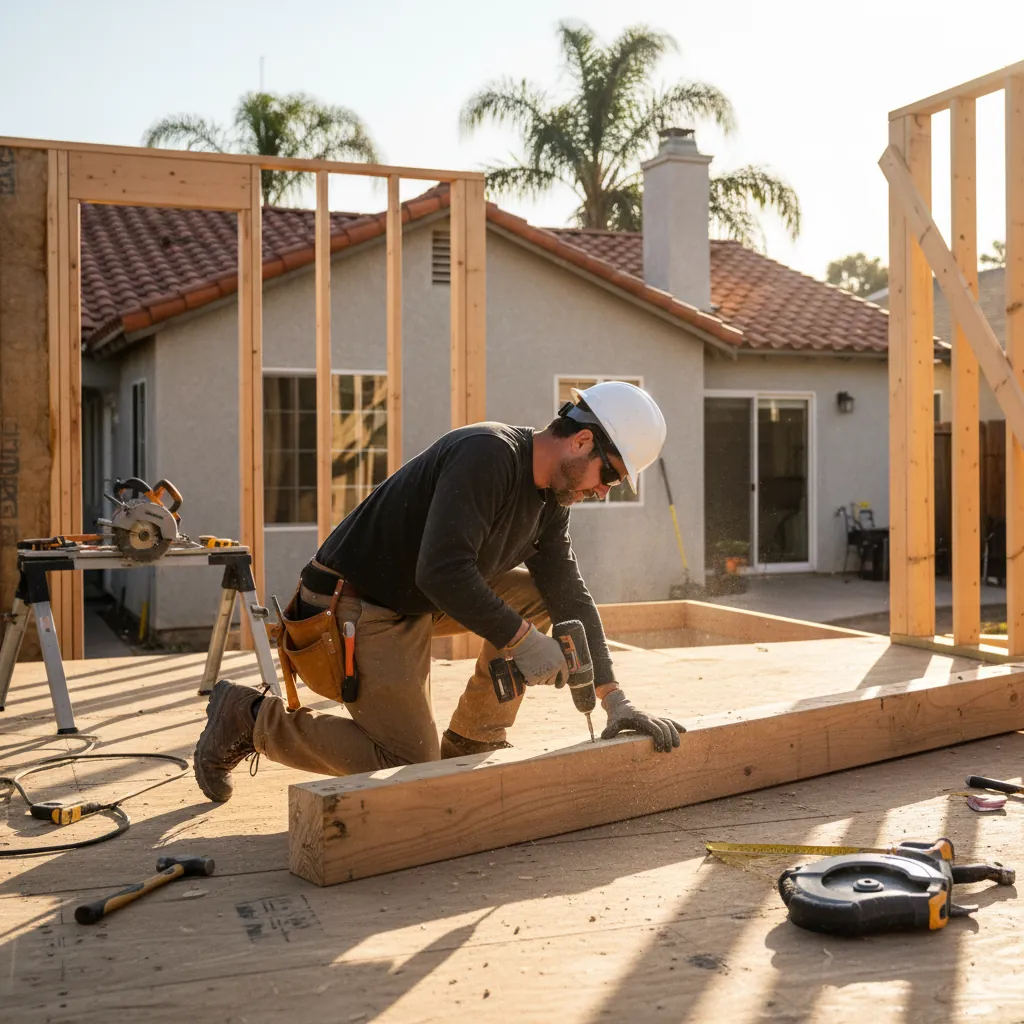
ContractorPro.Leads doesn't do the work itself. We pass your Shadow Hills project to up to four local ADU builders who take this kind of job, and you decide whether to hire any of them.
Shadow Hills maintains a distinct semi-rural charm, situated just north of La Tuna Canyon Road and stretching towards the Hansen Dam Recreation Area. Properties along Sunland Boulevard often feature expansive lots that provide the perfect footprint for detached ADUs, pool houses, or multi-generational living suites. Unlike denser parts of Los Angeles, the spacious layout of homes here means ADU designs must harmonize with natural landscapes, oak tree preservation guidelines, and existing equestrian setups.
Tell us what you have in mind. We'll pass it to up to four local pros, and they'll contact you to talk it through.
Permitting through the Los Angeles Department of Building and Safety typically takes 4 to 8 months. Plan check times can vary depending on whether your property has specific hillside overlays, oak tree impacts, or equestrian zoning restrictions.
Yes, but you must maintain the required setbacks and clear space for horse keeping as mandated by the City of Los Angeles 'K' Horsekeeping District rules. An experienced local designer can ensure your ADU layout does not compromise your equestrian privileges.
Because parts of Shadow Hills lie within a Very High Fire Hazard Severity Zone (VHFHSZ), ADUs must comply with Chapter 7A of the California Building Code. This requires ignition-resistant exterior materials, specific eave venting to prevent ember intrusion, and the establishment of defensible space.
While LADWP does not directly fund ADU construction, you can take advantage of rebates for energy-efficient heat pump HVAC systems, solar installations, and high-efficiency water-saving appliances installed during the build.
Properties closer to the Hansen Dam wash often have sandy, rocky soils, while hillside properties feature decomposed granite. A soils report is typically required by LADBS to design a custom foundation that prevents settling or erosion.
ContractorPro.Leads doesn't check licenses or insurance, so take a few minutes before you sign. Look up the company's license at cslb.ca.gov and confirm it is active and covers this type of work. Ask for current certificates of general liability insurance and, if the company has employees, workers' compensation. Then get a written contract that says who pulls the Los Angeles Dept. of Building and Safety (LADBS) permits.
