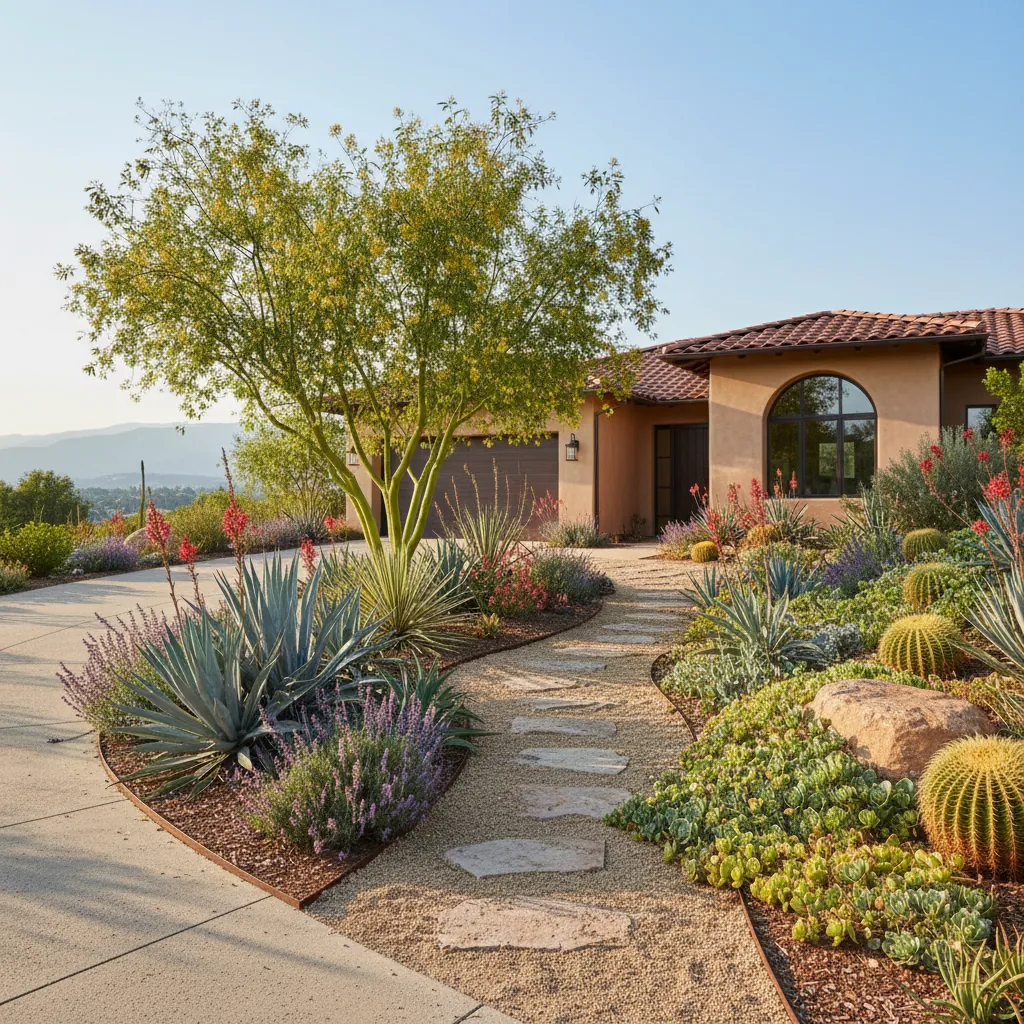
Typical Shadow Hills costs, permit steps and timelines are below. When you are ready, describe your project and up to four local landscapers serving Shadow Hills will contact you. You compare and decide.
Managing a spacious equestrian lot near Sunland Boulevard or a hillside home tucked along La Tuna Canyon Road requires a highly customized approach to landscaping. Property owners here balance the rustic, semi-rural character of the foothills with the practical realities of wildfire safety and water management.
Shadow Hills landscapes must withstand intense summer heat and highly variable soils, ranging from sandy, rocky wash soils on the flats to highly erodible decomposed granite on the foothill slopes.
Because much of the 91040 ZIP code sits within the City of Los Angeles' mapped Very High Fire Hazard Severity Zone (VHFHSZ), any new planting plan must strictly adhere to LAFD brush clearance guidelines. Additionally, large equestrian lots often require extensive irrigation runs that need careful pressure zoning to keep paddocks dust-free and plantings hydrated without violating water-conservation mandates.
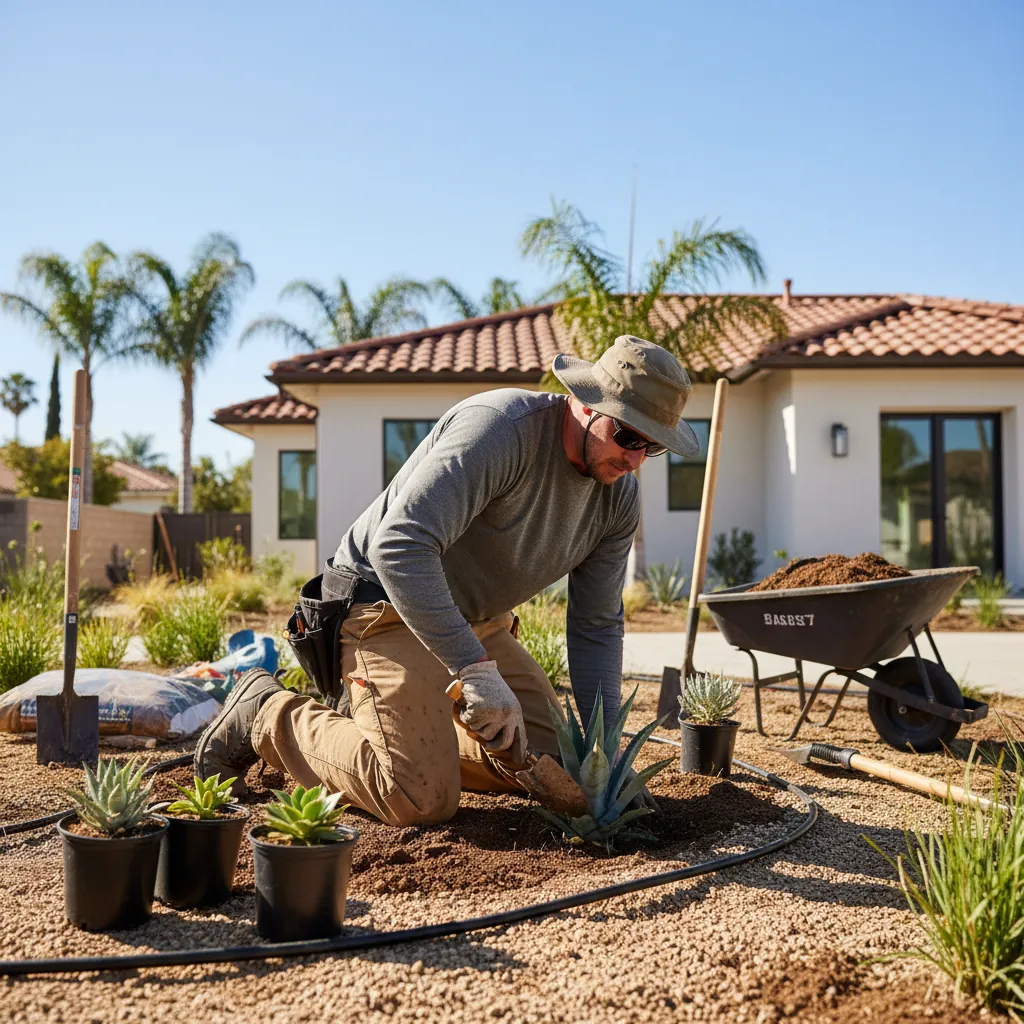
Price reflects the scale of the property, degree of slope difficulty, and the density of fire-resistant, drought-tolerant plantings.
Large Shadow Hills lots and equestrian layouts require extensive trenching, long lateral runs, and high-efficiency valves to satisfy LADWP watering schedules.
Ideal for preserving the semi-rural aesthetic; costs vary based on slope grading, stabilizing agents, and weed-barrier installation.
Steep properties near the Verdugo Mountains require engineering and LADBS permitting, driving up structural material and labor costs.
Typical market ranges for the Greater Los Angeles area, not a quote or a guarantee. The price of your job depends on its scope, so ask each pro for a written estimate before you decide. Bars share one scale, so you can compare project sizes.
Assess site topography, soil drainage (wash vs. slope DG), and specific fire zone classifications.
Verify horse-safe and non-toxic plant selections for equestrian zones.
Draft a comprehensive zone-by-zone irrigation plan optimized for water pressure across long runs.
Submit grading or retaining wall plans to the Los Angeles Dept. of Building and Safety (LADBS) if structural permits are required.
Clear dry brush and establish defensive space zones per Los Angeles Fire Department guidelines.
Install hardscaping, soil amendments, native plants, and smart irrigation controllers.
ContractorPro.Leads doesn't do the work itself. We pass your Shadow Hills project to up to four local landscapers who take this kind of job, and you decide whether to hire any of them.
From the wider, flatter horse properties near the Hansen Dam Recreation Area to the steep, rocky slopes rising toward the Verdugo Mountains, Shadow Hills demands a deep respect for natural terrain. Successful landscape plans here must harmonize with native oaks while managing stormwater runoff along major corridors like La Tuna Canyon Road.
Tell us what you have in mind. We'll pass it to up to four local pros, and they'll contact you to talk it through.
Yes, the Los Angeles Dept. of Building and Safety (LADBS) requires a building permit for retaining walls over 4 feet high, or any wall supporting a surcharge (such as a slope, terrace, or driveway). Hillside properties in the 91040 ZIP code often require a geological review due to the area's decomposed granite soils.
To secure the LADWP rebate, you must replace existing turfgrass with low-water, climate-appropriate plants, include a permeable hardscape element (like DG or gravel), and install a smart, weather-based irrigation controller. The independent contractors we connect you with can design a qualifying layout.
Southern California natives like Toyon, Cleveland Sage, California Lilac, and Deer Grass thrive in Shadow Hills' rocky wash and DG soils. They require minimal water once established and help stabilize canyon slopes naturally.
Being in the VHFHSZ means you must maintain 100 feet of defensible space. Your landscape design must feature low-fuel, highly irrigated plants immediately near structures and transition to carefully thinned, native vegetation on outlying slopes, complying with LAFD Regulation 4.
Yes, the independent contractors we connect you with are experienced with horse properties. They will exclude toxic plants like oleander, tobacco, and certain nightshades, replacing them with hardy, non-toxic natives that are safe for curious livestock.
