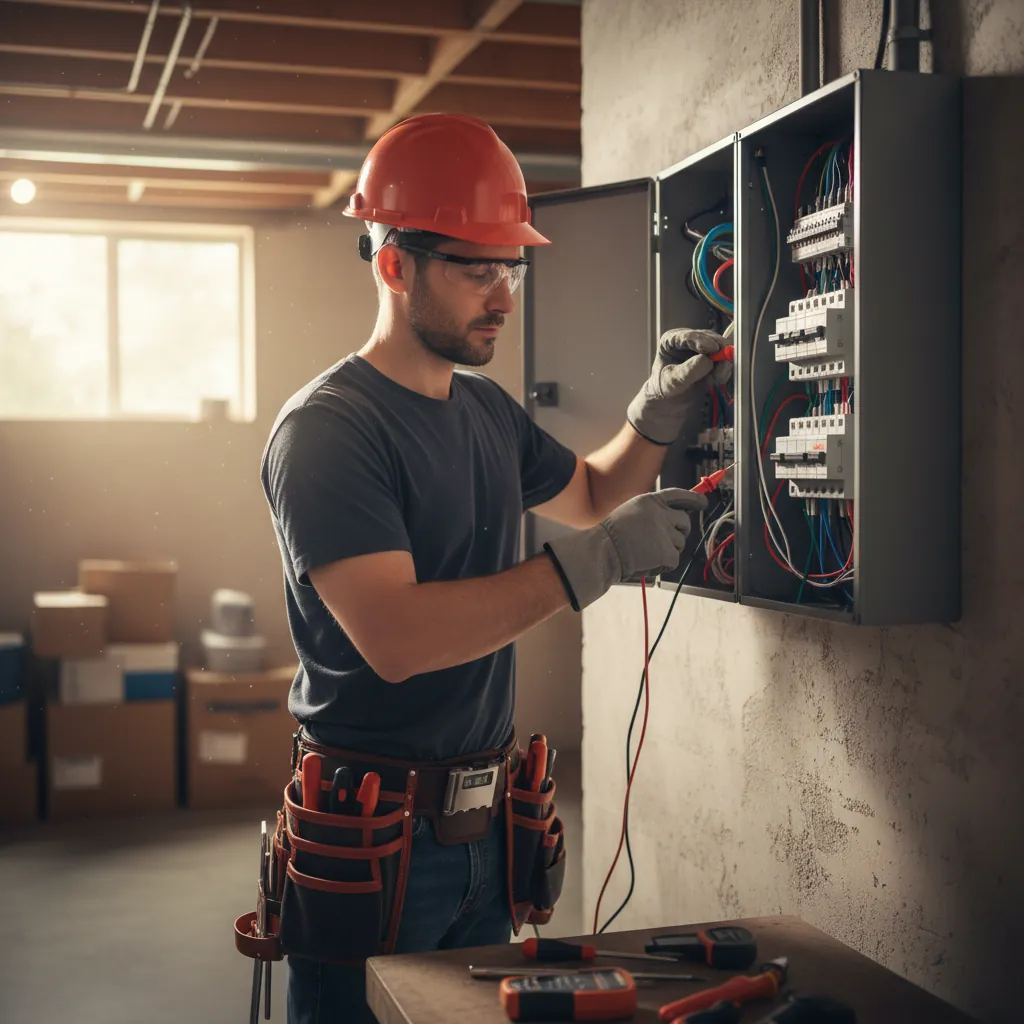
Local electrical pros in 65 Los Angeles-area neighborhoods. Each request goes to up to four of them.
Electricians handle panel upgrades, rewiring, new circuits, EV chargers, lighting, generator and battery hookups, and troubleshooting outlets that spark or breakers that keep tripping. In Greater Los Angeles, many calls come from 1920s to 1960s houses with fuse boxes, knob-and-tube wiring or 100-amp panels that cannot carry modern loads. In Greater San Antonio, the drivers are air conditioning demand, storm outages and newer homes adding EV chargers and solar. We route your request to electricians who work in your area.
Common jobs follow a pattern. A panel upgrade replaces the main panel and often the service conductors, with the utility disconnecting and reconnecting power. Rewiring runs new cable through walls and attics, with small openings patched afterward. EV chargers need a dedicated circuit, sometimes with a load management device that avoids a panel upgrade. Batteries and generators need transfer equipment so they never back-feed the grid. Small jobs take a few hours; a panel upgrade usually takes a day of work plus utility scheduling; a whole-house rewire often takes three to seven days.
The housing stock decides what electricians find. Older LA homes may have knob-and-tube wiring, ungrounded two-prong outlets, cloth-insulated cable, and panels from brands like Federal Pacific or Zinsco that many electricians recommend replacing. Hillside homes often have long service runs and little panel space. Switching to heat pumps, induction cooking and EV charging pushes many houses past 100 amps. In San Antonio, central AC dominates the load, some 1960s and 1970s homes have aluminum branch wiring that needs special connectors, and hail season outages raise interest in generators and batteries.
Panel upgrades, new circuits, EV chargers, rewiring and generator hookups require electrical permits: from LADBS in the city of LA, from the building offices of Burbank, Glendale or Pasadena, from LA County Public Works where the address is unincorporated, or from San Antonio DSD. The utility matters too. LADWP, SoCal Edison, Burbank Water and Power, Glendale Water and Power or CPS Energy must approve service changes, which can add weeks. Ask your electrician to file the utility request for you. Expect a rough and a final inspection on larger jobs.
| Job | Typical range | What moves the price |
|---|---|---|
| Panel upgrade to 200 amps | $3,000 - $7,000 | Service conductors, meter location, utility requirements and patching the wall around the panel. |
| Level 2 EV charger | $800 - $2,500 | Distance from the panel, wire size and whether load management avoids a panel upgrade. |
| Whole-house rewire | $10,000 - $25,000 | House size, plaster versus drywall walls, attic and crawlspace access, and the patching afterward. |
| New circuit or outlet | $250 - $900 | Run length, wall finish and whether the panel has open breaker spaces left. |
| Whole-house generator or battery | $8,000 - $25,000 | Equipment size, transfer switch, gas line or solar tie-in, and the permit and utility review. |
| Troubleshooting visit | $150 - $450 | Covers diagnostic time; the actual repair is priced once the electrician finds the fault. |
Typical market ranges, not a quote. Your price depends on the house, the scope and the season; compare written quotes.
Type your ZIP code and we take you to the electrical page for your neighborhood. If we do not cover that ZIP yet, you go to the request form with it filled in.
We also match electrical requests in 5 San Antonio neighborhoods.
A 200-amp panel upgrade commonly lands between $3,000 and $7,000 in both metros, depending on whether the meter moves, the service line needs replacing and how much wall repair follows. Utility requirements from LADWP, SoCal Edison or CPS Energy can add cost and weeks to the schedule.
Not always. Many homes can add a Level 2 charger on a dedicated circuit, especially with a load management device that limits charging while the house is drawing heavily. Older 100-amp panels may need an upgrade. A load calculation is the way to know before spending money.
Knob-and-tube in many 1920s LA homes has no ground, and decades of splices, brittle insulation and runs buried under attic insulation raise the risk. Some insurers decline to cover homes that still have it. Many electricians recommend replacing it, often room by room. An inspection shows how much remains.
Panel changes, new circuits, EV chargers, rewiring, generators and outlets in new locations usually require one. Swapping a light fixture or outlet in place often does not, though rules vary by city. In San Antonio and across LA, inspections protect you, and buyers often ask about permits when you sell.
An inspection makes sense when you buy an older home, before a major remodel, after water or fire damage, or if breakers trip often or outlets feel warm. Homes over 40 years old with the original panel benefit most. Many electricians suggest a check roughly every ten years.
It depends on how often you lose power and what must keep running. San Antonio storms and power shutoffs in fire-prone LA foothill areas make backup more appealing in some neighborhoods. Batteries pair well with solar. Generators cost less per hour of backup but need fuel and regular maintenance.
