Typical Mount Washington costs, permit steps and timelines are below. When you are ready, describe your project and up to four local electricians serving Mount Washington will contact you. You compare and decide.
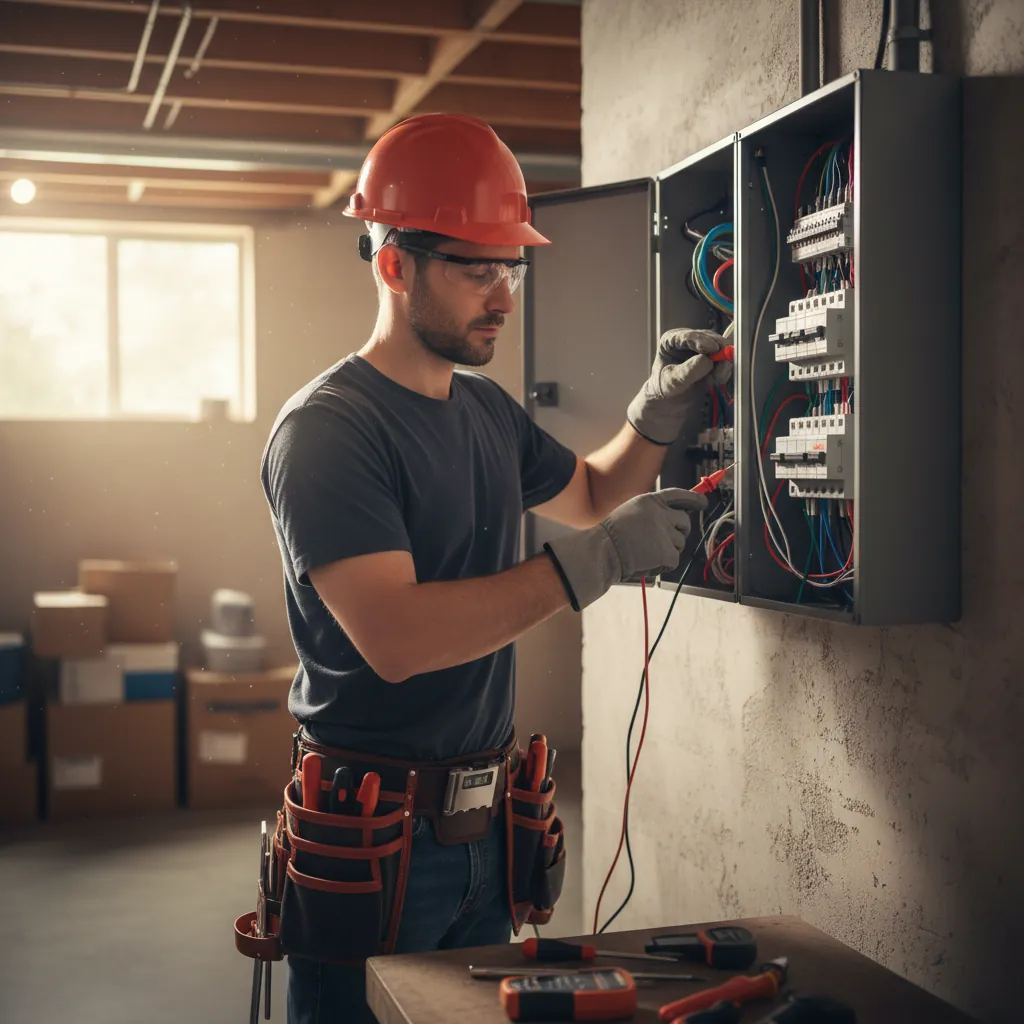
Site assessment to evaluate existing panel capacity and hillside service drop clearance.
Drafting and submitting load calculations to the Los Angeles Department of Building and Safety (LADBS).
Coordinating with LADWP for utility disconnect and spot location approval.
Installing code-compliant grounding electrodes, often requiring deep driving into hillside soils.
Mounting the new panel, pulling permit-approved wiring, and securing exterior conduits.
Passing final municipal inspection by LADBS to restore or finalize utility connection.
Higher end reflects the complexity of mounting on steep hillside exteriors and LADBS permitting/grounding requirements in challenging soils.
Depends on the distance from the panel to your carport or steep hillside parking deck, plus any necessary conduit trenching.
Ensuring stable grounding rods in dry, rocky hillside soils above the Arroyo Seco often requires specialized drilling or multiple rods.
Typical market ranges for the Greater Los Angeles area, not a quote or a guarantee. The price of your job depends on its scope, so ask each pro for a written estimate before you decide. Bars share one scale, so you can compare project sizes.
Tucked away on the winding, narrow ridges above the Arroyo Seco, Mount Washington homes require a specialized approach to modern electrical needs. Whether you live in a mid-century architectural gem or a newer custom build, keeping your electrical system up to code ensures your property remains safe through hot inland summers. We connect you with local, electricians who understand the unique structural and infrastructure challenges of this historic hillside community.
Running new electrical lines or upgrading panels in Mount Washington often intersects with our steep hillside terrain.
Trenching for underground service lines or installing exterior conduits requires navigating unstable hillside soils, sometimes demanding coordination with retaining walls or engineered foundations. Furthermore, older overhead service drops on narrow streets like San Rafael Ave are highly vulnerable to wind and mature trees, requiring precise LADBS-compliant mast installations to ensure safety and code compliance.
ContractorPro.Leads doesn't do the work itself. We pass your Mount Washington project to up to four local electricians who take this kind of job, and you decide whether to hire any of them.
From the quiet trailheads of Elyria Canyon Park to the winding stretches of San Rafael Ave, Mount Washington’s topography is as beautiful as it is challenging. Navigating these narrow streets requires local pros who know how to stage equipment safely without blocking traffic. Whether your home overlooks the Arroyo Seco or sits nestled in a steep canyon, local electrical contractors ensure your system is resilient against seasonal heatwaves and high-wind events.
Tell us what you have in mind. We'll pass it to up to four local pros, and they'll contact you to talk it through.
For standard panel upgrades and EV chargers, LADBS often offers 'Express Permits' online, which can be secured in a few days. However, if your steep hillside property requires trenching near retaining walls or modified service drops, plan-check review can take 2 to 4 weeks.
Yes. Mount Washington residents can utilize LADWP's 'Charge Up LA' program for EV charger rebates, as well as rebates for panel upgrades when transitioning to energy-efficient heat pumps or solar systems.
Steep slopes and narrow streets complicate physical access. Additionally, meeting LADBS grounding requirements in dry hillside soils often requires installing multiple interconnected grounding rods or navigating engineered concrete foundations.
High temperatures increase air conditioning usage, putting a strain on older 100-amp panels. Upgrading to a 200-amp service prevents frequent breaker trips and prepares your home for extreme seasonal heat.
Properties bordering wildland-urban interface zones must use specific weather-resistant, spark-proof conduits and enclosures. Local contractors will ensure all exterior wiring complies with strict LADBS fire safety codes for hillside areas.
