Typical Silver Lake costs, permit steps and timelines are below. When you are ready, describe your project and up to four local electricians serving Silver Lake will contact you. You compare and decide.
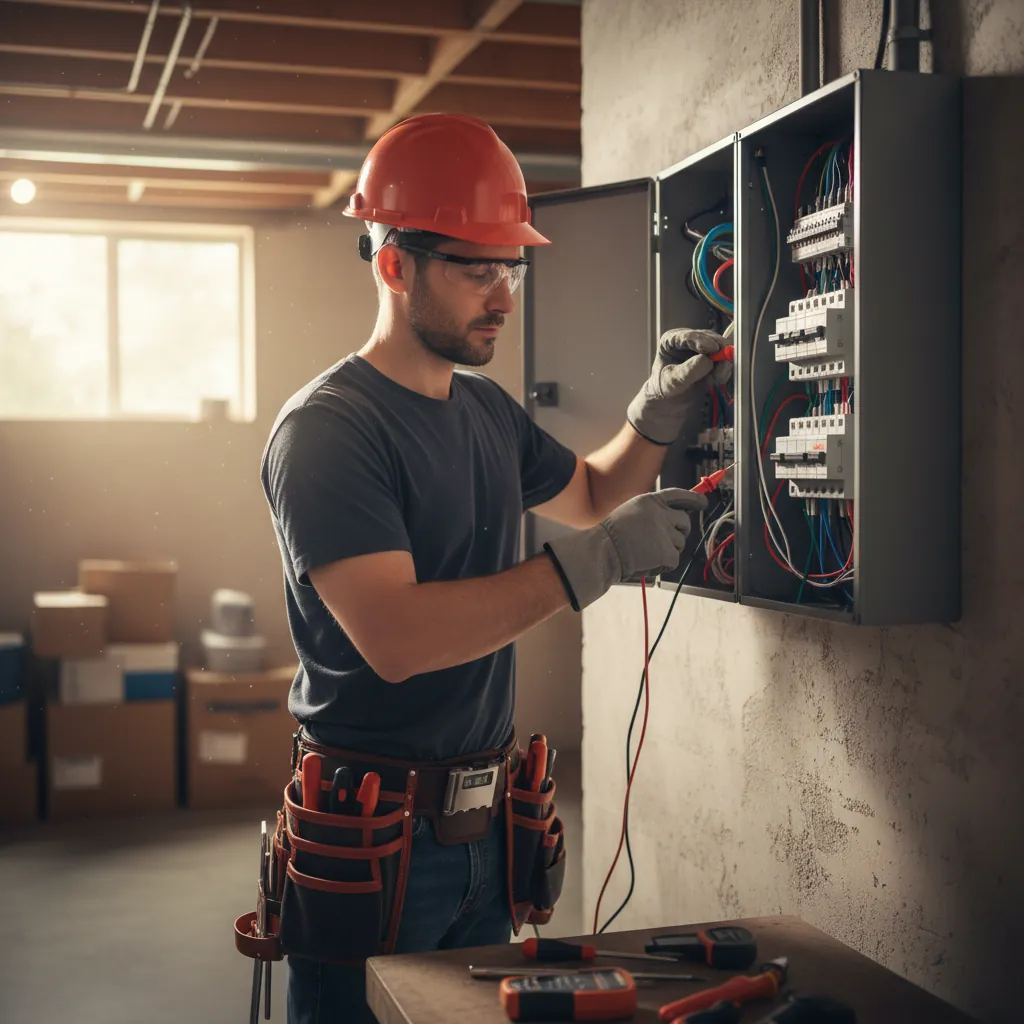
Conducting a comprehensive electrical load calculation of the existing system
Drafting and submitting electrical plans to LADBS for plan check, if required
Coordinating with LADWP for service disconnect and meter spot locations
Installing code-compliant arc-fault (AFCI) and ground-fault (GFCI) protection
Securing final sign-off from the City of Los Angeles building inspector
Costs in Silver Lake often reflect the complexity of working on steep hillsides where LADWP may require specific service drop relocations or overhead-to-underground conversions.
Highly dependent on the distance from your main panel to the garage or carport, which can be significant in terraced hillside properties.
Older Spanish and Mid-Century homes with lath-and-plaster walls require careful, labor-intensive routing to minimize cosmetic damage to historic architectural finishes.
Typical market ranges for the Greater Los Angeles area, not a quote or a guarantee. The price of your job depends on its scope, so ask each pro for a written estimate before you decide. Bars share one scale, so you can compare project sizes.
Maintaining the electrical system in Silver Lake's historic mid-century moderns and Spanish Revivals requires a delicate touch and deep local knowledge. From the winding streets near the Silver Lake Reservoir to the bustling commercial stretches of Sunset Boulevard, properties here present unique architectural and structural details.
The steep hillsides and shifting clay soils around Silver Lake place unique physical stress on utility connections, where ground movement can pull at buried conduits and exterior retaining wall wiring.
Additionally, older overhead service drops on winding, tree-lined streets are highly vulnerable to dry-season windstorms, making structural panel modernizations and robust weatherhead anchoring critical safety priorities. Navigating these challenges requires strict compliance with LADBS electrical codes tailored to hillside zoning districts.
ContractorPro.Leads doesn't do the work itself. We pass your Silver Lake project to up to four local electricians who take this kind of job, and you decide whether to hire any of them.
Whether you are renovating a historic home overlooking the Silver Lake Reservoir, updating a retail space along Sunset Blvd, or addressing outdoor lighting on the steep public stairways off Silver Lake Blvd, local expertise is essential. The neighborhood's mix of steep topography, narrow roads, and dense, older housing stock makes routing new circuits and upgrading service panels a task best left to specialists who navigate these specific blocks daily.
Tell us what you have in mind. We'll pass it to up to four local pros, and they'll contact you to talk it through.
Yes, the Los Angeles Department of Building and Safety (LADBS) requires an electrical permit for all service panel upgrades. Fortunately, simple panel replacements can often be issued via Express Permits online, though physical inspections are still required upon completion.
Express permits can be secured almost instantly online by a licensed contractor. However, scheduling the final inspection and coordinating the power shut-off/re-connection with LADWP typically takes between 1 to 3 weeks depending on inspector availability in the Metro area.
Yes, LADWP offers substantial rebates for installing qualifying Level 2 EV chargers and smart thermostats, and they occasionally run incentive programs for panel upgrades when paired with residential electrification projects like heat pumps.
Terraced yards, steep slopes, and detached garages common to Silver Lake require longer conduit runs, trenching through engineered hillside soils, and more labor to mount wiring safely, which can increase the overall cost compared to a flat lot.
Many homes built before 1950 contain knob-and-tube or ungrounded cloth-insulated wiring. Over time, warm dry summers can degrade the insulation, and the lack of a ground wire poses safety hazards for modern electronics and high-draw appliances.
