Typical North Hills costs, permit steps and timelines are below. When you are ready, describe your project and up to four local electricians serving North Hills will contact you. You compare and decide.
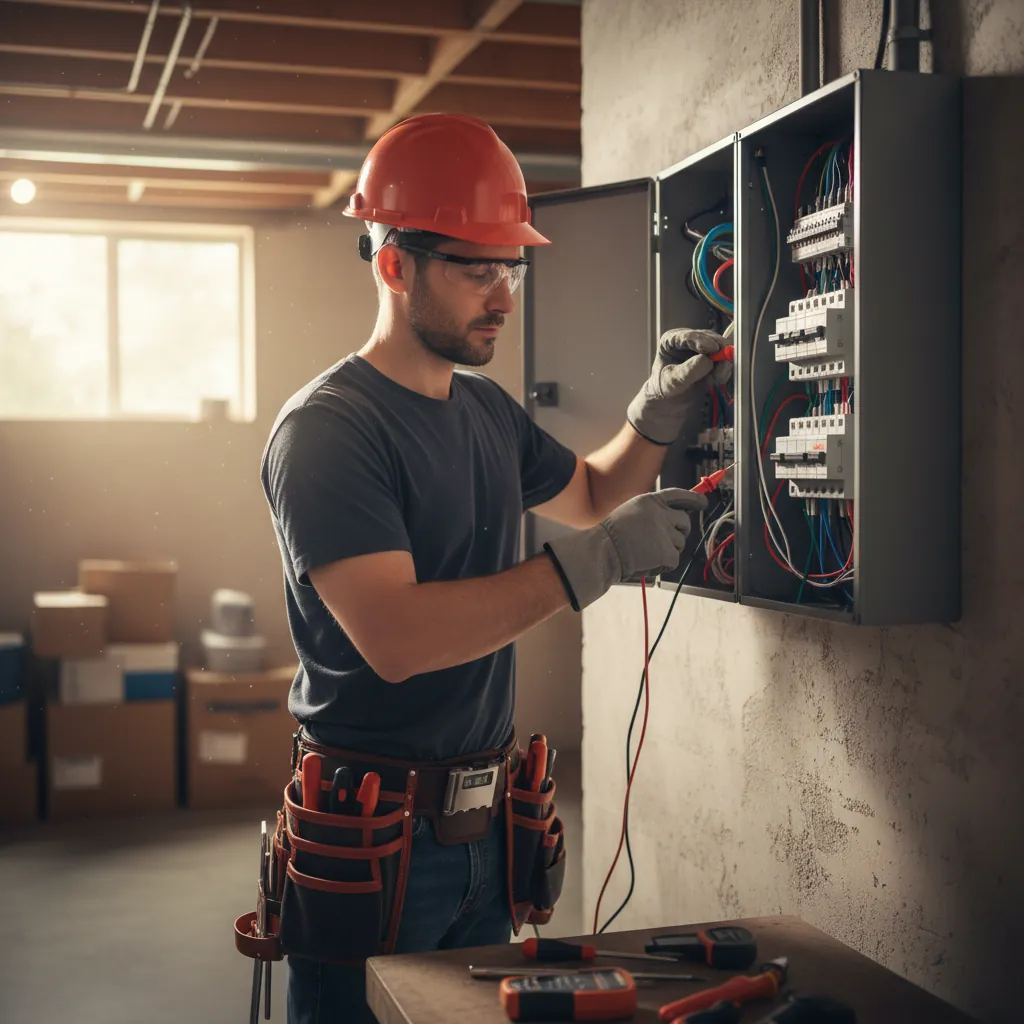
Comprehensive on-site load calculation to evaluate your current panel capacity.
Preparation and submission of permit plans to the Los Angeles Department of Building and Safety (LADBS).
Coordination with LADWP for utility locate services and scheduled power shutdowns.
Professional installation of the new panel, subpanel, or dedicated circuits using weather-rated components.
Thorough system testing and verification of grounding rods in local clay/alluvial soils.
Final inspection walkthrough with the LADBS municipal inspector to sign off on the permit.
Typical for older ranch homes near Plummer St transitioning away from original, outdated panels to handle modern HVAC loads.
Cost varies based on the distance from your main panel to the garage or driveway, and whether LADWP-eligible smart chargers are utilized.
Essential for adding new air conditioning units or heavy-duty workshop tools to handle dry Valley summers safely.
Highly dependent on home square footage and wall access in classic mid-century North Hills properties.
Typical market ranges for the Greater Los Angeles area, not a quote or a guarantee. The price of your job depends on its scope, so ask each pro for a written estimate before you decide. Bars share one scale, so you can compare project sizes.
Maintaining a safe electrical system in North Hills means keeping pace with both historic mid-century ranch homes and modern energy demands. From upgrading older panels near Sepulveda Boulevard to installing high-efficiency EV chargers, we connect you with local contractors who understand the unique infrastructure of the northern San Fernando Valley. These local professionals help ensure your home's power supply remains resilient through the hottest summer stretches.
During the intense heat of San Fernando Valley summers, North Hills electrical systems run at peak capacity to power heavy air conditioning loads.
This thermal stress is compounded by the area's flat, dry terrain and alluvial soils with pockets of expansive clay, which can shift and stress underground conduit and grounding systems over time. Navigating these regional conditions requires a deep familiarity with LADBS electrical codes to ensure your grounding electrodes and service panels are properly secured and sized for extreme climate demands.
ContractorPro.Leads doesn't do the work itself. We pass your North Hills project to up to four local electricians who take this kind of job, and you decide whether to hire any of them.
Whether you own a classic mid-century home near Plummer Street or a newer property off the Devonshire Street corridor, your home's electrical needs are shaped by the area's growth. The flat northern Valley floor, nestled close to the busy I-405 and I-5 interchange, hosts a mix of older single-family residences and updated multi-family units. Local electricians who service the 91343 ZIP code routinely navigate these distinct property types, ensuring code-compliant panel upgrades and rewiring from Sepulveda Boulevard to the quiet residential pockets nearby.
Tell us what you have in mind. We'll pass it to up to four local pros, and they'll contact you to talk it through.
For standard residential projects like panel upgrades or EV chargers, LADBS often offers Express Permits online or over the counter, which can be issued the same day. More complex rewires or commercial upgrades requiring plan checks can take 2 to 4 weeks.
Yes, LADWP offers residential rebates for installing qualifying Level 2 EV chargers, and occasionally offers incentives for smart thermostats or energy-efficient panel components. Your matched contractor can help verify current rebate requirements.
When temperatures routinely exceed 90 degrees Fahrenheit in the San Fernando Valley, air conditioning systems run constantly, pulling maximum current. If your panel is older or has loose connections, this sustained high load generates extreme thermal stress, which can lead to tripped breakers or electrical failure.
Yes. Parts of the northern Valley floor contain expansive clay pockets within the alluvial soil. Over time, seasonal moisture changes cause the soil to swell and shrink, which can shift or crack buried PVC conduits or loosen grounding electrodes. A professional installer will ensure proper depth and bracing to handle this.
If your home was built in the 1950s or 60s and still has an original Zinsco or Federal Pacific panel, or if you notice flickering lights when the AC kicks on, it is highly recommended to upgrade. Modern appliances and HVAC units require more stable power than these older panels can safely provide.
