Typical North Hills costs, permit steps and timelines are below. When you are ready, describe your project and up to four local plumbers serving North Hills will contact you. You compare and decide.

Pricing depends on tank capacity, energy-efficiency ratings, and the cost of bringing older installations up to current LADBS earthquake strapping and venting codes.
Costs are driven by the depth of the alluvial soil, proximity to mature tree roots, and ease of access near driveways or sidewalks.
Expansive clay shifting under concrete slabs in North Hills homes often requires specialized electronic locating equipment and selective concrete breaching.
Varies based on home size, layout, and whether the property has an accessible crawlspace, common in older mid-century North Hills builds.
Typical market ranges for the Greater Los Angeles area, not a quote or a guarantee. The price of your job depends on its scope, so ask each pro for a written estimate before you decide. Bars share one scale, so you can compare project sizes.
Maintaining a home on the flat northern San Fernando Valley floor requires plumbing that can withstand both intense summer heat and shifting ground. We connect you with local plumbing contractors who understand the unique infrastructure of North Hills, keeping your system flowing safely and efficiently. Whether you own a classic mid-century ranch home or a newer property, we make finding the right local professional straightforward and stress-free.
Homes in North Hills sit on alluvial Valley soils mixed with pockets of expansive clay, which swell and shrink drastically between wet winters and hot, dry summers.
This shifting ground puts immense stress on underground sewer lines and water mains, often leading to slab leaks or misaligned pipes. Additionally, the extreme summer heat increases local water demands, making efficient pressure regulators and quick leak detection critical to avoiding high LADWP bills.
Thorough on-site diagnostic using video pipe inspection for underground lines
Clear, upfront written estimate detailing labor, materials, and municipal fees
Sewer and water line pressure testing to pinpoint hidden leaks under the concrete slab
Filing necessary LADBS permits for major repiping or water heater replacements
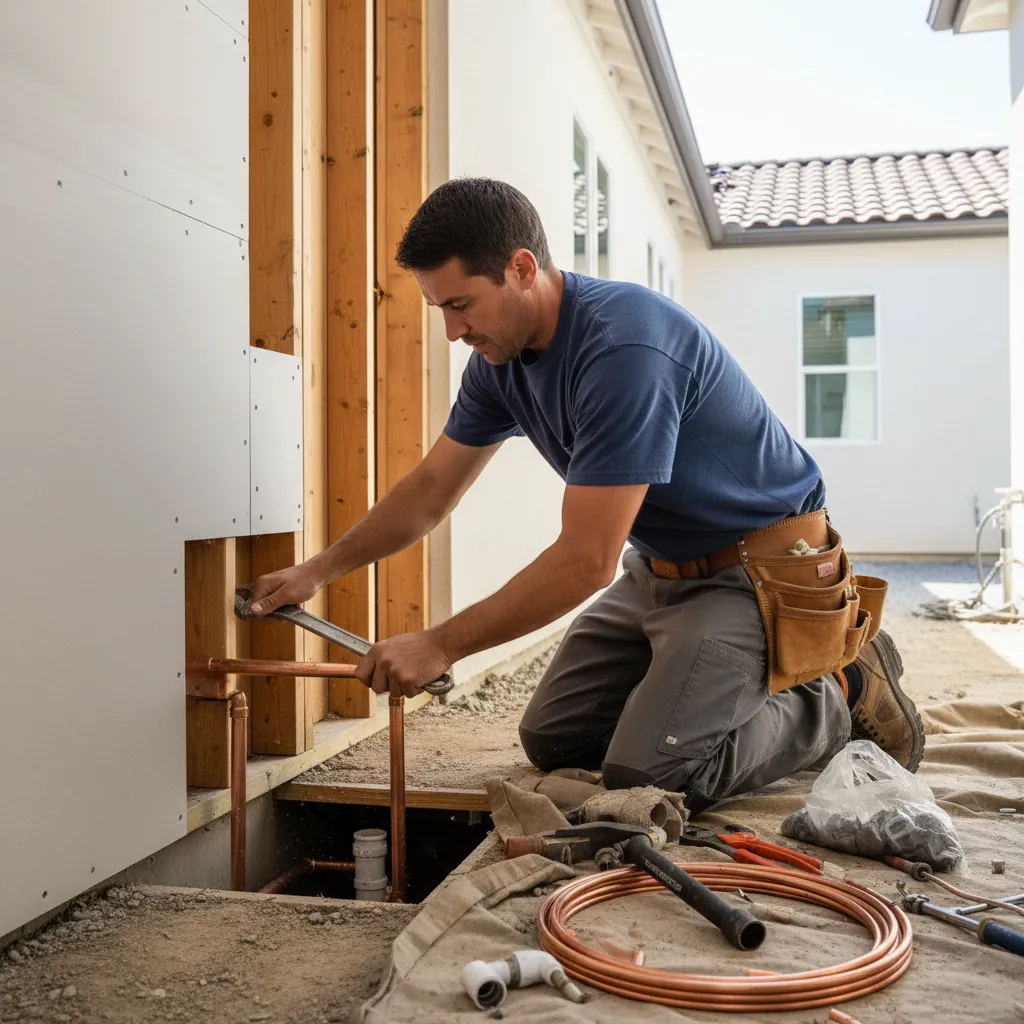
Professional execution of repairs using durable, code-compliant materials like copper or PEX
Final inspection and cleanup, leaving your North Hills property secure and tidy
ContractorPro.Leads doesn't do the work itself. We pass your North Hills project to up to four local plumbers who take this kind of job, and you decide whether to hire any of them.
From the quiet residential blocks near Plummer St and Devonshire St to the bustling corridors along Sepulveda Blvd, North Hills plumbing demands vary by property era. The post-war ranch homes clustered near the I-405 corridor often feature original galvanized steel pipes that are reaching the end of their functional lifespan, while properties closer to the I-5 corridor face distinct water pressure challenges that require skilled municipal code navigation.
Tell us what you have in mind. We'll pass it to up to four local pros, and they'll contact you to talk it through.
Yes. The Los Angeles Department of Building and Safety (LADBS) requires a permit and a subsequent safety inspection for all water heater installations to ensure proper seismic strapping and venting.
The expansive clay found in pockets across the northern Valley floor expands when wet and contracts when dry. This cyclic shifting can crack older clay sewer pipes or put stress on copper water lines running beneath concrete slabs, leading to leaks.
Yes. North Hills customers are served by the Los Angeles Department of Water and Power (LADWP), which offers rebates on qualifying high-efficiency toilets, smart water monitors, and low-flow plumbing fixtures.
Simple permits, such as those for standard water heaters or minor in-home repipes, can often be obtained online instantly by licensed contractors through the LADBS e-Permit system. Larger projects requiring plan checks may take several business days.
Many North Hills homes built in the mid-to-late 20th century were constructed on concrete slab foundations with copper pipes run underneath. The combination of corrosive soil chemistry, thermal expansion during hot summers, and natural ground movement leads to pinhole leaks over time.
