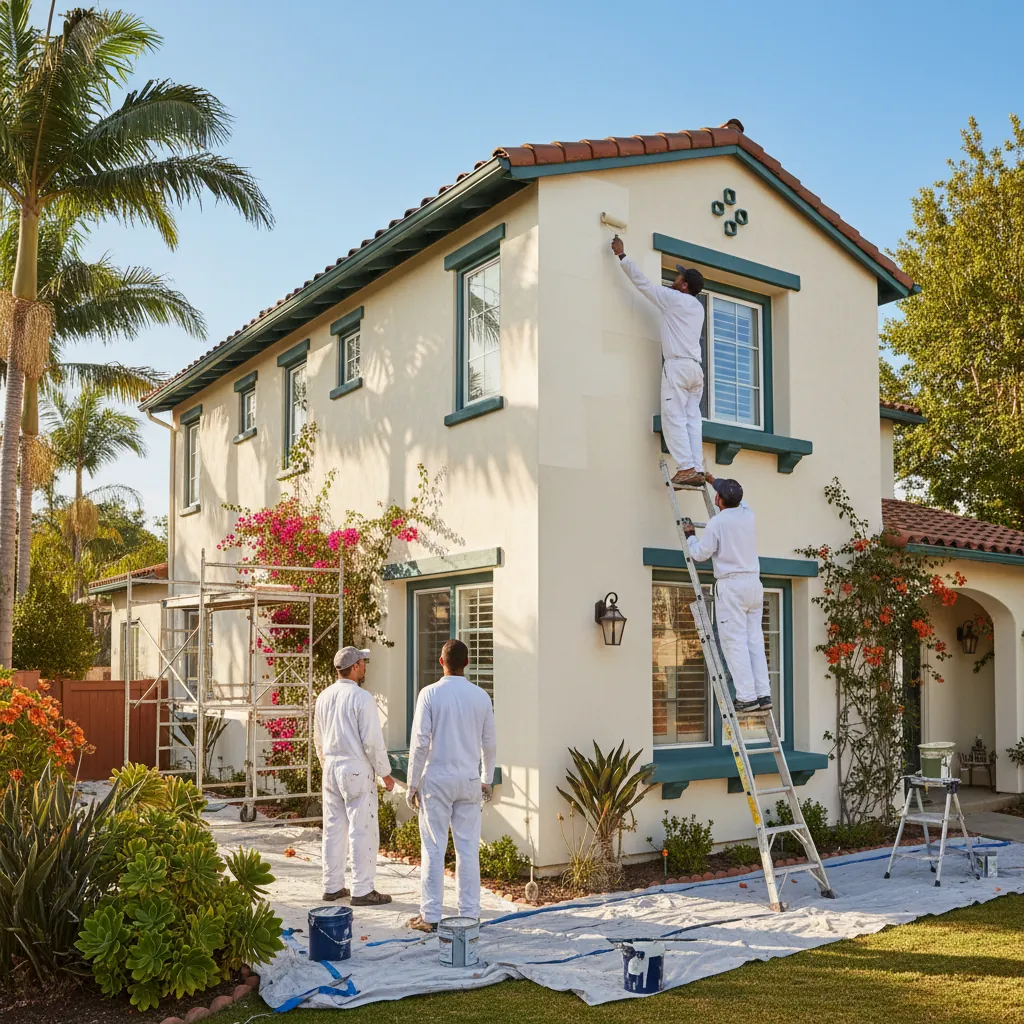
Local exterior painting pros in 63 Los Angeles-area neighborhoods. Each request goes to up to four of them.
Exterior painting protects stucco, wood siding, trim, eaves, doors and fences from sun and moisture, and it changes how a house looks from the street. In Greater Los Angeles, painters work on everything from 1920s Spanish revival stucco to mid-century wood siding and newer fiber cement. In Greater San Antonio, jobs often involve brick and stone homes with painted trim, siding worn by heat and humidity, and hail-scuffed surfaces. We forward your request to exterior painters who work in your area.
Prep takes more time than painting. A good crew washes the house, scrapes loose paint, sands rough edges, fills stucco cracks with elastomeric patch, replaces or fills rotted wood, caulks gaps and masks windows and plants. Bare spots get primer. Paint goes on by brush, roller or sprayer, usually two coats, with trim and doors cut in by hand. On stucco, some owners choose elastomeric coatings that bridge hairline cracks, though they can trap moisture if applied over damp walls. A single-story house often takes three to six days.
Weather and building age set the challenges. LA sun fades and chalks paint fast on south and west walls, coastal fog and salt air near Venice or the South Bay cause peeling and rusted nails, and Valley heat can blister paint applied in the afternoon. Many pre-1978 homes have lead paint under newer layers, so scraping calls for lead-safe practices. Fire zone homes may be swapping wood trim for ignition-resistant materials. In San Antonio, humidity grows mildew on shaded walls, hail chips trim, and expansive clay can crack stucco and brick mortar that need repair before painting.
Repainting does not normally require a building permit, although historic preservation zones in Los Angeles, Pasadena and other cities may review color changes, and many HOAs require color approval. Southern California air rules limit VOC content in paints, so use products made to meet local limits. Under EPA rules, contractors disturbing paint in pre-1978 homes must follow lead-safe work practices. Spring and fall bring the best painting weather in both metros. Expect the crew to wait out morning dew and stop before the strongest afternoon heat.
| Job | Typical range | What moves the price |
|---|---|---|
| Single-story house, full exterior | $5,000 - $10,000 | Square footage, stucco versus siding, and how much prep and repair the surfaces need. |
| Two-story house, full exterior | $8,000 - $18,000 | Scaffolding or lifts, more trim and second-floor eaves raise the labor hours. |
| Trim, eaves and fascia only | $1,500 - $5,000 | Linear footage and the condition of the wood; replacing rotted fascia adds to the cost. |
| Elastomeric stucco coating | $3 - $6 / sq ft | Thicker coating and more prep than standard paint; useful where walls have hairline cracks. |
| Wood repair and replacement | $300 - $3,000 | Rotted sills, fascia or siding boards need carpentry before any paint goes on. |
| Lead-safe prep on older homes | $500 - $3,000 | Containment, HEPA cleanup and disposal add time on pre-1978 houses with damaged paint. |
Typical market ranges, not a quote. Your price depends on the house, the scope and the season; compare written quotes.
Type your ZIP code and we take you to the exterior painting page for your neighborhood. If we do not cover that ZIP yet, you go to the request form with it filled in.
We also match exterior painting requests in 5 San Antonio neighborhoods.
Painting a single-story home typically costs around $5,000 to $10,000 in either metro, and two-story homes commonly cost $8,000 to $18,000. Prep work, stucco repair, wood rot and lead-safe practices on older homes move the price most. Get two or three written bids with the same scope so you can compare them fairly.
Many homes need repainting every 7 to 12 years, depending on the surface, sun exposure and paint quality. South and west walls in the Valley and San Antonio fade faster, and coastal homes may need trim touch-ups sooner. Peeling, chalky residue on your hand or cracked caulk are signs it is time.
Generally no. Historic zones in Los Angeles, Pasadena and some other cities may review exterior color changes, and HOAs often require approval. If the job includes replacing siding, large stucco repairs or structural fixes, ask your building department whether a permit is needed for that part of the work.
Many painters use 100 percent acrylic exterior paint on stucco because it breathes and handles sun well. Elastomeric coatings can bridge hairline cracks but must go on dry, well-prepped walls or they may blister. Ask your painter which product suits your wall and whether it meets South Coast VOC limits.
Spring and fall usually work best. Most paints need moderate surface and air temperatures and dry weather while curing. In Los Angeles, avoid Santa Ana wind days and walls still wet from the marine layer. In San Antonio, summer heat can make paint dry too fast, so crews often start early in the morning.
Any house built before 1978 might. Lead is common under newer layers on 1920s to 1960s homes in both metros. Painting over intact paint is generally low risk, but scraping, sanding or power washing can release lead dust. Contractors must follow EPA lead-safe rules on these homes.
