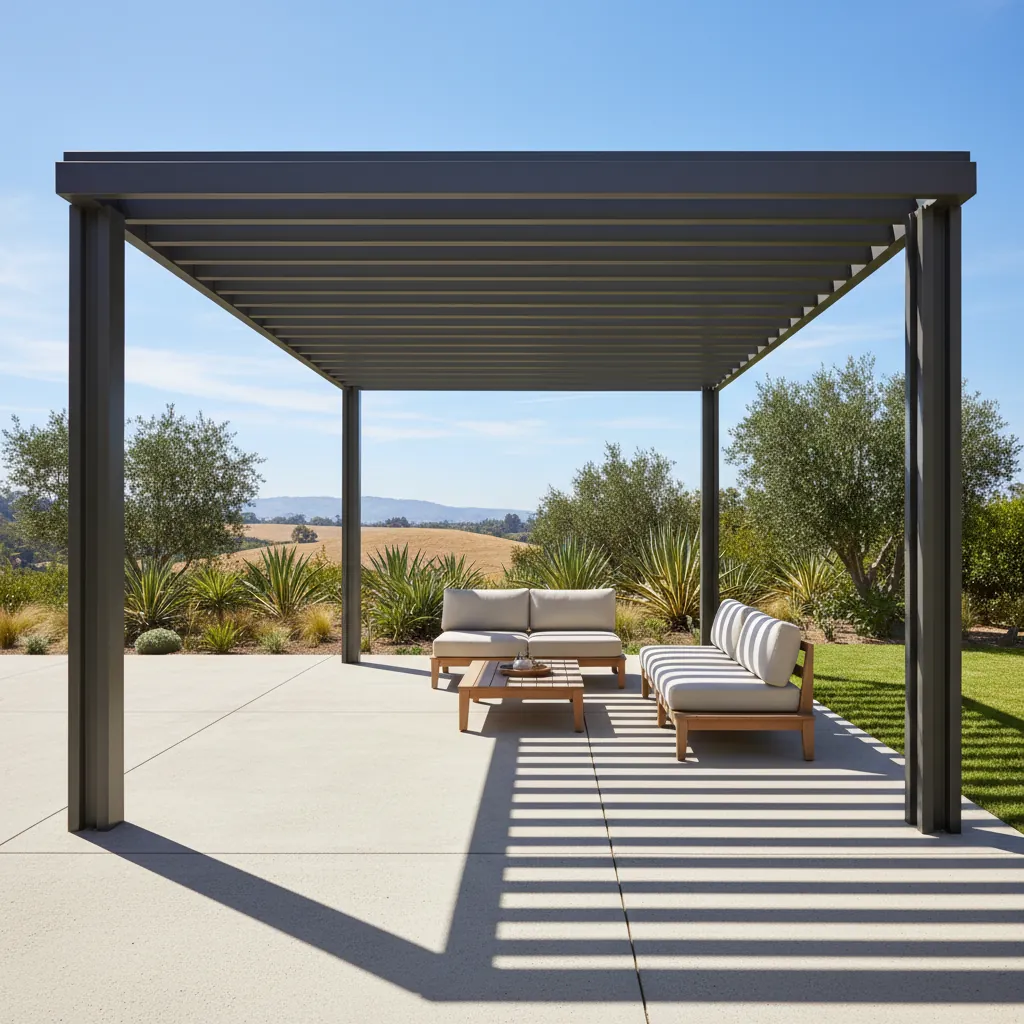
Local patio covers pros in 63 Los Angeles-area neighborhoods. Each request goes to up to four of them.
Patio covers add shade and weather protection over a deck, slab or outdoor kitchen. Builders put up solid roof covers, open lattice, louvered aluminum systems, wood pergolas and insulated panel covers, either attached to the house or freestanding. In Greater Los Angeles, the goal is usually cooling a sun-blasted patio and extending living space. In Greater San Antonio, homeowners want relief from summer heat, protection from hail and rain, and a place to hang ceiling fans. We send your request to local patio cover builders.
Most jobs start with measuring and checking the attachment point: the fascia, the rafter tails or a ledger board bolted into the wall framing. Posts sit on concrete footings sized for the load and soil, then beams and rafters or aluminum panels go up. Solid covers need flashing where they meet the house and a slight slope so rain runs off. Louvered systems add motors and wiring, while insulated panels allow recessed lights and fans. A typical attached cover takes one to four days to build, after permits and material delivery.
Building details vary by area. On the 1950s and 1960s ranch houses common in the Valley, the existing eave may be too shallow or weak to carry a cover, so many builders tie into the wall instead. Expansive clay calls for deeper footings. Hillside and foothill homes in fire hazard zones may need noncombustible or ignition-resistant materials, which favors aluminum and steel over wood. Coastal salt air corrodes cheap fasteners. In San Antonio, covers must handle storm winds and hail, so panel thickness and anchoring matter, and suburban HOAs often set rules on color and roof tie-ins.
Plan on a permit for almost every attached cover and for many freestanding ones. LADBS, separate cities like Pasadena or Glendale, LA County and San Antonio DSD typically check setbacks, footing size and attachment details, and some prefab aluminum systems come with engineering paperwork that speeds review. Expect a footing inspection before concrete and a final at the end. Permit time ranges from days to several weeks. Spring and early summer are busy, so ordering in winter can shorten the wait. Ask about a fan or lights now, since wiring is easier before the cover is closed in.
| Job | Typical range | What moves the price |
|---|---|---|
| Aluminum lattice cover, attached | $25 - $50 / sq ft | Size, beam spans and whether the house wall needs a new ledger or header to carry it. |
| Solid aluminum or insulated panel roof | $40 - $80 / sq ft | Insulated panels cost more but block heat and make room for recessed lights and fans. |
| Wood pergola or cover | $35 - $90 / sq ft | Lumber species, custom details and paint or stain finish; fire zone rules may limit wood. |
| Motorized louvered system | $70 - $140 / sq ft | The motor, rain sensors and premium aluminum place these at the high end of the market. |
| Electrical for fans and lights | $600 - $2,500 | Distance to the panel and fixture count; the work needs an electrician and its own permit. |
| Permits and engineering | $500 - $3,000 | Prefab systems with existing engineering cost less; custom designs on slopes need more. |
Typical market ranges, not a quote. Your price depends on the house, the scope and the season; compare written quotes.
Type your ZIP code and we take you to the patio covers page for your neighborhood. If we do not cover that ZIP yet, you go to the request form with it filled in.
We also match patio covers requests in 5 San Antonio neighborhoods.
A basic attached aluminum lattice cover often runs about $25 to $50 per square foot installed in Los Angeles and San Antonio. Solid insulated roofs, wood covers and motorized louvered systems cost more. A 12 by 20 foot cover might land anywhere from roughly $6,000 to $20,000 depending on type, permits and electrical work.
Usually yes. Attached covers almost always need one and many freestanding designs do too; the review checks setbacks, footings and how the cover ties into the house. LADBS, cities such as Burbank or Glendale, LA County and San Antonio DSD each have their own rules. Some small freestanding pergolas may be exempt, so ask first.
Aluminum resists rot, termites and fire better than wood and needs little upkeep, which makes it common in both metros. Wood looks warmer but needs sealing or paint every few years. Steel frames are strong but must be well coated, especially near the coast. Insulated aluminum panels add comfort in hot climates.
A solid cover can darken rooms that open onto the patio, so some homeowners add skylight panels or choose lattice near windows. A cover generally cools the patio and the wall behind it. Insulated panels cut the heat radiating down, which matters on west-facing patios in the Valley and San Antonio.
A well-built one can, but it depends on the product. In San Antonio, thicker panels, solid anchoring and engineering for local wind loads matter. Thin lattice can dent in hail. Ask the builder for the product's wind rating and how the posts are anchored to their footings.
Building usually takes one to four days. The longer part is often design, permits and material lead time, which can add two to eight weeks. Custom wood covers and louvered systems may take longer to order. Spring is the busiest season, so booking in winter often helps.
