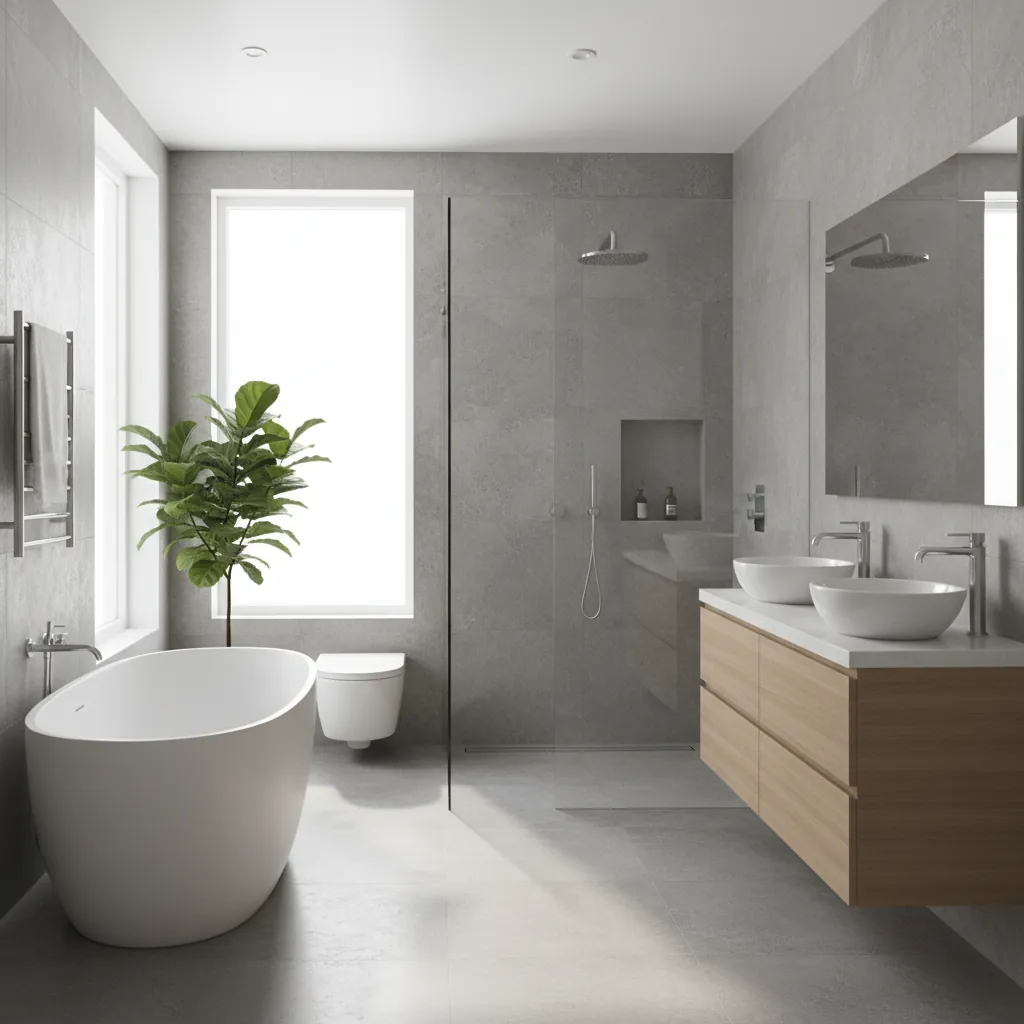
Local bathroom remodeling pros in 63 Los Angeles-area neighborhoods. Each request goes to up to four of them.
Bathroom remodeling covers new showers and tubs, vanities, tile, toilets, lighting and ventilation, sometimes with a layout change or a larger footprint. In Greater Los Angeles, many projects replace 1950s and 1960s tile bathrooms with cracked grout, leaking shower pans and galvanized supply lines. In Greater San Antonio, homeowners commonly convert garden tubs into large walk-in showers or update builder-grade bathrooms in 1990s and 2000s homes. We send your request to bathroom remodelers who serve your area.
A typical job starts with demolition to the studs or subfloor, then plumbing changes, electrical for lights, outlets and the exhaust fan, and inspections before the walls close. Showers get a waterproofing system, either a traditional mortar bed with a liner or a sheet or liquid membrane, and then tile. Vanities, toilets, glass and trim follow. Curbless showers need the floor lowered or built up. A hall bath commonly takes three to six weeks once materials arrive; a primary suite with layout changes often runs six to ten weeks.
The age of the house shows up behind the tile. Older Los Angeles homes may have cast iron drains, galvanized pipes, mortar-set tile on wire lath and ungrounded wiring, and raised-foundation homes sometimes hide rot under a leaking toilet or tub. Hard local water leaves scale on fixtures and glass, so finish choice and water softening come up often. In San Antonio, very hard water is common too, slab homes on clay can shift and crack floor tile, and humid summers make a properly sized exhaust fan important for keeping mildew away.
Bathroom remodels that move plumbing, add circuits or change walls usually need permits from LADBS, LA County, cities like Pasadena or Glendale, or San Antonio DSD. In California, permitted work in older homes generally requires swapping high-flow toilets, showerheads and faucets for water-conserving ones, and bathrooms need an exhaust fan that meets energy and ventilation rules. Inspectors usually check rough plumbing and electrical, and sometimes the shower pan with a flood test. Plan for a few weeks without that room, and order tile and fixtures early to avoid gaps in the schedule.
| Job | Typical range | What moves the price |
|---|---|---|
| Hall bath refresh | $12,000 - $25,000 | Keeping the layout, a tub-shower combo and a stock vanity holds costs in this range. |
| Full hall bath remodel | $25,000 - $45,000 | A new tile shower, plumbing updates and a custom vanity; tile choice and glass add up. |
| Primary bath remodel | $40,000 - $90,000 | Larger showers, double vanities, layout changes and higher-end tile push totals upward. |
| Tub to walk-in shower conversion | $10,000 - $25,000 | Drain relocation, waterproofing, the glass enclosure and total tile area drive the price. |
| Curbless or wet room shower | $15,000 - $35,000 | Lowering the subfloor or cutting the slab and adding a linear drain mean more structural work. |
| Repiping supply lines in the bath | $1,500 - $5,000 | Replacing galvanized or old copper while walls are open avoids tearing into them again later. |
Typical market ranges, not a quote. Your price depends on the house, the scope and the season; compare written quotes.
Published Los Angeles figures for midrange and upscale bathroom remodels, LADBS permit fees and Title 24 rules are collected in our Los Angeles Home Remodeling Costs 2026 guide, with a source for every number. For bathroom work specifically, see Los Angeles Bathroom Remodel Costs & Permits 2026: cost tiers, which work needs an LADBS permit, and wait times from the city's own permit records.
Type your ZIP code and we take you to the bathroom remodeling page for your neighborhood. If we do not cover that ZIP yet, you go to the request form with it filled in.
We also match bathroom remodeling requests in 5 San Antonio neighborhoods.
In Los Angeles, a full hall bath remodel commonly runs around $25,000 to $45,000, with primary bathrooms often higher. San Antonio projects are frequently a bit less for similar finishes. Tile area, shower type, fixture quality and whether plumbing moves make the biggest difference. Ask each contractor to price the same scope.
Replacing a toilet or vanity where it already sits generally needs no permit. Moving plumbing, adding circuits, changing walls or replacing a shower pan often does. Depending on the address, the permit comes from LADBS, a separate city, LA County or the San Antonio DSD. In California, permitted work may also trigger water-conserving fixture and exhaust fan requirements.
A hall bath often takes three to six weeks of work once materials are on site, and a primary suite six to ten weeks. Permit approval, special-order tile, glass fabrication after tile is set and inspection scheduling add time. Ordering everything before demolition keeps the room out of service for less time.
Many homeowners with a second tub elsewhere convert one to a walk-in shower for easier access. If it is the only tub in the home, families with small children may miss it, and some buyers prefer at least one. A tub-shower combo in the hall bath with a walk-in shower in the primary is a common compromise.
Common causes are a failed shower pan, cracked grout or caulk, or a leaking valve behind the wall. In older LA homes, original mortar pans often wear out after decades. On San Antonio slabs, a floor crack from shifting soil can break tile and waterproofing. A plumber can test the pan and valve to find the source.
Any season works for an indoor project, though tile and fixture orders often take longer before the holidays. Many remodelers book up in spring, so planning over winter can help. Start choosing materials four to eight weeks before your target start date so nothing holds up the crew.
