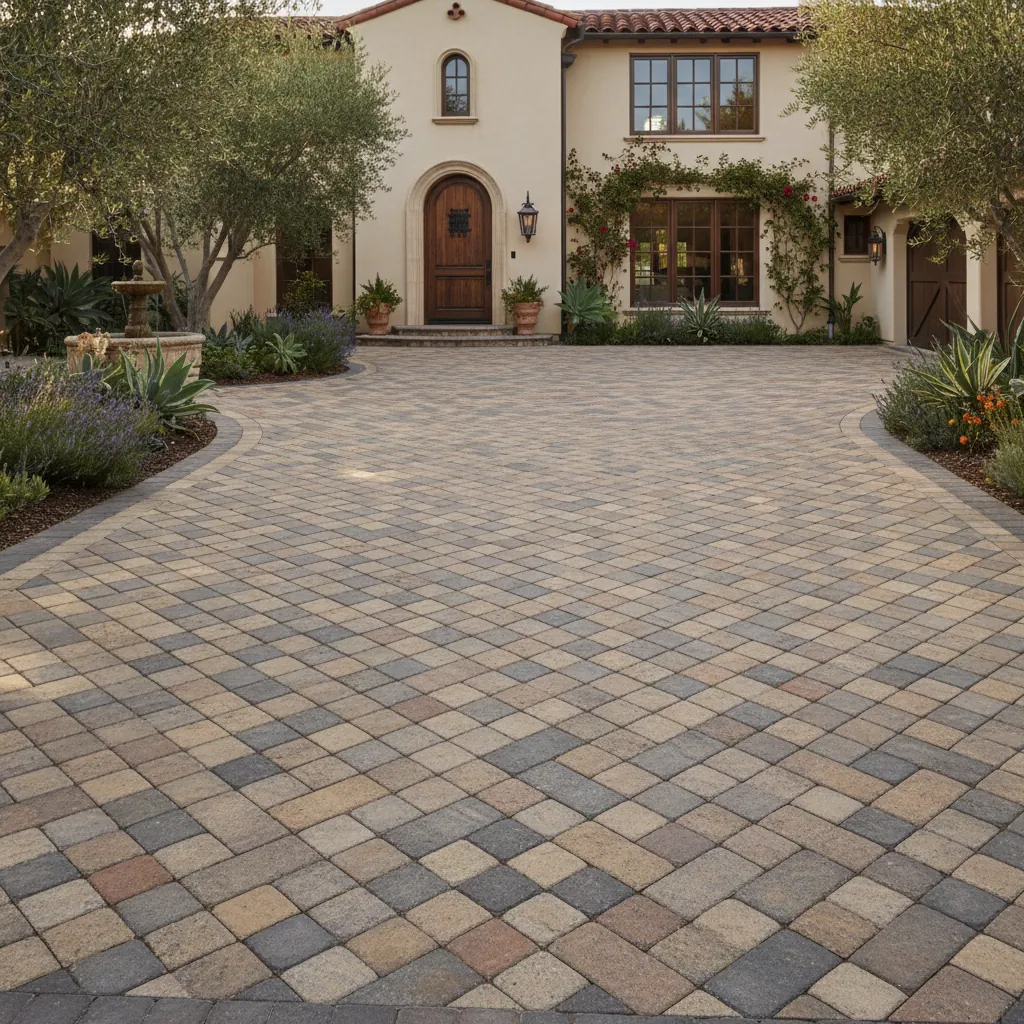
Local pavers pros in 64 Los Angeles-area neighborhoods. Each request goes to up to four of them.
Paver contractors build patios, driveways, walkways, pool decks and steps from interlocking concrete, clay brick or natural stone units set on a compacted base. In Greater Los Angeles, they often replace cracked concrete behind 1950s ranch houses or add permeable driveways that let rain soak in. Around San Antonio, paver patios and pool surrounds are popular because single units can be lifted and reset when clay soil moves. We pass your project along to paver installers who cover your area.
Most of the work happens below the surface. The crew excavates seven to twelve inches depending on use, compacts the subgrade, then installs crushed aggregate base in lifts, compacting each one, followed by a thin layer of bedding sand. Pavers are laid in the chosen pattern, cut along the edges, locked in with edge restraints and compacted again. Joints get polymeric sand, which hardens when misted, or small open-graded stone in permeable systems. Herringbone patterns hold up best under cars. A 300 to 500 square foot patio commonly takes three to five working days.
Local ground decides the base. On expansive Valley clay, installers usually dig deeper, add geotextile fabric and slope everything away from the foundation so water does not pool under the field. Hillside yards in places like Eagle Rock or the Santa Monica Mountains may need short retaining walls and step transitions. Older neighborhoods around Pasadena and Hancock Park often suit clay brick or tumbled pavers that match 1920s architecture. In San Antonio, crews dig through caliche, lean on crushed limestone base, which is plentiful locally, and choose lighter colors for pool decks under summer sun.
Patios on private property typically need no permit, though drainage changes and anything attached to the house can. Driveway work that reaches the street apron runs into right-of-way rules: the City of Los Angeles handles that through public works, and Glendale, Burbank and San Antonio each have their own process. Some LA programs have encouraged permeable surfaces for stormwater, so ask your installer what applies to your lot. Spring and fall give the best working weather. Expect a light sand haze for a few days, and plan on resanding joints every few years.
| Job | Typical range | What moves the price |
|---|---|---|
| Concrete paver patio | $16 - $30 / sq ft | Base depth, pattern complexity and how far the crew must wheel material from the street. |
| Paver driveway | $20 - $38 / sq ft | Thicker pavers, a deeper base for vehicles and removing the old concrete raise driveway pricing. |
| Permeable paver system | $24 - $45 / sq ft | Open-graded stone layers and deeper excavation cost more but reduce runoff and standing water. |
| Natural stone or travertine | $25 - $50 / sq ft | Material drives this line; travertine pool decks and flagstone need more hand cutting and fitting. |
| Steps, borders and seat walls | $60 - $150 / linear ft | Each step or wall course adds base work, adhesive and cutting time to the job. |
| Resanding and sealing existing pavers | $2 - $5 / sq ft | Cleaning, weed removal and fresh polymeric sand; sealing adds color depth and stain resistance. |
Typical market ranges, not a quote. Your price depends on the house, the scope and the season; compare written quotes.
Type your ZIP code and we take you to the pavers page for your neighborhood. If we do not cover that ZIP yet, you go to the request form with it filled in.
We also match pavers requests in 5 San Antonio neighborhoods.
Paver patios in Los Angeles and San Antonio usually run around $16 to $30 per square foot installed, often more than a plain concrete slab and close to stamped concrete. The extra cost goes into base work and labor, but single units can be lifted and reset later, which helps on clay soils that move.
A backyard patio usually does not. Permits come into play for driveway approaches at the curb, work in the public parkway, retaining walls above local height limits and grading that changes drainage. Requirements differ between LADBS, separate cities like Pasadena and San Antonio DSD, so ask your installer what your project triggers.
Sinking usually traces to thin or poorly compacted base, water collecting below the pavers, or soil settling over an old utility trench. On expansive clay, seasonal swelling and shrinking adds movement. The fix is lifting the area, rebuilding and compacting base and relaying the same pavers, which is a real advantage over cracked concrete.
A well-built patio can last 25 years or more, and the pavers often outlast the joint sand and sealer. Plan on resanding joints every few years and resetting a few units where roots or water cause movement. Driveways take more stress, so their base matters even more than a patio's.
Polymeric sand is joint sand mixed with binders that harden when wet, which helps resist weeds, ants and washout. Most patios use it. Permeable systems use small stone in the joints instead so water can drain through. Applying it in hot afternoon sun or right before rain can cause haze or failure.
They can be, especially where runoff or puddling is a problem or where your city encourages capturing stormwater on site. They cost more because of deeper excavation and open-graded stone. On tight clay soils they may need an underdrain. Have the installer judge whether your soil and slope are a good fit before you commit.
