Local HVAC pros in 65 Los Angeles-area neighborhoods. Each request goes to up to four of them.
HVAC contractors install, repair and maintain central air conditioners, furnaces, heat pumps, ductless mini-splits and the ductwork that connects them. In Greater Los Angeles, the work ranges from adding cooling to 1920s and 1940s homes that never had it to replacing aging systems in Valley ranch houses that bake every summer. In Greater San Antonio, air conditioning carries the house for much of the year, so a breakdown in July or August is urgent. We connect you with HVAC companies that serve your area.
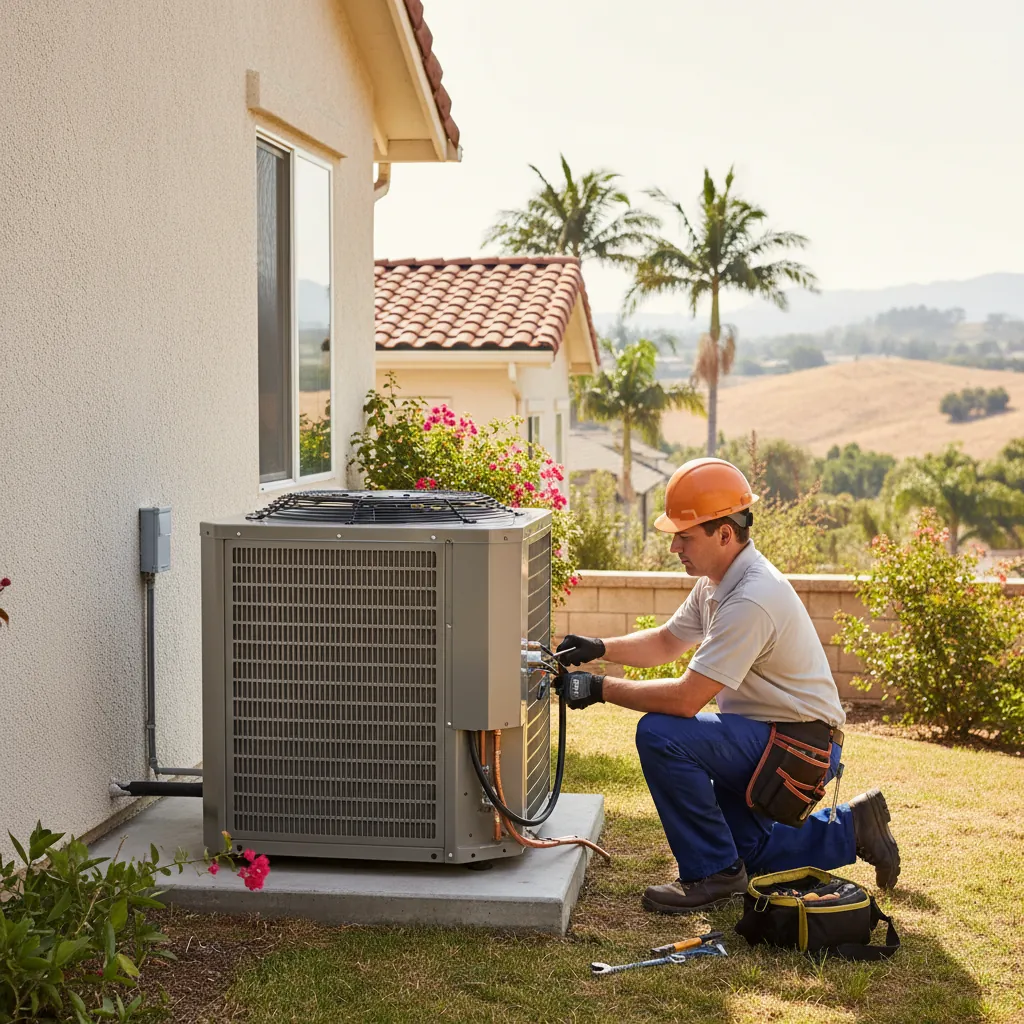
Replacement jobs start with sizing. A proper Manual J load calculation looks at insulation, windows, orientation and local design temperatures instead of copying the old unit's tonnage. The crew then removes the old equipment, sets the new condenser on a pad or bracket, installs the furnace or air handler, connects refrigerant lines, wiring, condensate drain and thermostat, and tests airflow and charge. Ducts often need sealing or replacement at the same time. Systems made since 2025 commonly use newer refrigerants such as R-454B or R-32. A straight swap often takes one to two days.
Housing and climate shape the choices. Many older LA homes have small attics, floor furnaces or wall heaters, so mini-splits or a new duct system may suit them better than one central unit. In the Valley, summer peaks over 100 degrees stress undersized equipment, while coastal homes may need only modest cooling. On hillside lots, condenser placement has to respect noise and setback rules. In San Antonio, long humid cooling seasons favor equipment that pulls moisture well, attic air handlers need good drain pans and float switches, and CPS Energy rates make efficiency a real factor in operating cost.
Replacing or adding HVAC equipment generally requires a mechanical permit, issued by LADBS, LA County, cities such as Pasadena and Burbank, or the San Antonio DSD. In California, many changeouts also trigger Title 24 requirements, which can include duct leakage testing verified by a HERS rater, so ask whether your job is covered. LADWP, SoCal Edison and CPS Energy have offered rebates on efficient equipment at various times; check what is open before you sign. Book replacements in spring or fall when crews are less rushed, and expect a final inspection after startup.
| Job | Typical range | What moves the price |
|---|---|---|
| Central AC replacement | $7,000 - $14,000 | Tonnage, efficiency rating, refrigerant type and whether the coil and line set are replaced too. |
| Split heat pump system | $9,000 - $18,000 | A heat pump replaces both AC and furnace; older homes may need electrical upgrades first. |
| Furnace replacement | $3,500 - $8,000 | Efficiency, attic versus closet location and any venting changes affect the labor. |
| Ductless mini-split, per zone | $3,500 - $7,500 | Line set length, wall versus ceiling heads and how many zones share one outdoor unit. |
| Duct replacement | $5,000 - $12,000 | House size, attic access and the insulation level of new ducts; HERS testing may apply in California. |
| Repair visit | $150 - $1,200 | Diagnostic fees are low; capacitors, blower motors and refrigerant leaks range widely in cost. |
Typical market ranges, not a quote. Your price depends on the house, the scope and the season; compare written quotes.
Type your ZIP code and we take you to the hvac page for your neighborhood. If we do not cover that ZIP yet, you go to the request form with it filled in.
We also match HVAC requests in 81 San Antonio neighborhoods.
Expect roughly $7,000 to $14,000 for a central AC replacement in LA or San Antonio, and full heat pump systems commonly cost more. Size, efficiency, refrigerant, duct condition and installation difficulty all move the price. Ductless systems are priced per zone. Compare bids with the same equipment level and scope.
Many contractors suggest replacing when the system is around 12 to 15 years old, needs a costly repair like a compressor, or runs on an older refrigerant that is expensive to recharge. If it is younger and the repair is modest, fixing it usually makes sense. Ask for written repair and replacement prices side by side.
Yes, in most cases. Building departments from LADBS and LA County to San Antonio DSD typically require a mechanical permit for equipment changes. In California, Title 24 rules may also require duct testing by a HERS rater. Your contractor should pull the permit and schedule the final inspection.
Heat pumps suit both climates because winters are mild. In Los Angeles they can replace an old gas furnace and AC with one system. In San Antonio they cool like a standard AC and give efficient heat on cold nights. Ask about electrical capacity and current rebates before deciding.
Once a year is common, with a cooling check before summer and a heating check in fall for systems used both ways. In San Antonio, a spring tune-up before the long cooling season is especially useful. Swap filters on a one to three month cycle and keep the condensate line clear to avoid leaks.
A straight replacement usually takes one to two days. New duct systems, heat pump conversions with electrical work or multi-zone mini-splits can take three to five days. Permits and inspections may add time before and after. Summer emergency jobs often wait longer for crews and equipment.
