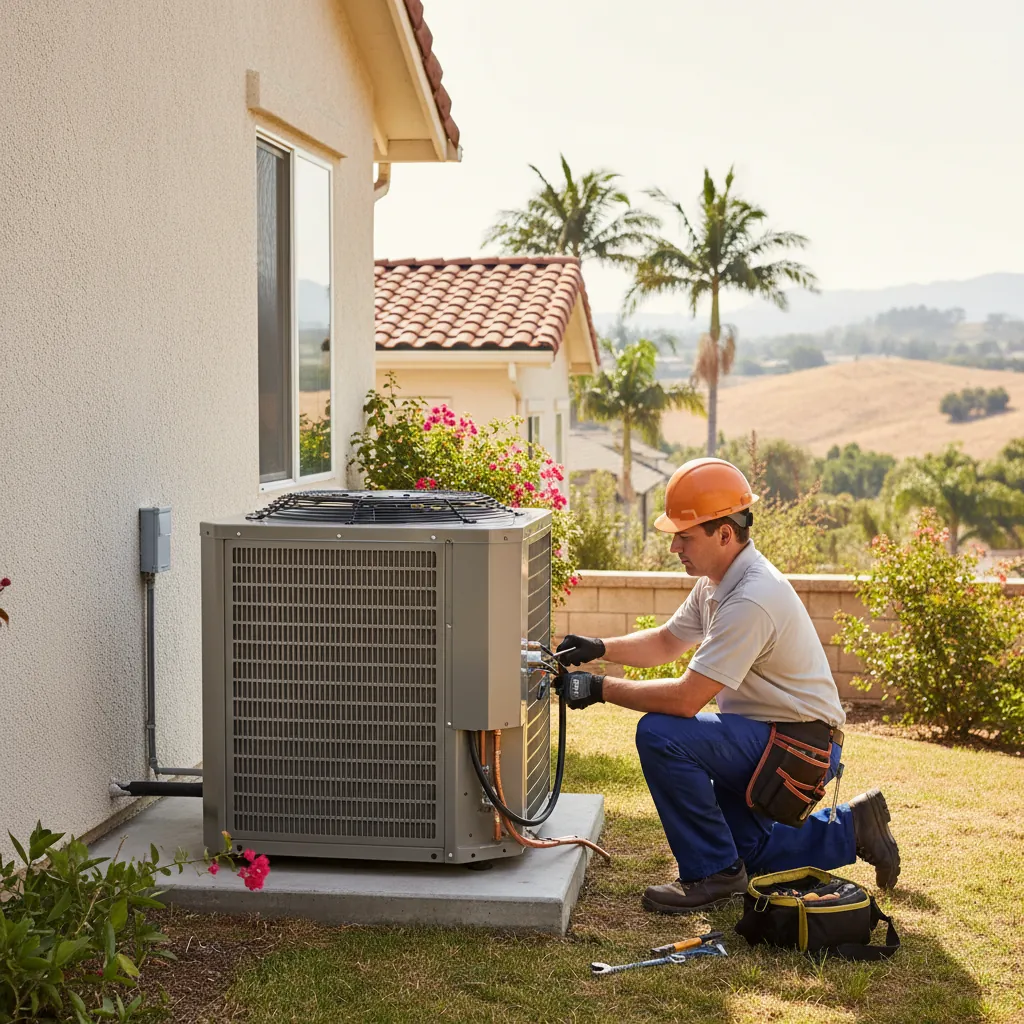
Typical Hancock Park costs, permit steps and timelines are below. When you are ready, describe your project and up to four local HVAC contractors serving Hancock Park will contact you. You compare and decide.
Maintaining indoor comfort in Hancock Park requires a delicate balance of modern climate control and respect for classic architecture. From the grand estates lining Rossmore Avenue to the charming residences near Larchmont Village, these historic properties demand specialized heating and cooling care. We connect you with local HVAC professionals who understand the unique structural and aesthetic requirements of Greater Los Angeles's historic homes.
Hancock Park’s flat basin terrain and high-canopy trees keep the streets beautiful, but the 1920s period-revival homes often feature original raised foundations with tight crawlspaces.
This makes routing modern ductwork highly complex, requiring specialized layout planning to avoid damaging plaster walls or compromising historic framing. Additionally, any major heating or cooling upgrade must navigate the strict permitting and historical preservation guidelines enforced by the Los Angeles Department of Building and Safety (LADBS).
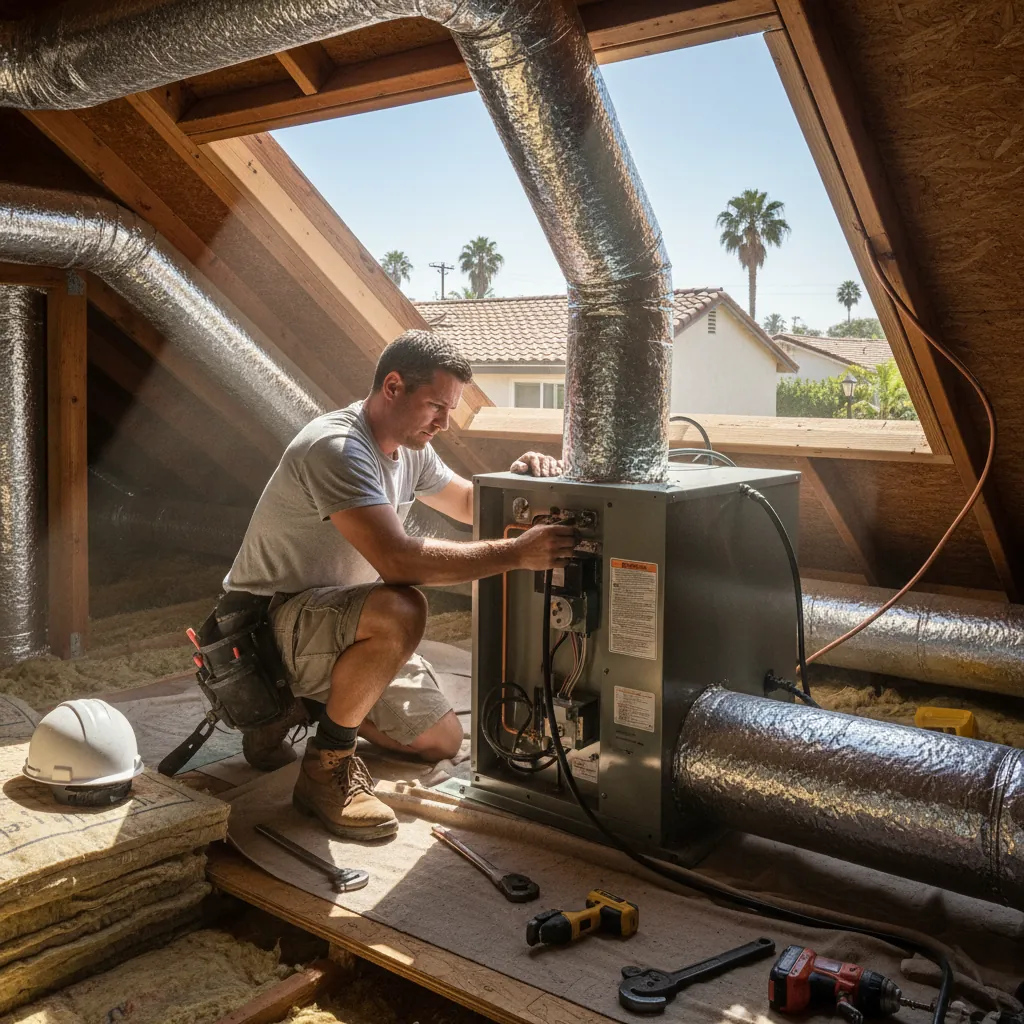
Reflects the complexity of installing high-efficiency, multi-zone heat pumps in 1920s homes with plaster walls and limited crawlspace access.
Cost varies depending on clearance levels under original raised foundations typical of the flat basin soils in 90004.
Includes standard single-stage or two-stage units, excluding any specialized historical preservation mounting or screening requirements.
Typical market ranges for the Greater Los Angeles area, not a quote or a guarantee. The price of your job depends on its scope, so ask each pro for a written estimate before you decide. Bars share one scale, so you can compare project sizes.
Conduct an on-site structural and ductwork integrity assessment in the crawlspace or attic.
Calculate exact heating and cooling loads tailored to 1920s plaster-and-lathe insulation properties.
Draft a system design that minimizes physical impact on historic interior finishes.
Submit comprehensive plans to the Los Angeles Department of Building and Safety (LADBS) for permit approval.
Install the new equipment, ensuring proper sealing of original plenums and modern duct runs.
Provide complete documentation and proof of installation to assist with your LADWP rebate filing.
ContractorPro.Leads doesn't do the work itself. We pass your Hancock Park project to up to four local HVAC contractors who take this kind of job, and you decide whether to hire any of them.
Whether your home overlooks the fairways of the Wilshire Country Club or sits on a quiet, tree-lined block steps from Larchmont Village, local climate control is about preserving both comfort and architectural value. The mild Mid-City weather means you rely on efficient heating during damp winter mornings and high-performance cooling during dry summer afternoons. HVAC contractors in our network are highly experienced with the structural nuances of homes in the 90004 ZIP code, ensuring modern equipment integrates seamlessly into historic spaces.
Tell us what you have in mind. We'll pass it to up to four local pros, and they'll contact you to talk it through.
The Los Angeles Department of Building and Safety (LADBS) typically issues simple, standard residential HVAC permits express online. However, if your home is within an HPOZ or requires structural modifications to support heavy attic units, plan review can take two to four weeks.
Yes, LADWP offers substantial rebates for qualifying energy-efficient central air conditioners and electric heat pumps.
Absolutely. Many homeowners near Larchmont Village opt for high-velocity duct systems or ductless multi-zone mini-splits. These modern systems bypass the need for large, invasive duct runs through historic framing and plaster.
While Hancock Park enjoys relatively mild weather, summer temperatures regularly climb into the 90s, and winter mornings can be surprisingly damp. A variable-speed heat pump offers the ideal balance of dehumidification, heating, and cooling for this specific microclimate.
Yes. Many 1920s homes sit on original raised foundations over flat basin soils, which can trap moisture in crawlspaces. Contractors must ensure that underfloor ductwork is thoroughly sealed and insulated to prevent moisture intrusion and maintain indoor air quality.
