Typical San Fernando costs, permit steps and timelines are below. When you are ready, describe your project and up to four local HVAC contractors serving San Fernando will contact you. You compare and decide.
Living on the sun-baked floor of the northeast San Fernando Valley means relying heavily on a high-performing cooling system to handle intense summer heat waves. Our platform connects you with experienced local HVAC professionals who understand the unique demands of the City of San Fernando's climate and residential layouts. From historic bungalows near Brand Boulevard to newer properties, we help you find the right specialist to keep your home running efficiently year-round.
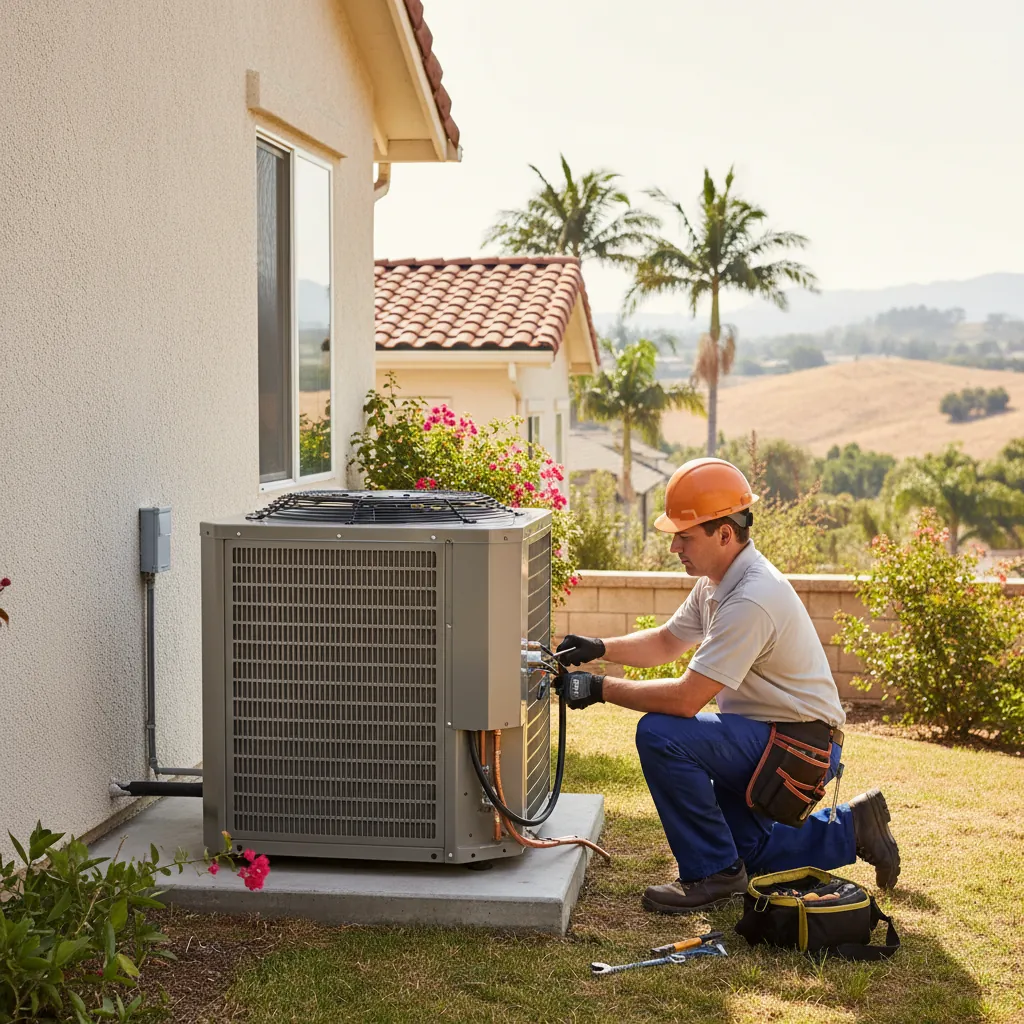
The tight, flat grid of modest lots in San Fernando means HVAC condenser placement requires careful planning to respect property lines and minimize noise for neighbors.
Additionally, the dry, dust-heavy winds of the northeast Valley floor, combined with alluvial clay soils that can cause minor shifting of outdoor equipment pads, demand rugged, properly anchored installations. System designs must also comply strictly with Southern California Edison (SCE) efficiency standards and local building codes to handle sustained triple-digit summer temperatures without overloading the local grid.
Costs depend on the SEER2 efficiency rating selected to combat hot Valley summers and the accessibility of narrow side-yard layouts common in San Fernando.
Includes indoor and outdoor units; pricing varies by capacity, ductwork modifications, and compatibility with SCE rebate programs.
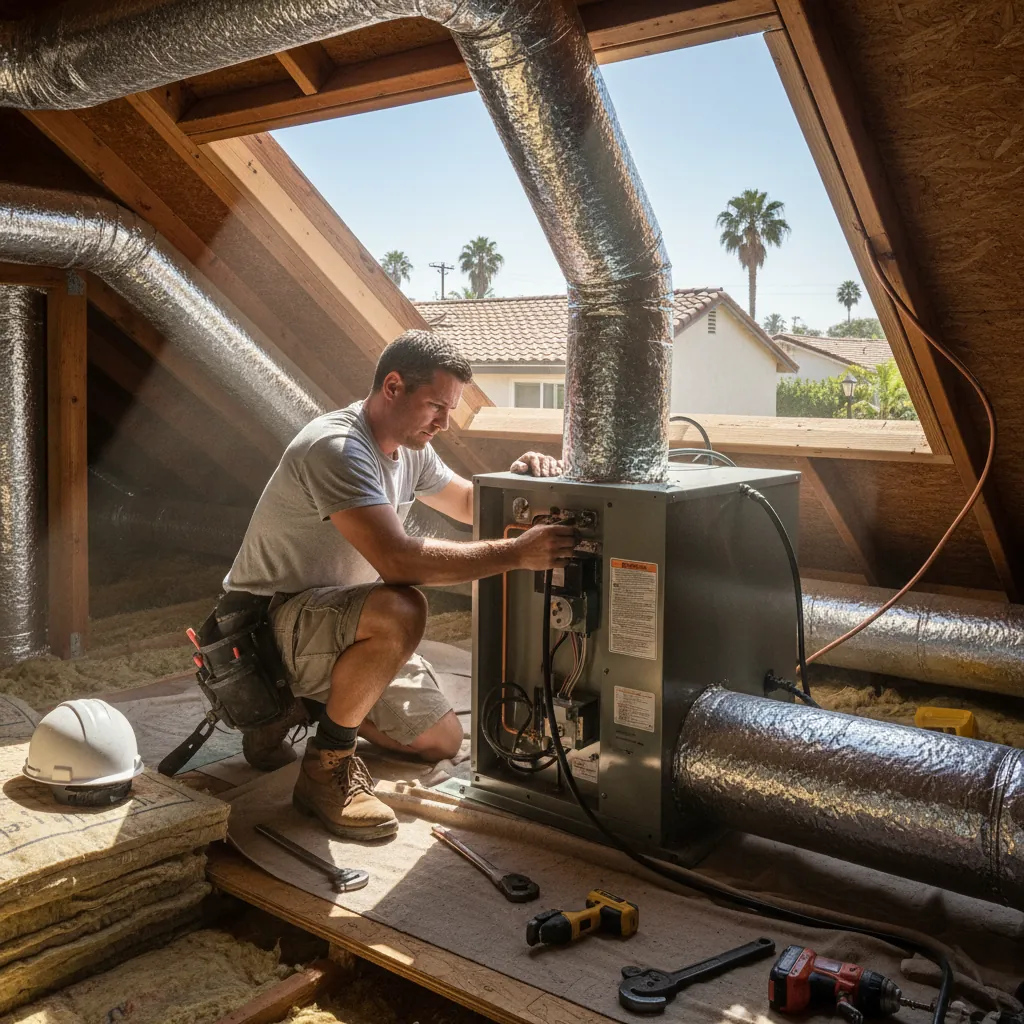
Older homes near Brand Blvd often require updated, tightly sealed R-8 insulated ducts to prevent cold air loss in unconditioned attic spaces during heat waves.
Regular service is crucial ahead of the summer heat to clean out fine dust and alluvial soil particles from the outdoor coils.
Typical market ranges for the Greater Los Angeles area, not a quote or a guarantee. The price of your job depends on its scope, so ask each pro for a written estimate before you decide. Bars share one scale, so you can compare project sizes.
In-home heating and cooling load calculation to match the system to your layout
Verification of existing ductwork integrity and insulation values
Secure mounting of the outdoor condenser on a level, vibration-isolated pad
Precise refrigerant charging and system evacuation to manufacturer specifications
City of San Fernando permit filing and preparation for the required HERS duct leakage testing
Final system walkthrough and explanation of the thermostat program and maintenance needs
ContractorPro.Leads doesn't do the work itself. We pass your San Fernando project to up to four local HVAC contractors who take this kind of job, and you decide whether to hire any of them.
Whether your home sits on a quiet street near the green spaces of Las Palmas Park or closer to the busy commercial corridors along San Fernando Road and Brand Boulevard, local climate realities remain the same. The compact neighborhood layouts typical of this historic independent city mean that outdoor condenser units are often tucked into narrow side yards, making quiet operation and precise duct sizing essential for indoor comfort.
Tell us what you have in mind. We'll pass it to up to four local pros, and they'll contact you to talk it through.
Yes, all HVAC replacements require a permit from the City of San Fernando Community Development Department, Building & Safety. This ensures the installation meets Title 24 energy-efficiency standards and local safety codes.
Over-the-counter permit issuance is often available for standard residential changeouts at the City Hall department, though scheduling the final inspector and the mandatory third-party HERS test usually adds 5 to 10 business days post-installation.
Electricity is provided by Southern California Edison (SCE), which offers substantial rebates for qualifying energy-efficient heat pumps and smart thermostats. While the City of San Fernando manages its own water utility, electrical incentives flow through SCE.
San Fernando's alluvial fan soils contain clay pockets that shrink and swell with moisture changes. Local pros install outdoor condensers on reinforced, level concrete pads or heavy-duty composite risers to prevent the unit from tilting and straining the copper lines.
Split-system central air conditioners or modern electric heat pumps are highly effective on the Valley floor. Heat pumps are increasingly popular as they provide both powerful summer cooling and efficient winter heating without relying on gas lines.
Given the dry climate, occasional Santa Ana winds, and dust on the Valley floor, filters should be checked monthly and replaced every 2 to 3 months—or more frequently if you live near busy corridors like San Fernando Road.
