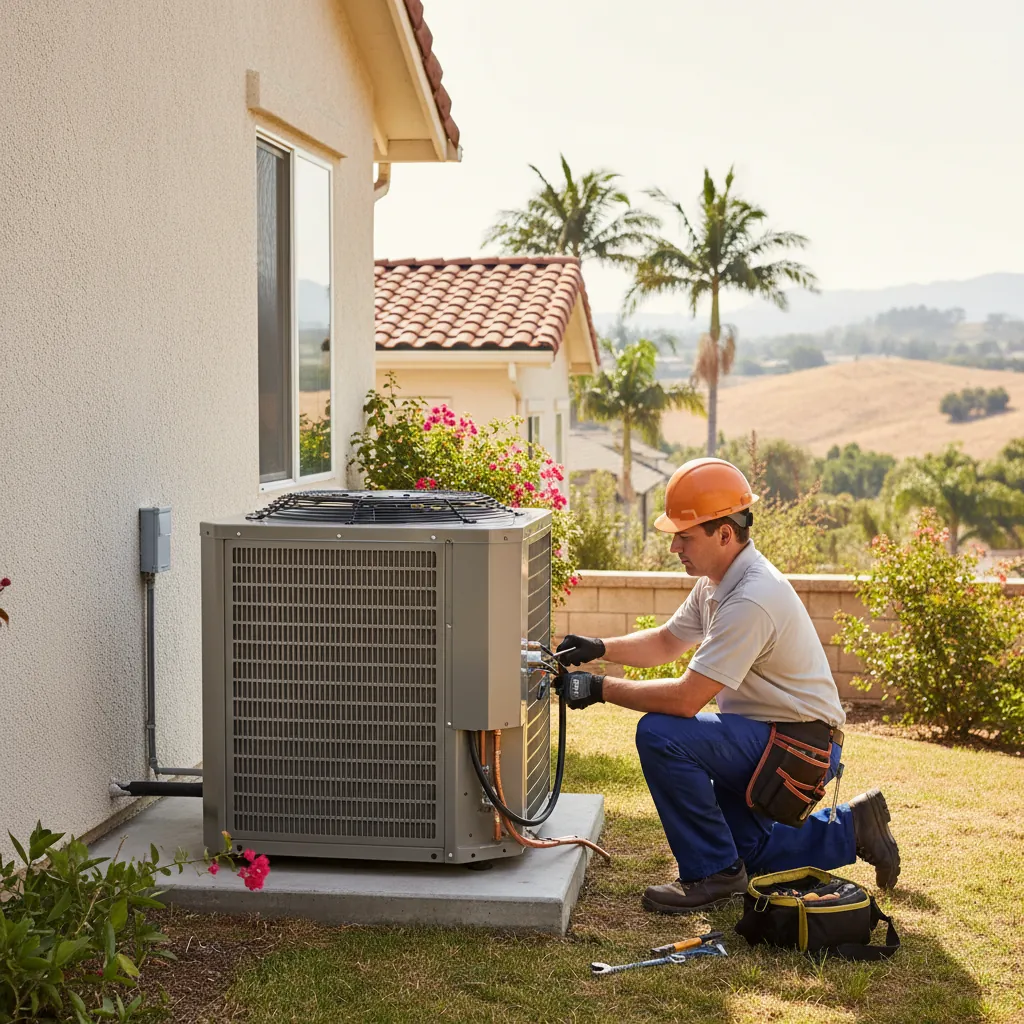
Typical Shadow Hills costs, permit steps and timelines are below. When you are ready, describe your project and up to four local HVAC contractors serving Shadow Hills will contact you. You compare and decide.
Nestled in the semi-rural foothills between the Verdugo Mountains and Hansen Dam, Shadow Hills properties require heating and cooling systems capable of handling extreme daily temperature swings. From expansive ranch-style properties with long ductwork runs to hillside homes exposed to dry canyon winds, these specialists keep your indoor climate perfectly balanced.
The unique terrain of Shadow Hills introduces specific HVAC challenges, particularly because many properties are mapped within the City's Very High Fire Hazard Severity Zone.
Outdoor air conditioning condensers must be carefully sited to maintain required brush clearances, and units frequently combat fine decomposed granite dust carried by seasonal winds through La Tuna Canyon. Furthermore, systems in these dry, fire-prone foothill zones require highly robust filtration configurations to keep indoor air clean when outdoor quality drops.
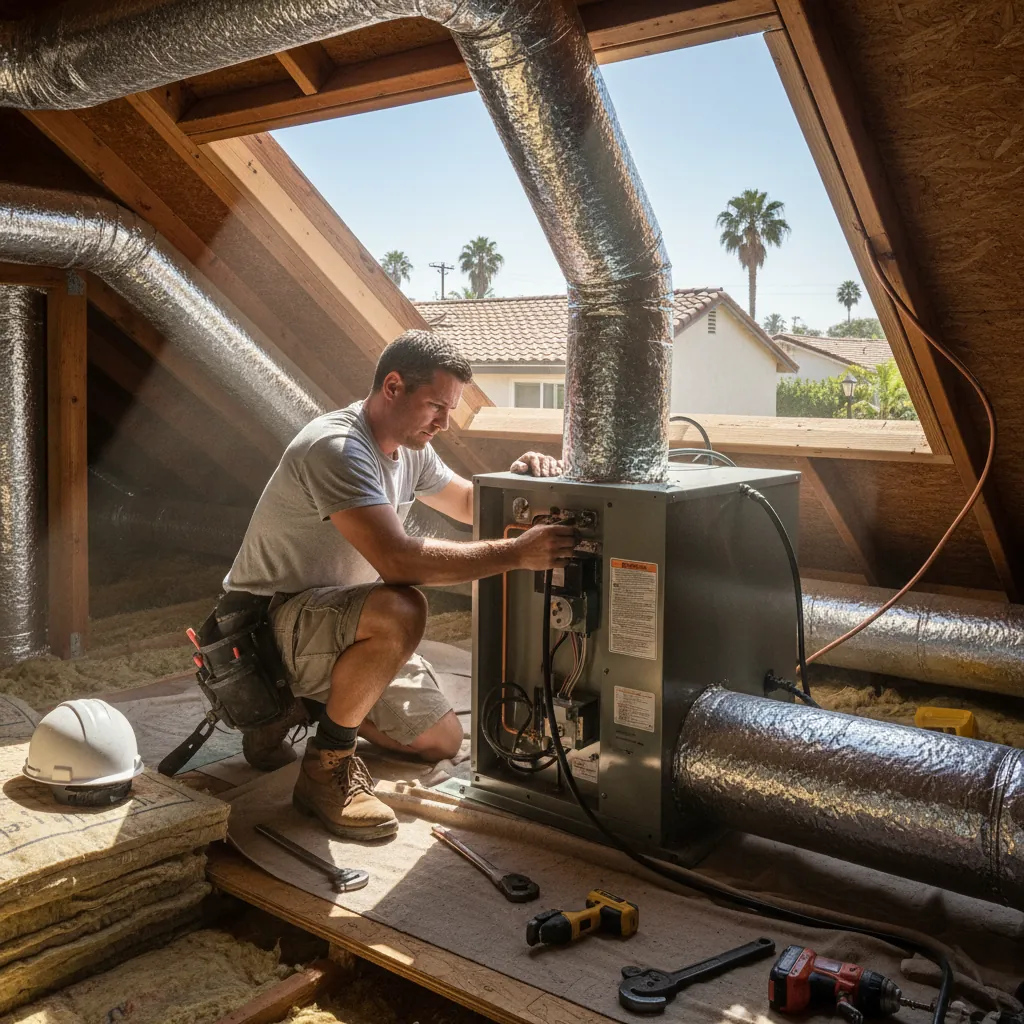
Pricing varies based on the SEER2 efficiency rating selected and physical accessibility on steep or terraced hillside properties.
A popular choice for LADWP rebate eligibility; total cost depends on the tonnage required to heat and cool large ranch homes.
An essential add-on to protect your system and lungs from the high dust volume near local horse trails and dry washes.
Commonly required in older Shadow Hills homes where pests or soil shifting have compromised duct seals in crawlspaces.
Typical market ranges for the Greater Los Angeles area, not a quote or a guarantee. The price of your job depends on its scope, so ask each pro for a written estimate before you decide. Bars share one scale, so you can compare project sizes.
Perform a Manual J load calculation tailored to canyon microclimates and solar exposure.
Inspect existing ductwork in crawlspaces for dry rot or rodent access common on rural lots.
File all necessary permit applications with the Los Angeles Department of Building and Safety (LADBS).
Install the condenser on a level, dust-resistant pad with appropriate wildfire safety clearances.
Calibrate thermostatic controls and configure multi-zone dampers for large floor plans.
Provide finalized documentation for local utility rebate submissions and manufacturer warranties.
ContractorPro.Leads doesn't do the work itself. We pass your Shadow Hills project to up to four local HVAC contractors who take this kind of job, and you decide whether to hire any of them.
Whether your home sits on a flat, sandy lot near Sunland Blvd or is tucked away on a larger equestrian parcel off La Tuna Canyon Road, your cooling and heating needs are shaped by the local geography. Proximity to the Hansen Dam Recreation Area means afternoon breezes often carry extra dust and pollen, making filter performance critical. Local contractors understand these microclimates and can recommend heavy-duty, high-efficiency equipment built to withstand the demanding local conditions.
Tell us what you have in mind. We'll pass it to up to four local pros, and they'll contact you to talk it through.
Yes, the City of Los Angeles Department of Building and Safety (LADBS) requires a permit for all HVAC replacements to ensure electrical safety, structural integrity, and Title 24 energy compliance.
Most standard residential HVAC replacements qualify for Express Permits through the LADBS online system, which can be secured instantly by your licensed contractor. Final physical inspections are usually scheduled within a week of project completion.
LADWP offers significant rebates for energy-efficient upgrades, including incentives for qualifying high-efficiency heat pumps and smart thermostats, which help offset the upfront cost of modernization on larger properties.
Decomposed granite dust and dry canyon debris can clog condenser coils rapidly, forcing your system to run longer and hotter. Regular coil cleaning and quarterly filter changes are highly recommended in Shadow Hills to prevent premature compressor failure.
Yes, properties within these zones must maintain strict defensible space. Outdoor units must be kept clear of dry brush, and contractors must ensure all electrical hookups and lines meet strict wildland-urban interface safety codes.
