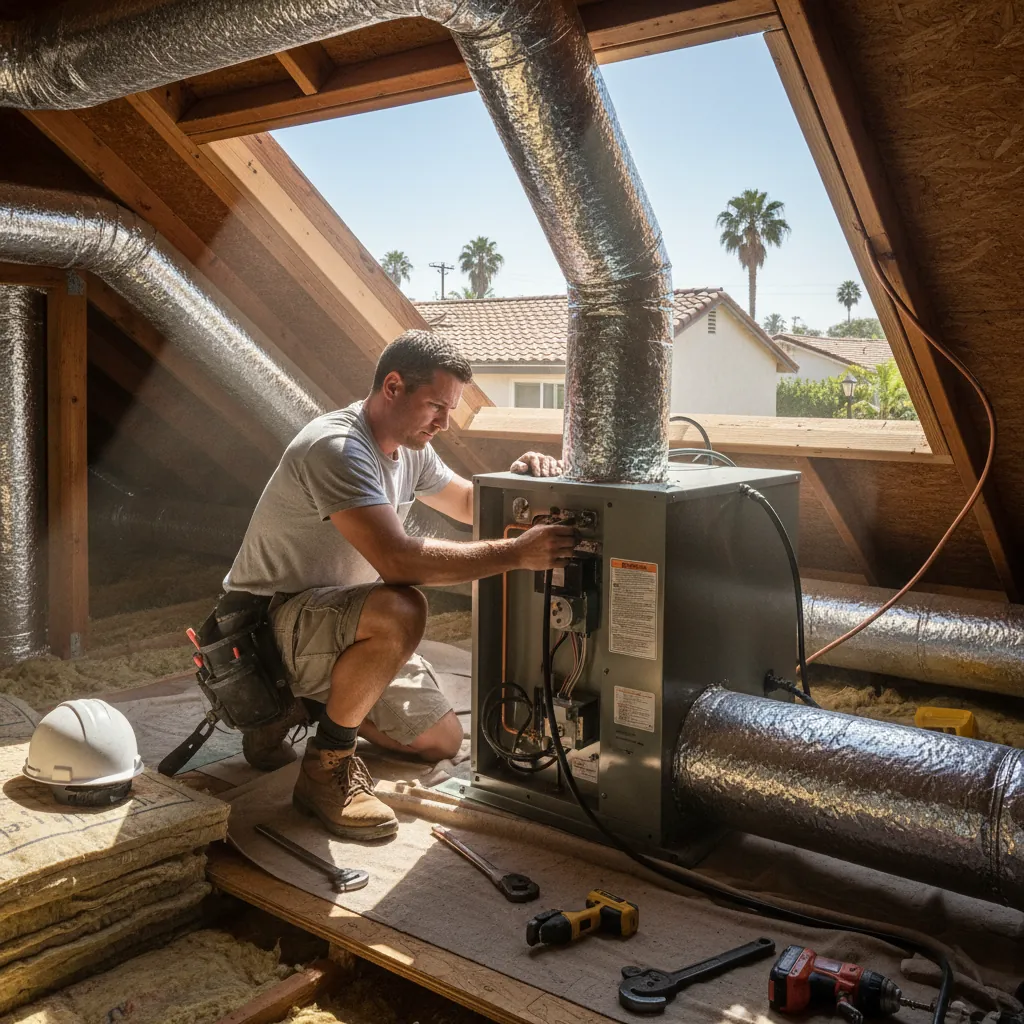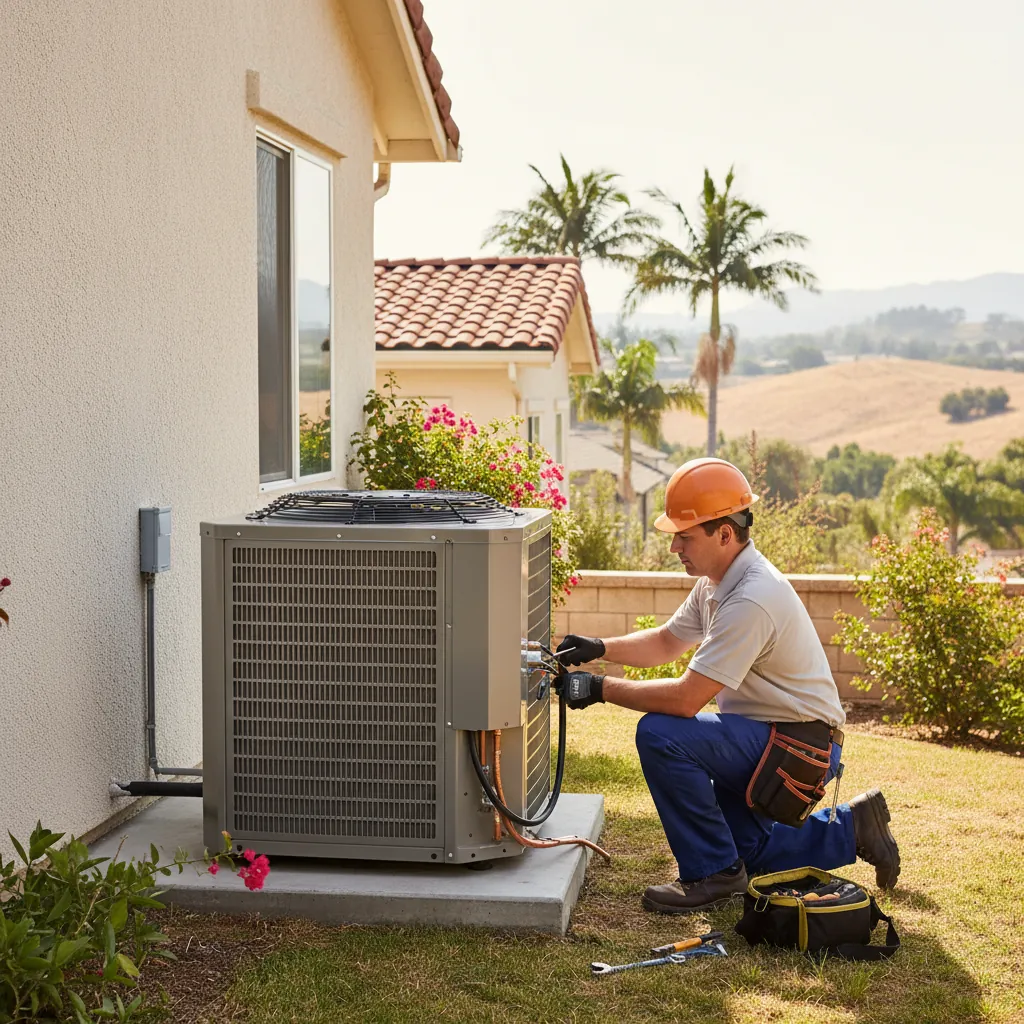
From the bustling media studios to the quiet residential streets of the 91504, 91505, and 91506 ZIP codes, keeping your home cool during our intense, dry San Fernando Valley summers is a necessity. Whether you own a classic mid-century home near Downtown Burbank or a property climbing into the northern foothills, reliable climate control is key to indoor comfort. We connect you with verified local HVAC professionals who understand the unique demands of our local climate.
Get free quotesBurbank's geography presents distinct challenges for HVAC systems. On the flat valley floor, heavy clay soils shrink and swell dramatically with seasonal moisture changes, which can cause concrete condenser pads to crack or tilt, putting strain on refrigerant lines. Meanwhile, homes situated on the northern foothill slopes face increased solar exposure and winds, requiring precise load calculations and zone-control systems to handle the uneven heating. Compounded by scorching, dry summer temperatures, your system needs to be perfectly calibrated for both the terrain and the soil beneath it.
Whether you are browsing the retro shops along Magnolia Blvd, heading home from a long day at the nearby media studios, or living close to the vibrant heart of Downtown Burbank, your home should be a sanctuary from the outdoor heat. Burbank's distinct architectural mix—ranging from historic bungalows to modern hillside estates—means a one-size-fits-all HVAC approach does not work. Local technicians specialize in retrofitting older homes with ductless mini-splits and optimizing central air systems for maximum efficiency in our specific microclimates.
Yes, any new HVAC installation or system replacement requires a permit from the City of Burbank Community Development (Building Division). Standard residential mechanical permits can often be issued over the counter or online within a few business days, though complex installations or structural changes may require plan checks taking up to two weeks.
Absolutely. Burbank Water and Power (BWP) offers attractive rebates for qualifying high-efficiency central air conditioners, heat pumps, and smart thermostats. Upgrading not only lowers your monthly electric bill during peak summer months but also aligns with local energy conservation goals.
Cost factors in Burbank often include the site preparation required for our local terrain. On the flat valley floor, technicians may need to pour reinforced concrete pads or use specialized leveling risers to prevent the heavy clay soil from shifting your outdoor unit. For foothill properties to the north, multi-story zoning or crane lifts for steep lots can also influence the final installation estimate.