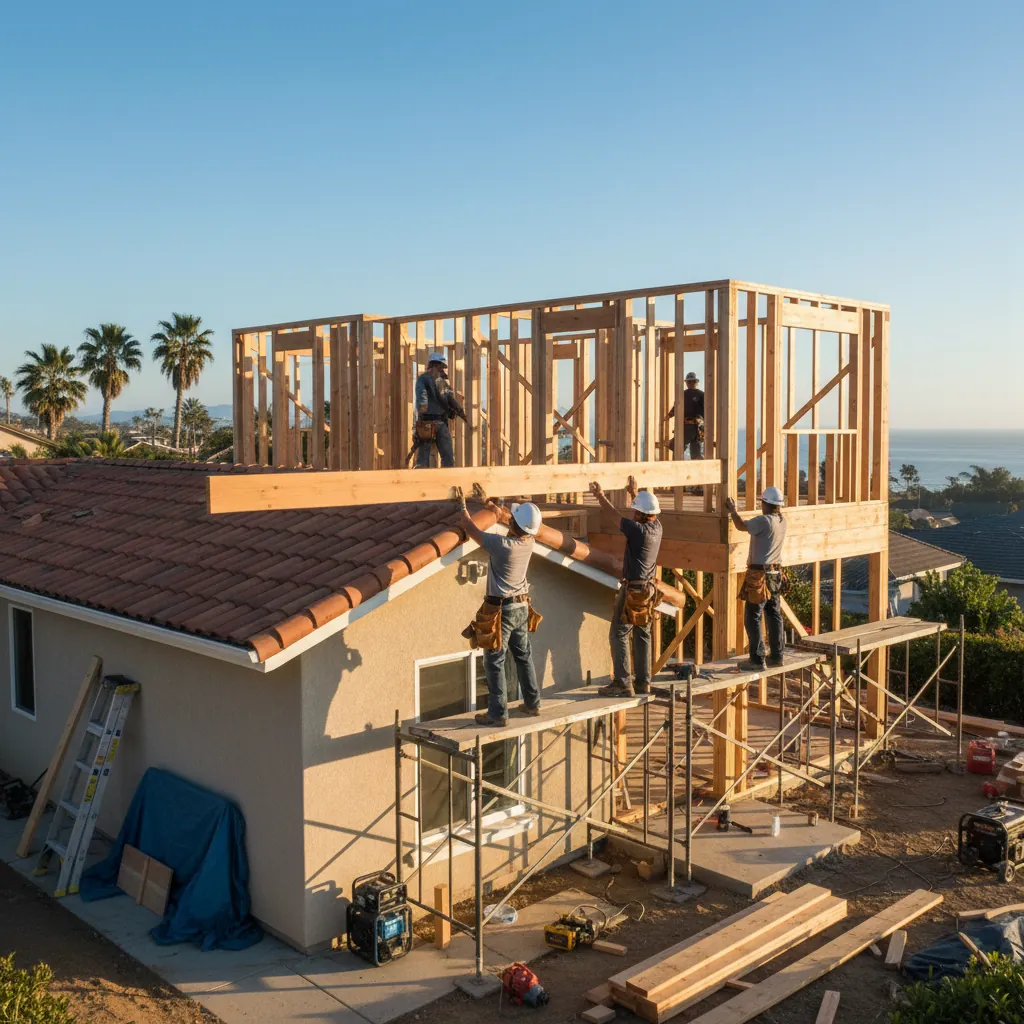
Typical Atwater Village costs, permit steps and timelines are below. When you are ready, describe your project and up to four local general contractors serving Atwater Village will contact you. You compare and decide.
Initial site assessment, including property boundary verification and soil stability review
Drafting of architectural plans tailored to Atwater Village zoning and historic character
Submitting plans and securing structural permits through the Los Angeles Department of Building and Safety (LADBS)
Site preparation and foundation reinforcement optimized for alluvial soil profiles
Framing, utility rough-ins, and local inspector walkthroughs
Final finishes, LADWP-compliant plumbing installations, and obtaining the certificate of occupancy
Reflects the premium structural framing and foundation reinforcement required for Atwater's soft river soils.
Varies by size and finish level; includes LADBS permitting costs and basic utility trenching.
Reflects retrofitting older plumbing and electrical systems common in 1920s builds to meet modern City of Los Angeles standards.
Crucial for older homes on alluvial soil to stabilize the structure against shifting and seismic activity.
Typical market ranges for the Greater Los Angeles area, not a quote or a guarantee. The price of your job depends on its scope, so ask each pro for a written estimate before you decide. Bars share one scale, so you can compare project sizes.
Homeowners along the tree-lined streets of Atwater Village often balance the charm of historic 1920s Spanish and Tudor homes with the need for modern structural updates. Whether you are expanding a classic bungalow near Glendale Boulevard or building a detached ADU, finding a contractor who understands local building codes is essential. We connect you with independent local pros who specialize in preserving neighborhood character while updating your home for modern comfort.
Because Atwater Village sits on flat terrain along the east bank of the Los Angeles River, the underlying ground consists of soft alluvial river soils.
This shifting soil profile requires specialized foundation engineering and detailed soil reports for any major structural additions or seismic retrofitting. Additionally, the region’s dry, warm summers demand climate-resilient framing and materials that resist thermal expansion and drought-induced soil settling.
ContractorPro.Leads doesn't do the work itself. We pass your Atwater Village project to up to four local general contractors who take this kind of job, and you decide whether to hire any of them.
From the bustling commercial strip of Glendale Boulevard to the quiet residential streets bordering the Los Angeles River Greenway, Atwater Village has a distinct, community-focused layout. Proximity to Griffith Park brings beautiful views but also strict environmental and fire-safety building considerations for properties bordering the park's foothills. Navigating these micro-local nuances, from parking constraints on narrow residential avenues to hauling materials near sensitive river-adjacent zones, requires a contractor who knows the area's specific physical and logistical landscape.
Tell us what you have in mind. We'll pass it to up to four local pros, and they'll contact you to talk it through.
For straightforward interior remodels, plans may be approved over-the-counter via LADBS 'Express Permit' services. However, major structural work, additions, or ADUs typically require full plan check reviews, which can take anywhere from 8 to 16 weeks depending on current department backlogs.
Because Atwater Village sits on the river's historic flood basin, the soil has lower load-bearing capacity. Your contractor may need to pour deeper concrete footings, use engineered grade beams, or conduct a soil test, which can add $3,000 to $10,000 to the foundation phase of an addition compared to bedrock areas.
While Atwater Village is not currently a designated Historic Preservation Overlay Zone (HPOZ) like some adjacent neighborhoods, many blocks have active community preservation guidelines. Local pros prioritize keeping the exterior aesthetic, such as original stucco finishes or rooflines, consistent with classic 1920s architecture while modernizing the interior.
Yes. When upgrading appliances, HVAC, or plumbing during a remodel, you can apply for LADWP rebates on energy-efficient heat pumps, low-flow toilets, and smart irrigation. Your contractor can help ensure you select rebate-eligible fixtures.
The ideal time to start excavation and foundation work is during the dry season, from late spring through autumn. This prevents rain from pooling in open trenches in Atwater's low-lying flat terrain, which can delay structural concrete pours.
