When triple-digit summer heat bears down on Round Rock, under-insulated attics turn homes into heat traps, spiking energy bills across 78664 and 78681. Adding high-performance attic insulation keeps conditioned air inside your living spaces while protecting your home during sudden Central Texas winter freezes. We connect you with experienced, independent insulation contractors in Round Rock who understand our local building envelopes.
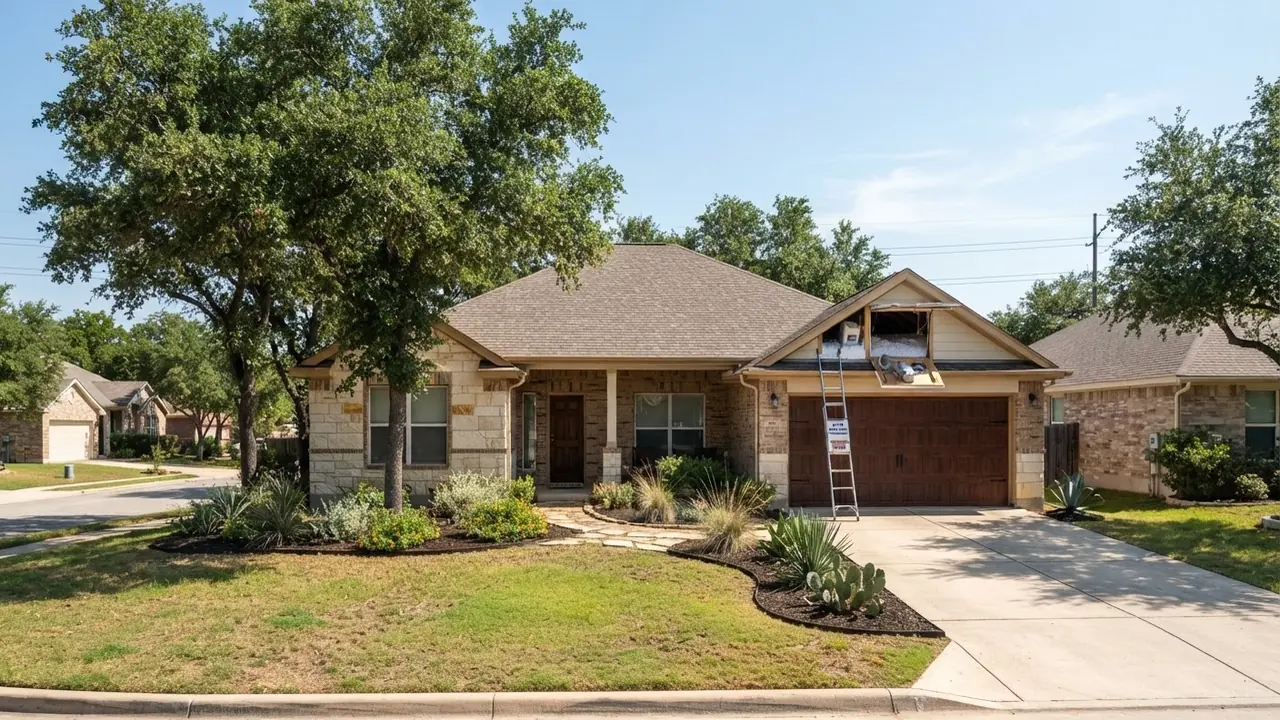
Round Rock’s humid subtropical climate subjects roof spaces to sustained summer temperatures exceeding 140°F, while winter cold snaps can rapidly drop below freezing.
Furthermore, the region's mixed Blackland clay and limestone bedrock causes seasonal foundation movement that subtly pulls drywall seams and ceiling penetrations apart, allowing hot attic air to bypass standard insulation batts. Without targeted air sealing and blown-in material built to R-38 or R-49 standards, your cooling system runs constantly to battle convective heat transfer through the ceiling.
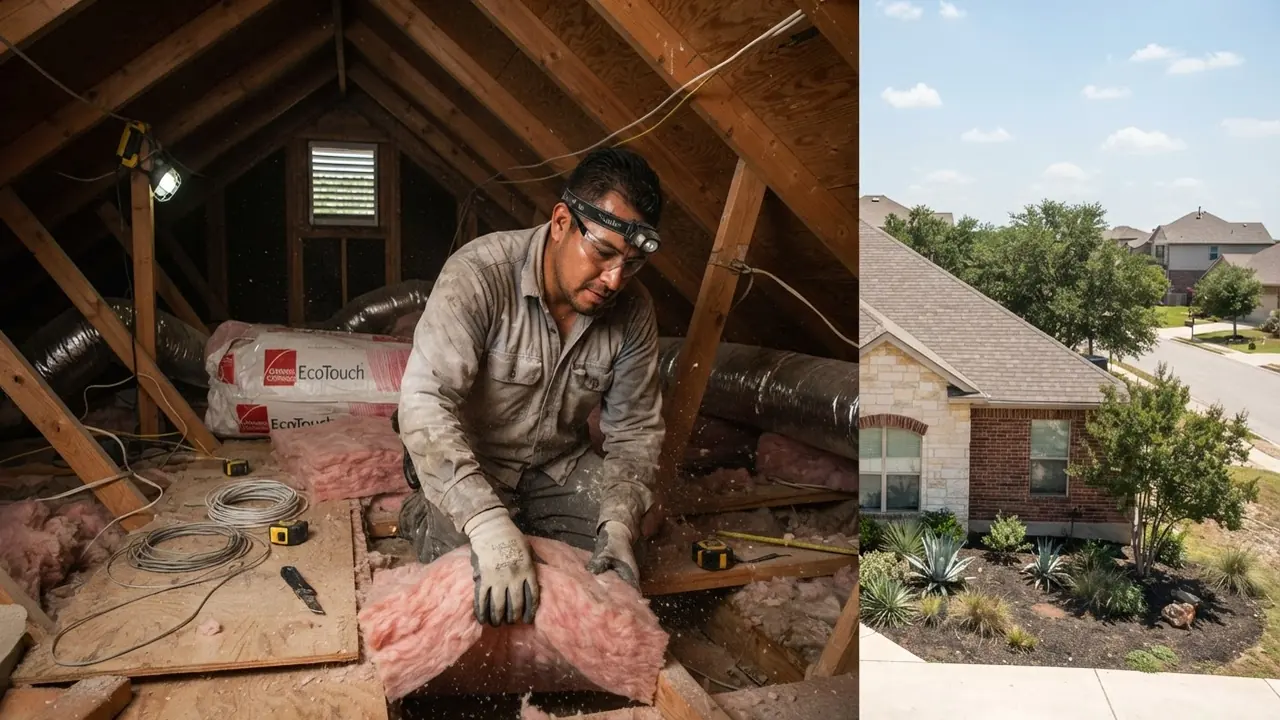
Typical for adding 6–8 inches over aged, settled material in a standard 1,800 sq. ft. Round Rock home to achieve R-38 to R-49.
Required when existing insulation is contaminated by pests, compressed by storage, or damaged by past roof leaks.
Seals drywall top plates, chases, and can lights prior to blowing material; essential for homes subject to clay foundation settling.
Applied to the underside of roof rafters to reflect radiant solar energy before it reaches the attic floor.
Typical market ranges for the Greater Austin area — not a quote or guarantee. Your actual price depends on scope; compare free quotes from local pros.
Comprehensive attic thermal inspection and existing insulation depth audit
Air sealing of plumbing stacks, electrical penetrations, and ceiling junction boxes
Installation of rafter baffles (accu-vents) to keep soffit intake vents clear
Constructing protective heat shields around recessed light fixtures and B-vent flues
Blowing loose-fill fiberglass or cellulose to specified R-38 or R-49 depth markers
Weatherstripping the attic hatch opening and installing an insulated access cover
ContractorPro.Leads is a matching service and doesn't do the work itself. We pass your Round Rock request to a few local companies that take this kind of job, and you decide whether to hire any of them.
From established single-story brick homes near Old Settlers Park and the US-79 corridor to newer two-story builds near Kalahari Resort and Dell Diamond, residential properties in Round Rock face intense thermal loading. Local contractors evaluate the specific roof pitch, soffit ventilation, and existing fiberglass or cellulose levels throughout 78664 and 78681 to recommend durable, climate-appropriate retrofits.
Connect with experienced Round Rock insulation contractors today to book your attic inspection and start lowering your monthly energy bills.
Routine insulation top-offs and retrofits do not typically require a building permit from City of Round Rock Building Inspections. However, if your project involves reconfiguring ductwork, modifying roof framing, or altering electrical systems, permits may be necessary. Independent pros in your area can advise on code compliance for your specific home.
Round Rock falls in Climate Zone 2. Energy experts and local building standards recommend an attic rating between R-38 (approx. 12–14 inches of blown fiberglass) and R-49 (approx. 16–18 inches). Achieving R-49 provides the best defense against Central Texas summer heat radiating into your ceiling drywall.
Yes, many Round Rock homes receive electric delivery through Oncor, which often provides residential energy efficiency incentives for documented ceiling insulation improvements. Contractors in our network can help provide the pre- and post-installation documentation required to apply for eligible rebates.
Late fall through early spring is the ideal window. Attic temperatures during Round Rock summers frequently surpass 130°F, making installation hazardous and slower. Completing the project between November and April ensures your thermal barrier is ready before the first 90-degree days arrive in May.
Round Rock's Blackland clay expands when wet and shrinks during summer droughts, causing slight foundation and framing movement. This movement creates hairline air bypasses around attic drywall seams and ceiling light fixtures. Professional air sealing with expandable foam stops this air leakage before new insulation is blown in.
