Living in San Marcos means managing intense triple-digit Hill Country summers alongside damp river-valley humidity and sudden winter freezes. Upgrading your home's thermal barrier protects your living space from extreme heat transfer while easing the burden on your air conditioning. We connect you with experienced, independent insulation contractors across 78666 who understand the exact energy-efficiency needs of Central Texas homes.
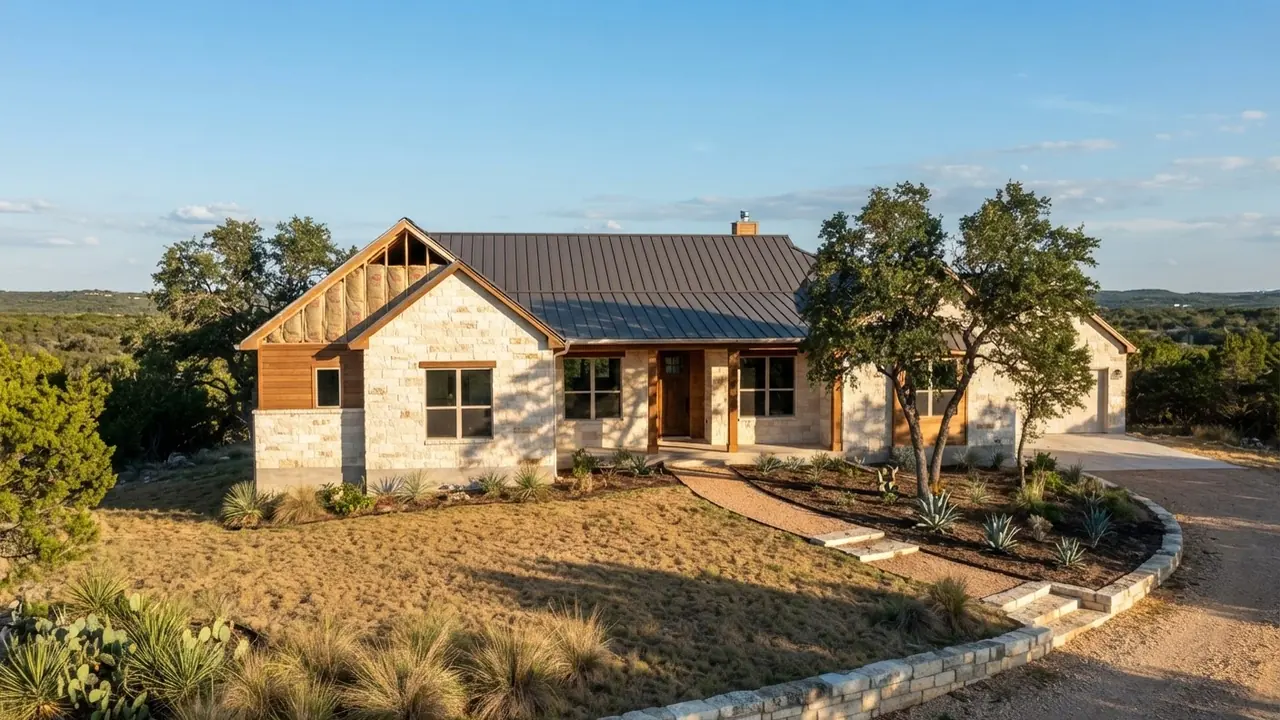
San Marcos rests along a geological transition where Blackland clay meets Edwards limestone hills, creating microclimates where humidity from the spring-fed San Marcos River collides with relentless 100°F summer sun.
Unconditioned attics across 78666 routinely reach 140°F to 150°F, causing old fiberglass batt insulation to degrade, settle, and allow heat to radiate directly through ceilings. Without proper air sealing, high humidity and temperature swings can also trap moisture against framing during damp spring rains and flash flood conditions.
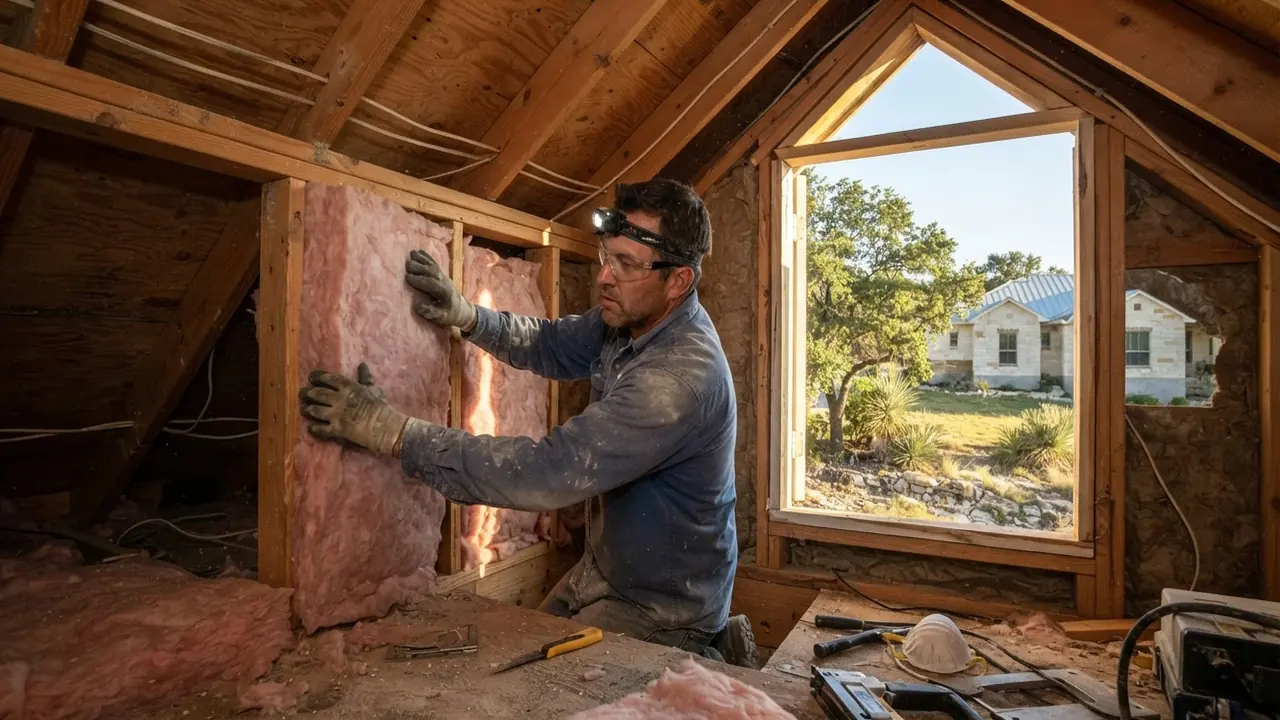
Typical for standard 1,200 to 1,800 sq. ft. San Marcos homes adding 6 to 10 inches of blown fill over existing clean insulation.
Includes commercial HEPA vacuum removal of deteriorated fiberglass or pest waste, comprehensive air sealing, and full fresh blow.
Creates a semi-conditioned, sealed attic space; ideal for Hill Country homes with complex rooflines or attic-based ductwork.
Seals major thermal bypasses and ensures soffit intake vents remain open to manage humid river-valley airflow.
Typical market ranges for the Greater Austin area — not a quote or guarantee. Your actual price depends on scope; compare free quotes from local pros.
Perform a complete attic inspection and thermal scan to locate air leaks and gaps
Safely extract and dispose of contaminated, compressed, or rodent-damaged material
Air-seal all ceiling penetrations, electrical wiring holes, and HVAC registers
Install rafter vent baffles and soffit dams to maintain continuous attic ventilation
Blow in premium cellulose or fiberglass to achieve uniform R-38/R-49 depth markers
Insulate and weatherstrip the attic access hatch or pull-down ladder cover
ContractorPro.Leads is a matching service and doesn't do the work itself. We pass your San Marcos request to a few local companies that take this kind of job, and you decide whether to hire any of them.
From mid-century ranch homes near the San Marcos River and historic properties surrounding Texas State University to newer subdivisions along the Tanger Outlets corridor, local housing stock varies widely in architectural framing and ventilation needs. Local pros evaluate each property's specific roofline, attic access, and ductwork configuration to recommend the most effective insulation strategy.
Ready to lower your energy bills and keep your home cool through the Texas summer? Request a free quote to connect with experienced attic insulation contractors in San Marcos today!
For Central Texas (Climate Zone 2/3), local building standards recommend an attic insulation depth of R-38 to R-49, which translates to roughly 12 to 16 inches of blown-in cellulose or fiberglass. Many older homes in 78666 have settled down to 4 to 6 inches, resulting in major energy loss.
Standard blown-in insulation top-offs generally do not require a permit from the City of San Marcos Planning & Development Services. However, if your project involves converting your attic into an unvented spray foam assembly or relocating gas appliances and electrical circuits, a permit and inspection may be required.
Yes, homeowners serviced by the City of San Marcos Electric Utility may be eligible for residential energy efficiency rebates when upgrading attic insulation to current recommended R-values. Local contractors can provide the necessary invoices and documentation for your application.
Blown-in cellulose or fiberglass on the attic floor is the most cost-effective option for keeping ceiling temperatures cool in summer. Spray foam applied directly to the underside of the roof deck is preferable if your HVAC air handler and ducts are in the attic, as it brings the equipment into a conditioned envelope.
Elevated humidity from the San Marcos River basin can cause unsealed attics to accumulate condensation during humid seasonal shifts. When combined with extreme attic heat, paper backings on old batt insulation can deteriorate and trap moisture, making modern loose-fill materials and dedicated air sealing a superior long-term choice.
