Nestled in the rolling Hill Country, Dripping Springs homes face brutal summer heatwaves and sharp winter freezes that push cooling and heating systems to the brink. Whether you need to replenish settled blown-in attic material or upgrade to modern spray foam insulation, we connect you with local contractors in 78620. Get fast, reliable quotes from independent insulation specialists who understand the demands of central Texas architecture.
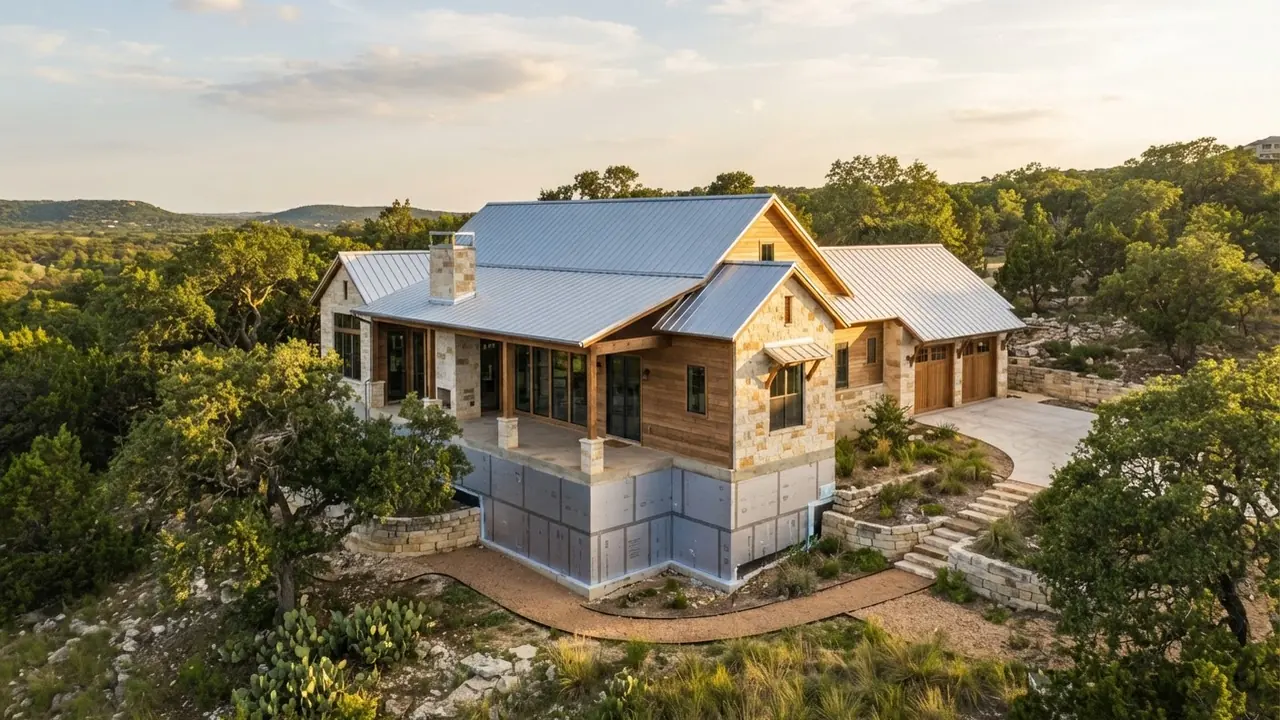
Dripping Springs sits on thin, rocky soil and Edwards limestone, where elevated topography and intense solar exposure routinely drive attic temperatures above 140°F during triple-digit summers.
Meanwhile, winter blue northers bring severe overnight freezes that threaten attic-run PEX or copper plumbing across sprawling ranch layouts. Without an airtight thermal boundary and adequate R-value, radiant heat pours through roof decking, driving up summer electric bills and leaving living spaces drafty during Hill Country freeze events.
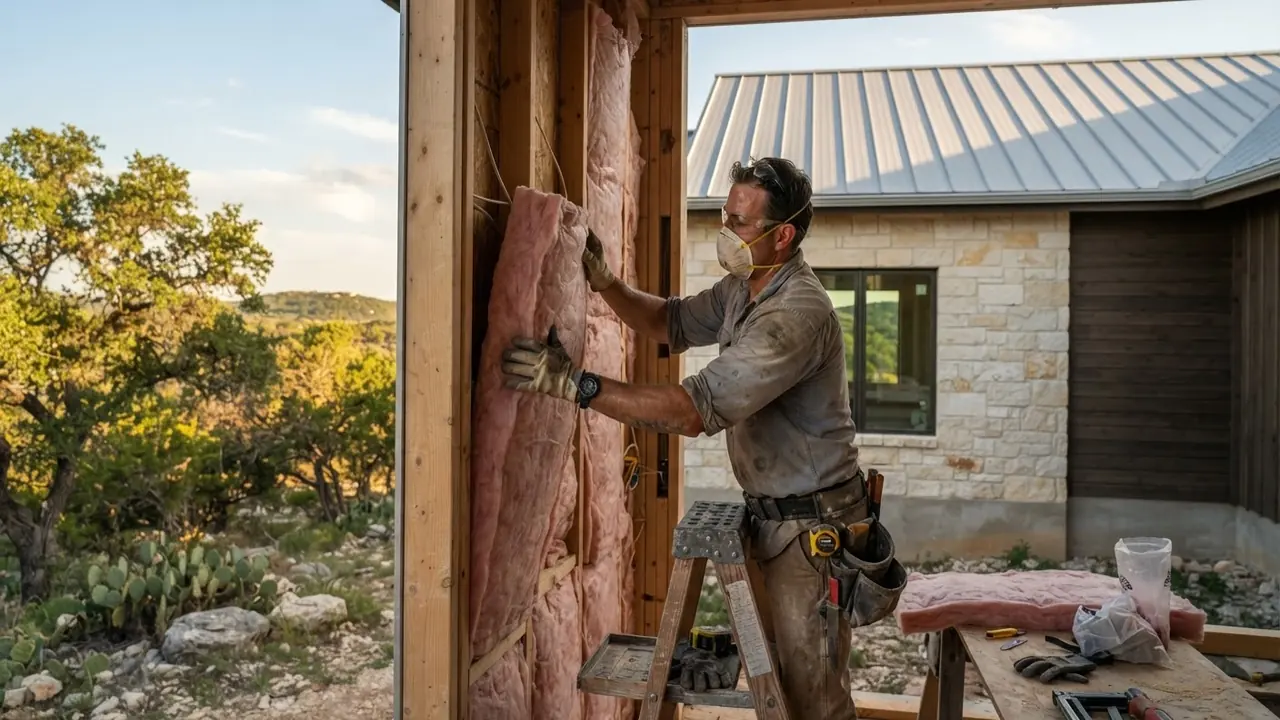
Cost varies by square footage and existing R-value; bringing a typical 2,000 sq ft Dripping Springs attic from R-19 up to current code R-38 to R-49.
Ideal for sealing complex attic spaces and bringing ductwork into conditioned Hill Country living envelopes.
Commonly selected for barndominiums and workshops on 78620 acreage requiring structural rigidity and built-in moisture barriers.
Driven by attic accessibility, presence of wildlife droppings, and disposal volume prior to new installation.
Typical market ranges for the Greater Austin area — not a quote or guarantee. Your actual price depends on scope; compare free quotes from local pros.
Comprehensive pre-installation inspection of attic framing, recessed lighting, and wiring
Evaluation and air sealing of thermal bypasses, chase ways, top plates, and duct boots
Removal and disposal of compromised, pest-damaged, or compressed vintage insulation
Installation of baffle vents at soffits to preserve required exterior attic airflow
Uniform application of blown-in fiberglass, cellulose, or targeted spray foam to specified R-values
ContractorPro.Leads is a matching service and doesn't do the work itself. We pass your Dripping Springs request to a few local companies that take this kind of job, and you decide whether to hire any of them.
From custom acreage properties along Fitzhugh Road near popular Dripping Springs distilleries to established ranch-style homes near Hamilton Pool Preserve, properties throughout 78620 feature distinct thermal profiles. Whether your home features sprawling standing-seam metal roofs or open-concept high ceilings, local pros tailor solutions to match the unique structural demands of rural and suburban Hill Country living.
Ready to cut your energy costs and keep your Dripping Springs home comfortable year-round? Request a free, no-obligation estimate from local insulation pros today.
Total cost is driven by the square footage of your attic or crawlspace, the type of material selected (loose-fill blown-in versus open- or closed-cell spray foam), attic roof pitch, accessibility, and whether old, contaminated batts must be extracted before new installation begins.
Straightforward insulation top-offs generally do not require a standalone permit. However, if your project involves converting a vented attic to an unvented conditioned envelope using spray foam, or involves structural framing and HVAC alterations, the City of Dripping Springs Development Services may require a residential permit to verify fire barrier and ventilation codes.
Both have distinct advantages. Blown-in fiberglass or cellulose is cost-effective and performs exceptionally well on standard flat attic floors. Spray foam applied directly to the underside of the roof deck encapsulates ductwork inside the conditioned space, which is especially valuable for sprawling Dripping Springs homes with hot, unconditioned attic mechanical systems.
Depending on your specific electric provider—most commonly Pedernales Electric Cooperative (PEC) in Dripping Springs—rebates may be available for qualifying attic insulation upgrades and comprehensive air sealing that improve home efficiency beyond baseline building standards.
Summer installations should be planned carefully because extreme attic heat can affect chemical expansion ratios for spray foam and increase labor safety precautions. Fall and late winter are prime times to evaluate thermal performance and complete retrofits before triple-digit summer heat or deep winter freezes arrive.
