Perched above Lake Travis and carved into the rolling Hill Country, Lakeway homes endure intense radiant summer heat and sharp winter cold snaps. Connecting with seasoned insulation contractors in the 78734 area ensures your home maintains balanced indoor temperatures while reducing strain on your HVAC system. Let us match you with independent local specialists who understand the unique structural and climatic demands of Lakeway properties.
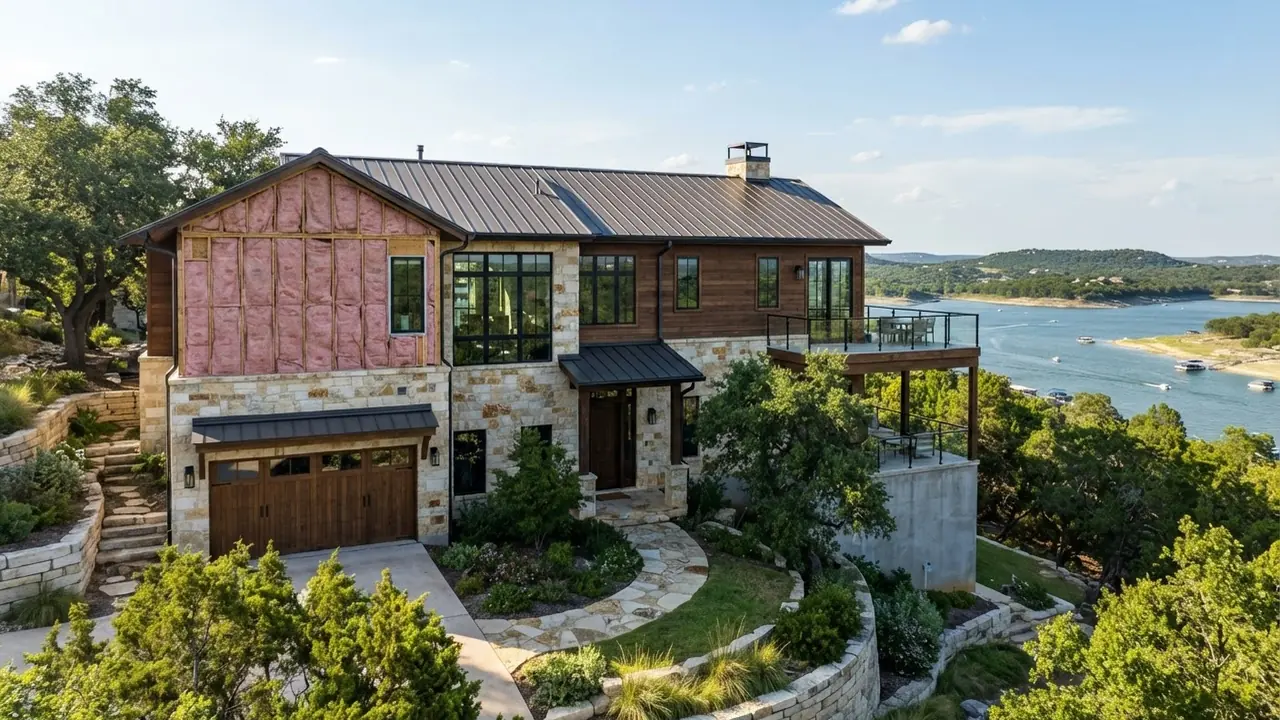
Lakeway’s topography of thin rocky soil over solid limestone creates a natural heat-sink effect, amplifying triple-digit summer temperatures that push unconditioned attic spaces past 140°F.
In multi-level homes situated on sloping terrain, thermal bypasses and under-insulated knee walls allow intense radiant heat to penetrate living spaces. When winter freezes hit Central Texas, insufficient ceiling insulation allows conditioned air to escape rapidly, creating cold drafts and leaving attic-routed plumbing vulnerable to freezing.
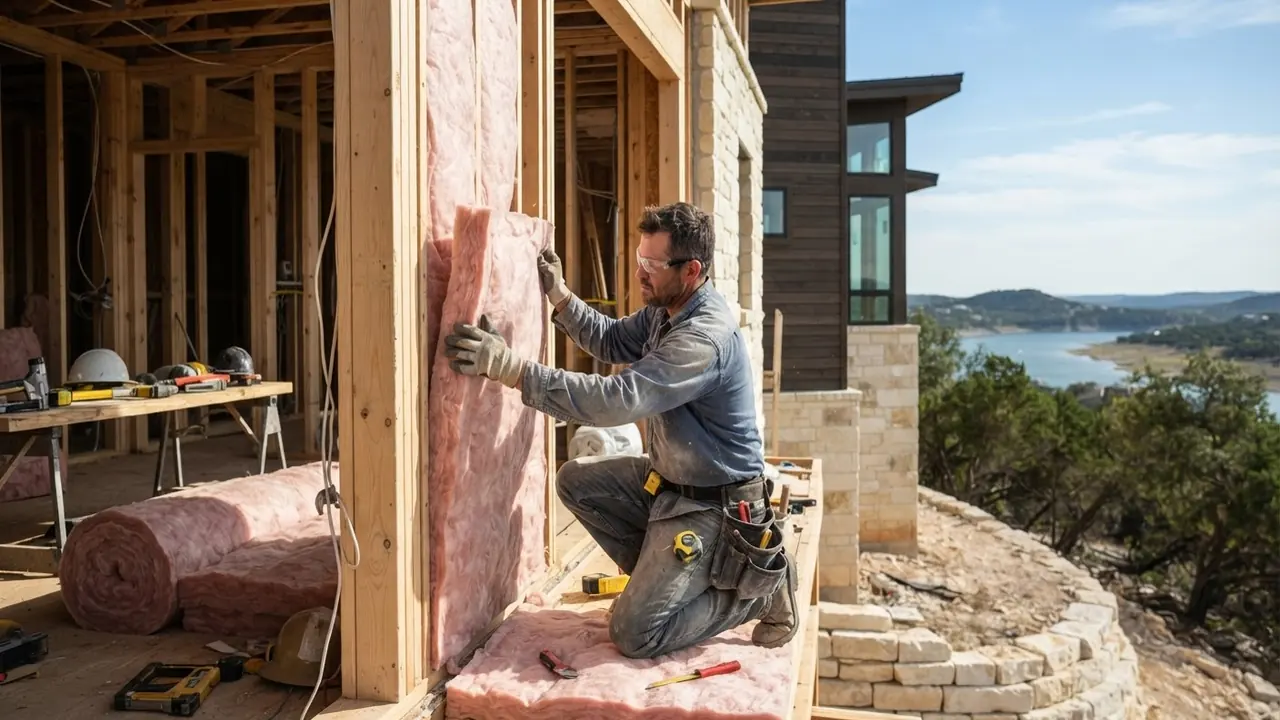
Standard upgrade cost to bring existing Lakeway attic spaces up to recommended R-38 or R-49 levels.
Commonly applied to roof rafters in 78734 homes to bring attic HVAC ducts into semi-conditioned space.
Provides maximum R-value per inch and adds structural racking strength, suited for exterior walls and tight rooflines.
Covers high-powered vacuum extraction of damaged material and comprehensive sealing of ceiling penetrations.
Typical market ranges for the Greater Austin area — not a quote or guarantee. Your actual price depends on scope; compare free quotes from local pros.
Comprehensive on-site evaluation of current attic insulation depth and condition
Thermal imaging assessment to identify hidden voids, drafts, and heat leaks
Safe extraction and disposal of degraded, settled, or contaminated materials
Precision air sealing around attic bypasses, duct boots, and ceiling fixtures
Installation of rafter baffles to ensure uninterrupted soffit ventilation
Uniform application of blown-in cellulose, fiberglass, or spray foam to specified R-values
Final inspection with depth rulers to verify consistent thermal coverage
ContractorPro.Leads is a matching service and doesn't do the work itself. We pass your Lakeway request to a few local companies that take this kind of job, and you decide whether to hire any of them.
Whether you live in a custom residence within The Hills, a golf-course property near the World of Tennis, or a waterfront estate overlooking Lake Travis, your home requires insulation engineered for Hill Country microclimates. Local contractors are familiar with the varied architecture across Lakeway, from mid-century ranch layouts with low-pitched roofs to modern multi-story designs with complex vaulted ceilings.
Connect with insulation contractors in Lakeway today and request your free, no-obligation estimate.
For a standard 2,000 to 2,800 square foot home in Lakeway, blown-in attic insulation generally ranges from $2,500 to $5,500. Full spray foam roof deck conversions typically range between $6,000 and $13,000, depending on roof complexity, accessibility, and whether old insulation must be removed first.
Routine top-offs and replacements of blown-in attic insulation typically do not require a permit. However, if your project involves unvented spray foam retrofits, changes to building ventilation, or structural remodeling, work should be confirmed with the City of Lakeway Building & Development Services.
Blown-in fiberglass or cellulose is an economical, highly effective choice for standard vented attics. Spray foam applied directly to the underside of the roof deck is ideal for Lakeway homes that house air handlers and ductwork in the attic, as it dramatically lowers attic temperatures and boosts HVAC efficiency.
Many Lakeway homes are served by Pedernales Electric Cooperative (PEC). PEC frequently offers residential energy-efficiency rebates for qualifying attic insulation improvements that increase overall R-values. Local contractors can help supply the required documentation.
Late autumn through early spring is the best window. Upgrading your insulation before May ensures your home is prepared for prolonged 100°F summer heat, while also helping lower heating costs and protect pipes during sudden Central Texas winter freezes.
