Perched among the rolling Hill Country along western Lake Travis, Spicewood homes face intense thermal stress across every season. Whether your property is a custom limestone build off Spur 191 or a sprawling estate with cathedral ceilings, proper attic and wall insulation is essential to keep indoor temperatures stable. We connect you with experienced Spicewood insulation contractors who understand local architecture, ventilation needs, and climate demands.
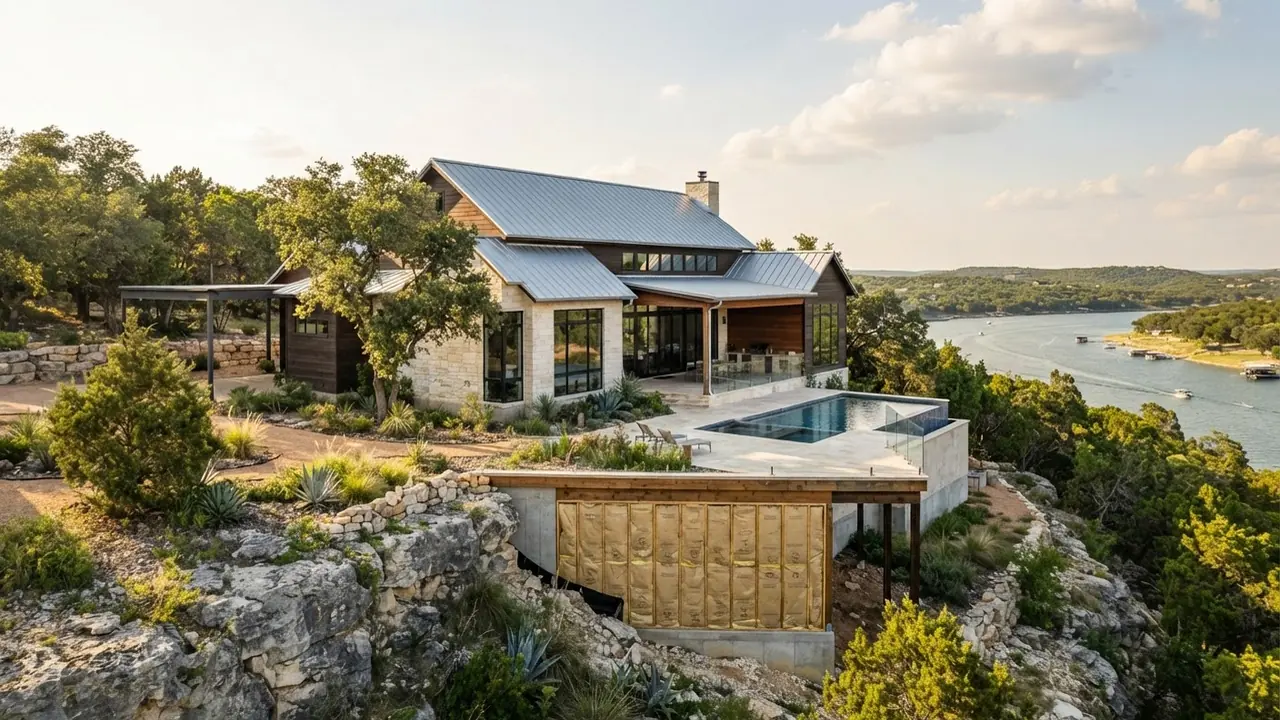
Spicewood's rugged topography—characterized by thin, rocky soil over solid limestone and caliche—amplifies ambient radiant heat, driving attic temperatures well past 130°F during long, triple-digit summers.
In contrast, winter brings sudden, bitter Hill Country freezes that quickly bleed heat through under-insulated ceilings and expose unconditioned attic plumbing. Combined with elevated lake humidity, homes here require aggressive air-sealing and resilient high-R-value materials like open-cell spray foam or dense blown-in insulation to stop energy loss and prevent moisture buildup.
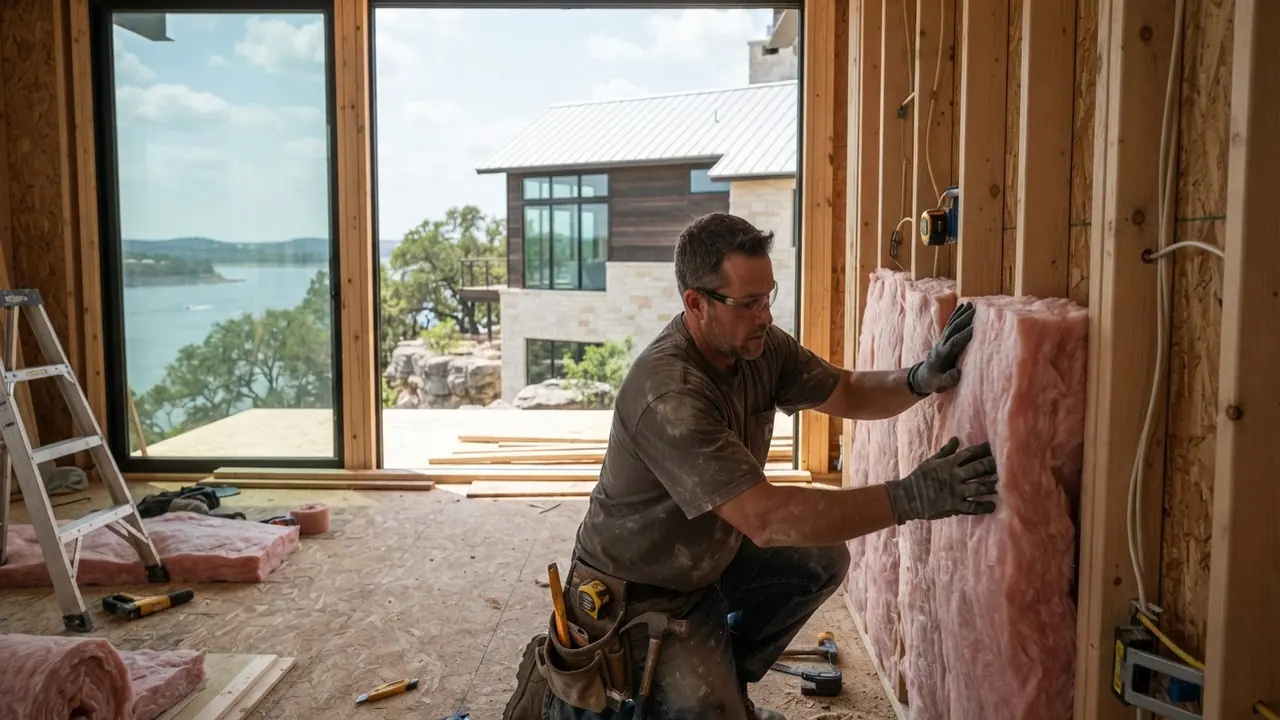
Typical cost to bring existing Spicewood attics up to recommended R-38 to R-49 standards.
Commonly applied to rooflines in Hill Country custom homes to create conditioned, sealed attics.
Used for metal workshops, barndominiums, and subfloors requiring maximum R-value and vapor resistance.
Includes vacuum extraction of degraded material, sanitization, and expanding foam sealing of air leaks.
Typical market ranges for the Greater Austin area — not a quote or guarantee. Your actual price depends on scope; compare free quotes from local pros.
Comprehensive thermal assessment and infrared air-leakage inspection
Safe removal and disposal of old, degraded, or rodent-compromised insulation
Complete air-sealing of electrical top-plate penetrations, can lights, and chases
Installation of attic baffles to preserve soffit ventilation where vented attics are used
Even application of high-performance blown-in insulation or spray foam to target R-values
ContractorPro.Leads is a matching service and doesn't do the work itself. We pass your Spicewood request to a few local companies that take this kind of job, and you decide whether to hire any of them.
From custom waterfront residences overlooking Lake Travis to acreage properties near Spicewood Vineyards and the shaded hollows around Krause Springs, homes in the 78669 area code feature distinct architectural demands. Standing-seam metal roofs, exposed timber trusses, and detached outbuildings require specialized insulation approaches that maximize thermal performance while preserving classic Texas Hill Country design.
Tired of high summer electric bills and drafty winter rooms? Tell us about your project to connect with insulation professionals serving Spicewood today.
Spray foam insulation along the roof rafters is exceptionally effective for Spicewood homes with metal roofs and cathedral ceilings because it seals out humidity and keeps HVAC ducts out of extreme heat. For traditional vented attics, blown-in fiberglass or cellulose brought to R-38 or higher offers dependable, cost-effective heat resistance.
In unincorporated areas of Travis and Burnet Counties, residential interior insulation retrofits do not require a building permit. However, local pros ensure all installations comply with the International Energy Conservation Code (IECC) guidelines for thermal and fire safety.
Yes, depending on your specific provider—such as Pedernales Electric Cooperative (PEC) or Austin Energy—rebates are often available for qualifying attic insulation increases and comprehensive air sealing. Federal energy efficiency tax credits under the Inflation Reduction Act can also offset up to 30% of project costs.
Humid air moving off Lake Travis can seep into vented attics, causing moisture to condense on cold air conditioning ducts. This moisture degrades fiberglass batts and encourages mold. Proper air-sealing and moisture-resistant insulation prevent this thermal exchange.
Most residential insulation removals and re-installations for homes between 2,000 and 3,500 square feet are completed within one to two days, minimizing disruption to your daily routine.
