
Nestled along the rugged terrain of western Lake Travis, Spicewood homes face unique environmental demands that place extra strain on residential exhaust systems. From custom limestone builds tucked off Spur 191 to rural ranches, keeping your dryer duct clear prevents dangerous heat buildup and preserves your appliance. We connect homeowners with local pros who deliver thorough clothes dryer vent cleaning tailored to the needs of the Hill Country.
Inspect transition hose and exterior termination hood for lint accumulation, clogs, or animal intrusion
Measure exhaust velocity and line backpressure using professional airflow diagnostic meters
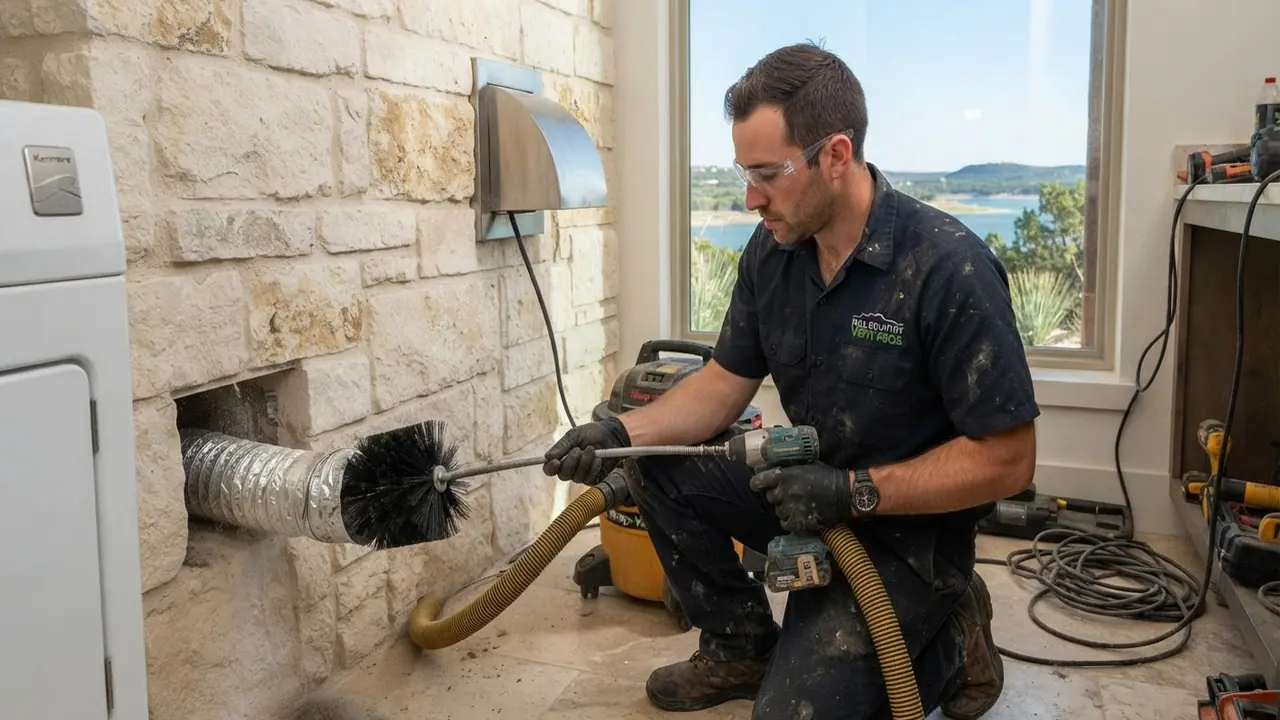
Feed heavy-duty rotary brush systems through the entire duct line to scrub away compacted lint
Capture loosened debris using high-efficiency commercial HEPA vacuum containment units
Clean the lint trap chamber, blower fan housing, and burner area where hidden lint collects
Conduct a final pressure check and inspect the outdoor damper flap for a complete, pest-resistant seal
Covers straight duct runs under 15 feet terminating on an accessible ground-level exterior wall.
Common in terraced Lake Travis properties requiring ladder access or high-pitch roof safety gear.
Replacing damaged flex foil with rigid metal, sealing joints, or updating pathways through attics or crawlspaces.
Installing specialized wildlife-resistant hoods to keep Hill Country rodents and wasps out of the vent.
Typical market ranges for the Greater Austin area — not a quote or guarantee. Your actual price depends on scope; compare free quotes from local pros.
Spicewood's climate combines intense summer heat topping 100°F with dry, rocky terrain, creating a serious wildland-urban fire hazard if exhaust lint ignites near dry brush or cedar breaks.
Because the surrounding caliche and limestone soil supports abundant local wildlife, drought conditions frequently drive field mice, mud daubers, and paper wasps into outdoor vent flappers seeking shelter. Additionally, many homes built into terraced lakeside hills feature unusually long, upward vertical vent runs that trap lint faster than standard residential layouts.
ContractorPro.Leads is a matching service and doesn't do the work itself. We pass your Spicewood request to a few local companies that take this kind of job, and you decide whether to hire any of them.
Whether you are spending your weekend boating on Lake Travis, cooling off at Krause Springs, or touring Spicewood Vineyards, home safety should never take a backseat. The unique residential architecture throughout Spicewood—ranging from sprawling acreage estates to multi-level hillside lake houses—often means exhaust lines travel through crawlspaces, attics, or high roof decks. Connecting with independent contractors experienced with local duct runs ensures your system is cleaned correctly and vent caps remain secure against Hill Country pests.
Connect with experienced dryer vent cleaning specialists in Spicewood, TX to protect your Hill Country home today.
Most homeowners in the 78669 ZIP code pay between $130 and $250 for comprehensive dryer vent cleaning. The total cost depends largely on your home's layout: direct, ground-floor exits are on the lower end, whereas steep-pitch rooftop terminations typical of custom Lake Travis homes require specialized safety equipment that increases the rate.
No residential building permits are required for dryer duct cleaning, repairs, or re-venting because Spicewood is located in unincorporated Travis and Burnet counties. County oversight focuses on septic systems and floodplain development. Even so, the local pros we connect you with adhere to standard IRC fire-safety guidelines, utilizing rigid metal ducting.
For most homes in Spicewood, an annual cleaning is recommended. However, if you have a large household, wash heavy linens frequently, or have a home with a long vertical duct line running to a second-story roof, having the vent inspected and cleared every 6 to 9 months helps maintain peak efficiency.
The rural Hill Country terrain around western Lake Travis has a high concentration of paper wasps, mud daubers, and rodents. During seasonal droughts, insects and mice are drawn to the moisture and warmth of dryer exhaust hoods, often building nests that mechanically wedge the exhaust damper shut.
Yes. When lint restricts airflow, clothes take multiple cycles to dry completely, consuming excessive power during peak cooling months. Clearing the exhaust line allows hot, moisture-laden air to vent freely, shortening cycles and lowering electric consumption on your Pedernales Electric Cooperative (PEC) bill.
