Your request goes to up to four local pros serving Lake View Terrace. Before any of them can receive it, we check their license where the work requires one, their business address.
Tucked against the San Gabriel Mountains, Lake View Terrace homes experience extreme temperature swings, from blistering summer afternoons to chilly foothill nights. Keeping your living spaces comfortable requires a robust thermal barrier that stands up to intense sun and drafting canyon winds. We connect you with local pros who are licensed (CSLB) and insured, with license and insurance checked on file, ensuring your insulation project is completed safely and to code.
Lake View Terrace homes sit in a dry, wind-prone foothill environment designated as a Very High Fire Hazard Severity Zone. Standard insulation isn't just about heat; it must resist ember intrusion and block fine ash carried by intense Santa Ana winds blowing down the canyons. Furthermore, many homes built along the sloped foothill terrain have irregular attic spaces or crawlspaces that require precise air sealing to prevent dry, hot air from infiltrating the living spaces from below and above.
| Project | Typical range | What affects it locally |
|---|---|---|
| Attic Air Sealing | $800 - $2,000 | Crucial for blocking hot canyon winds; price depends on attic size and accessibility of bypasses. |
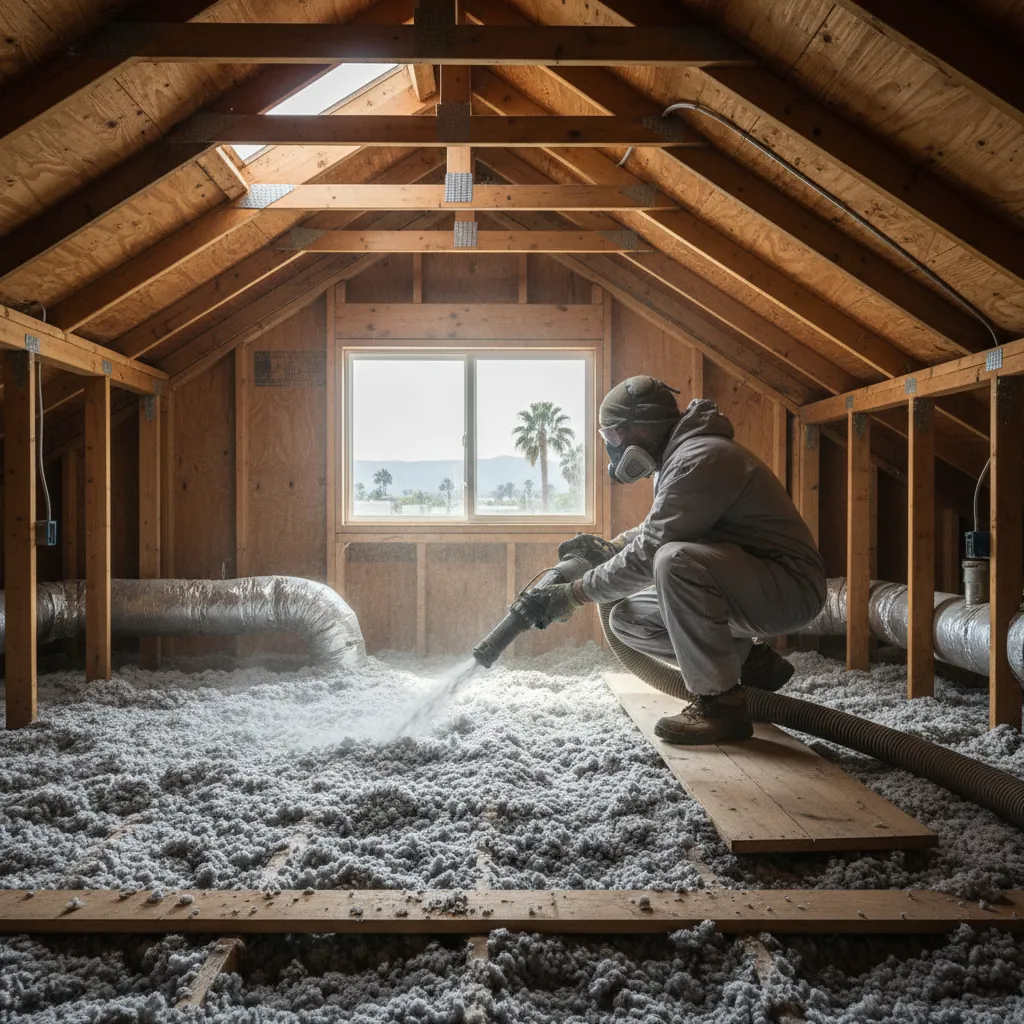
| Blown-In Attic Insulation (Fiberglass or Cellulose) | $1,500 - $3,500 | A cost-effective way to achieve R-38 or R-49 depth in standard Lake View Terrace ranch homes. |
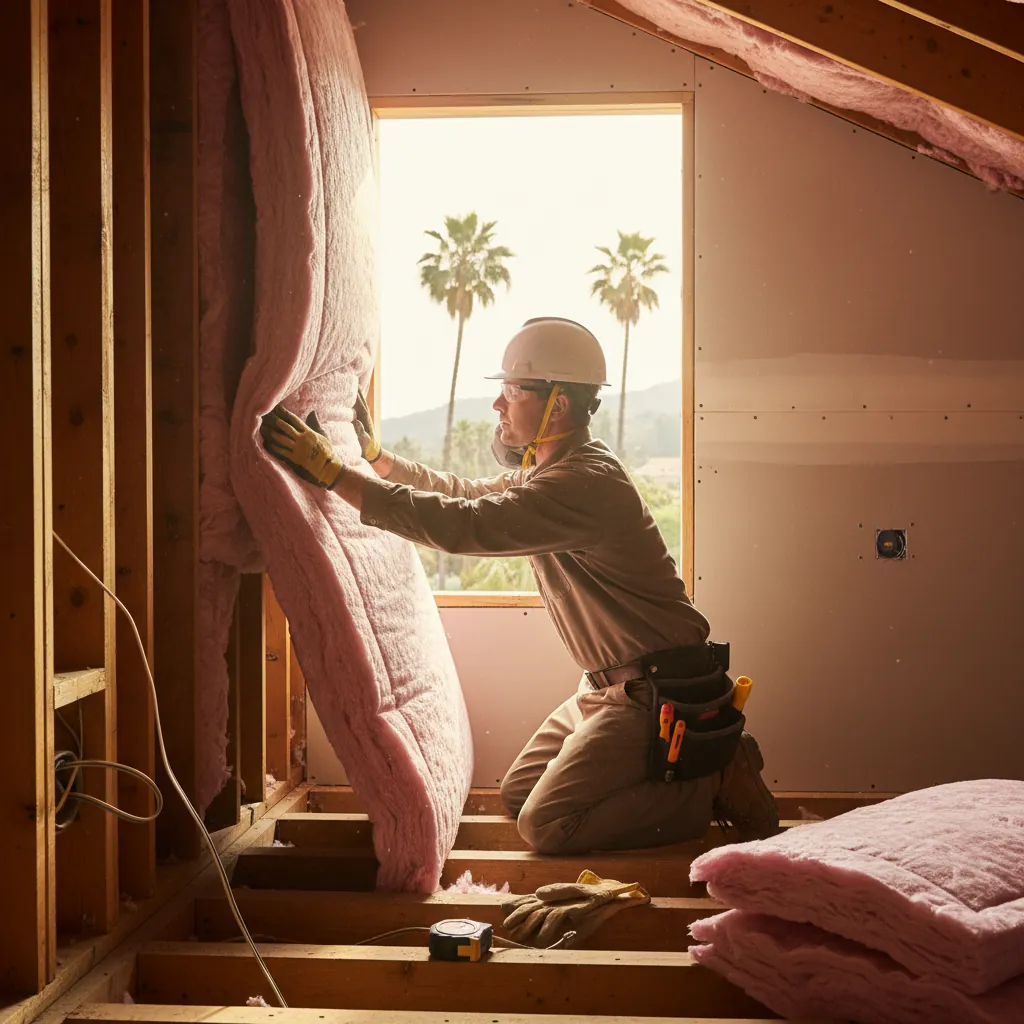
| Mineral Wool Batt Insulation | $2,200 - $4,800 | Highly recommended for foothill homes in fire hazard zones due to its high melting point and fire-resistant properties. |
| Crawlspace Insulation | $1,200 - $3,000 | Essential for homes on sloped foothill lots with exposed, drafty underfloor spaces. |
Typical market ranges for the Greater Los Angeles area, not a quote or a guarantee. The price of your job depends on its scope, so ask each pro for a written estimate before you decide.
ContractorPro.Leads doesn't do the work itself. We match Lake View Terrace homeowners with local companies, and a company has to pass these checks before it can receive any request.
These checks show the records as they stood when we reviewed them. Before you sign anything, look up the license yourself at cslb.ca.gov and ask the company for a current insurance certificate.
From ranch homes near the Hansen Dam Recreation Area to properties climbing the slopes above Foothill Boulevard and Osborne Street, Lake View Terrace possesses a distinct rural-suburban character. The semi-arid climate and intense sun exposure along these corridors mean that roof decks and attics bear the brunt of Southern California’s heat. Local insulation pros specialize in retrofitting these unique foothill properties, ensuring they are properly sealed against both the summer heatwaves and the cold canyon drafts.
All home services in Lake View Terrace
ZIP code we cover in Lake View Terrace: 91342 See every neighborhood we serve
Tell us what you have in mind. We'll pass it to up to four checked local pros, and they'll contact you to talk it through.
Tell us about your projectSimple insulation replacement generally does not require a permit from the Los Angeles Department of Building and Safety (LADBS). However, if the work involves structural changes, venting alterations, or major dry-wall removal, a permit may be necessary to ensure compliance with Title 24 energy standards.
Yes, Lake View Terrace residents served by the Los Angeles Department of Water and Power (LADWP) can take advantage of rebates for qualifying attic insulation upgrades. Local contractors can help ensure the chosen materials and R-values meet the specific utility requirements.
In fire-prone foothill areas, it is wise to choose non-combustible insulation materials like mineral wool (rockwool) and ensure all attic vents are fitted with ember-resistant baffles to prevent sparks from igniting your thermal barrier.
For most single-story ranch homes in Lake View Terrace, prep work, air sealing, and insulation blowing can be completed in one to two days, depending on the attic's accessibility and whether old insulation needs to be extracted first.
Over time, older insulation settles and loses its R-value, and typical gaps around pipes and wires allow hot attic air to bypass the barrier entirely. Professional air sealing combined with an insulation top-off is usually required to stop this convective heat loop.
