In the historic, tree-lined enclave of Olmos Park, preserving indoor comfort requires insulation tailored to unique architectural estates. Whether you own a 1920s Spanish Revival or a sprawling mid-century ranch, proper thermal barriers protect against brutal South Texas heatwaves and sudden winter freezes. We connect you with experienced local insulation specialists who understand how to seal and insulate classic 78212 homes efficiently.
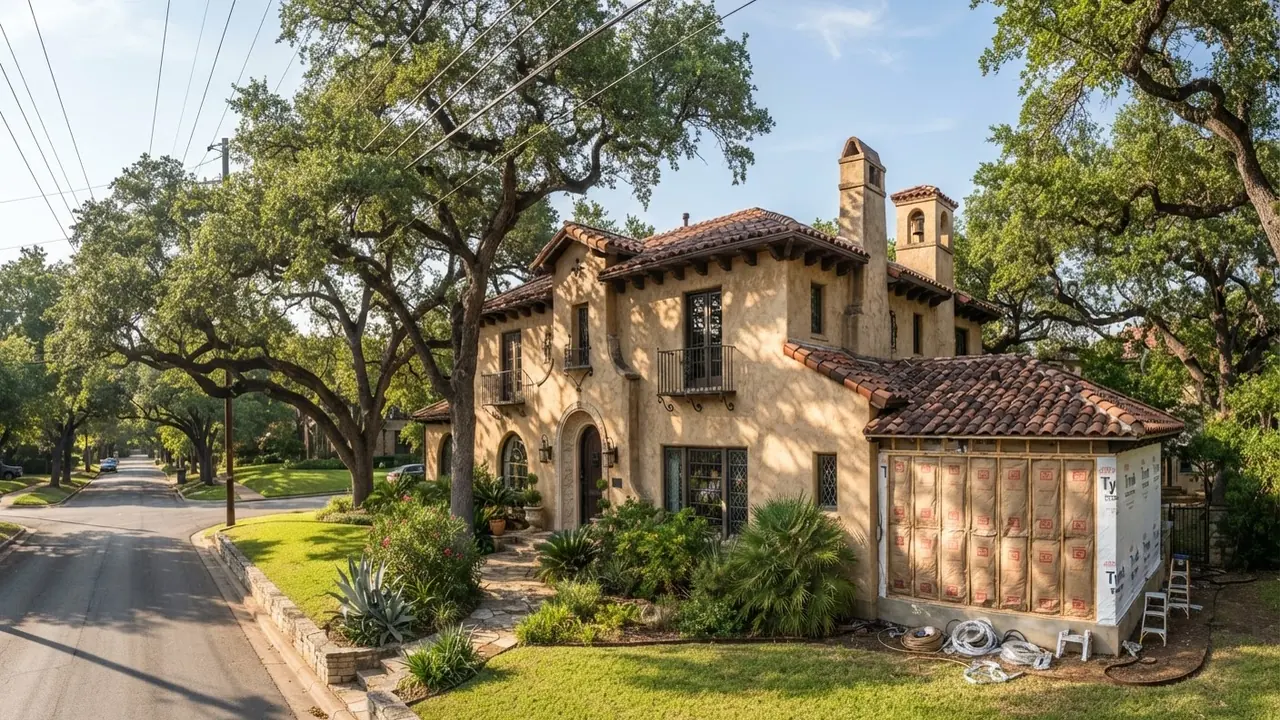
Olmos Park's rolling wooded terrain and expansive clay soil over limestone cause subtle foundation movement over time, opening micro-gaps around ceiling drywall, top plates, and attic penetrations.
Combined with summer temperatures regularly exceeding 100°F and high relative humidity from the nearby Olmos Basin, unsealed attics superheat up to 140°F, overworking HVAC systems and driving up cooling costs. Additionally, many historic local homes feature complex rooflines and legacy wiring that require careful assessment before installing modern spray foam or high-density blown-in materials.
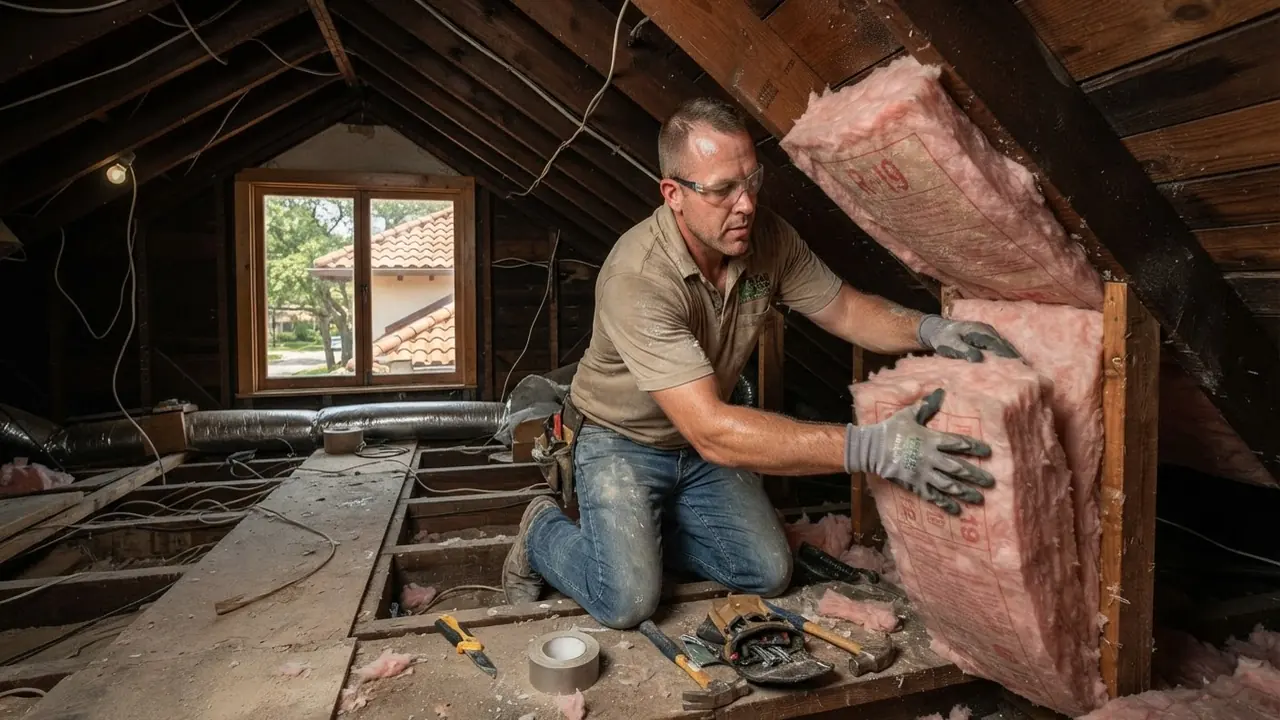
Covers fiberglass or cellulose; pricing depends on attic pitch, access difficulty, and depth needed in older Olmos Park attics.
Crucial for historic framing and homes with settling cracks before new insulation is installed.
Recommended if legacy materials are degraded, rodent-infested, or contaminated by roof leaks.
Applied directly to the roof deck to create a conditioned attic space, ideal for complex rooflines.
Typical market ranges for the Greater San Antonio area — not a quote or guarantee. Your actual price depends on scope; compare free quotes from local pros.
Comprehensive attic inspection to measure current R-value, airflow, and structural framing
Identification and sealing of thermal bypasses, can lights, plumbing chases, and access hatches
Installation of soffit baffles and ventilation chutes to preserve passive roof airflow
Removal of contaminated, compressed, or pest-damaged legacy insulation if required
Even installation of blown-in fiberglass, cellulose, or spray foam to reach target R-38 to R-49 standards
ContractorPro.Leads is a matching service and doesn't do the work itself. We pass your Olmos Park request to a few local companies that take this kind of job, and you decide whether to hire any of them.
Situated just west of Alamo Heights and minutes from the McNay Art Museum and Olmos Basin Park, Olmos Park is renowned for its grand estate homes and dense live oak canopy. While mature trees provide shade, humid microclimates around the basin make attic ventilation and moisture-resistant insulation crucial for long-term structural health.
Ready to lower your energy bills and eliminate hot spots? Connect with experienced Olmos Park insulation professionals for a comprehensive assessment today.
Routine retrofits and blown-in insulation top-offs generally do not require a permit. However, if your project involves structural alterations, roof deck modifications for unvented spray foam assemblies, or rewiring, the City of Olmos Park Building Dept. may require permits and inspections. Independent local contractors can guide you through municipal compliance.
Yes. Most Olmos Park residences are served by CPS Energy, which regularly offers weatherization and attic insulation rebates for qualifying projects that increase thermal performance to recommended levels. Your contractor can provide the paperwork needed to claim these incentives.
It depends on your attic structure and HVAC placement. If your air handler and ductwork are located in the attic, applying spray foam to the roof deck brings equipment into a semi-conditioned space, dramatically cutting heat gain. If your ductwork is modern and roof ventilation is intact, blown-in cellulose or fiberglass over an air-sealed attic floor is often the most cost-effective solution.
Expansive clay soils over limestone cause subtle, seasonal foundation movement. This shifting often creates micro-cracks in drywall and loosens attic penetrations, allowing hot attic air to leak into living areas. Professional air sealing before adding insulation is essential to stop this convective heat transfer.
For Bexar County's humid subtropical climate (Zone 2/3), the Department of Energy recommends an attic insulation rating between R-38 and R-49 (approximately 12 to 16 inches of blown-in material) to effectively resist summer heat transmission.
