Preserving the timeless beauty of King William’s historic residences requires modern energy efficiency solutions tailored for 19th-century architecture. The local insulation experts we connect you with understand how to protect your home's unique character while sealing out the intense San Antonio heat. Whether you live in a grand Victorian estate or a restored cottage, we make it easy to find local pros for your attic and wall insulation needs.
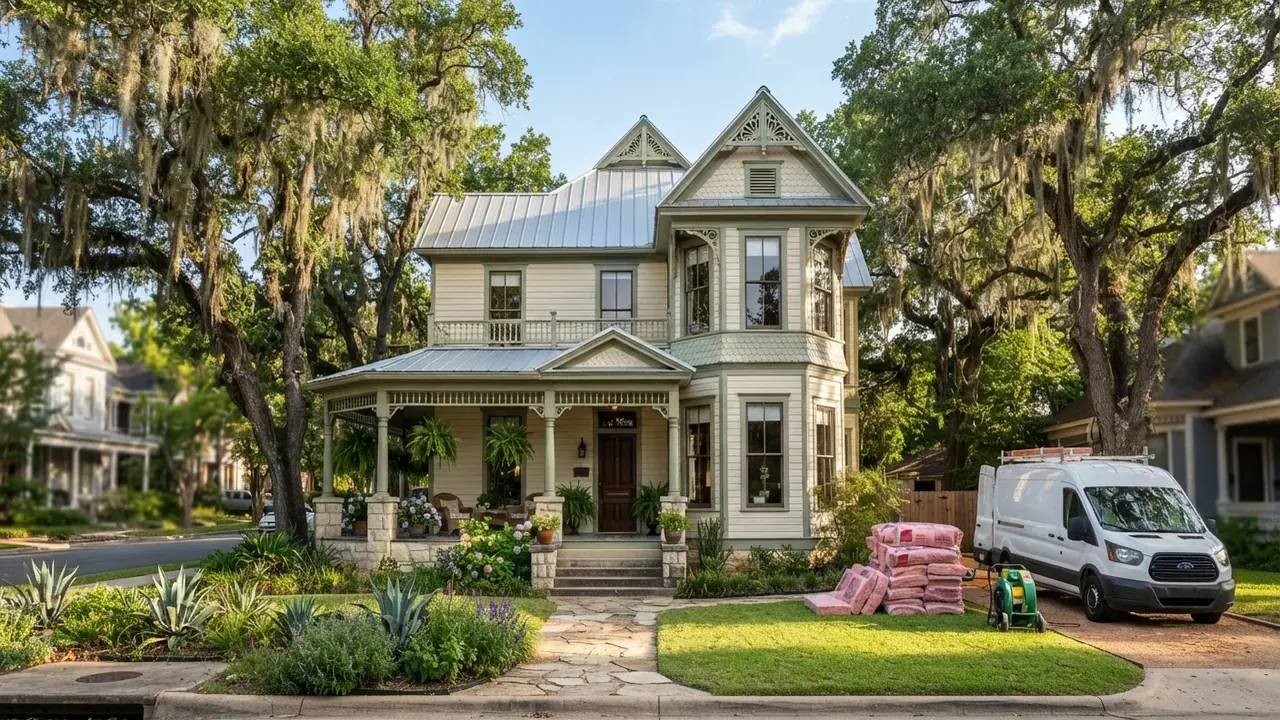
Insulating homes on King William’s flat river-terrace lots presents a unique double-challenge: extreme humid subtropical summers that frequently top 100°F, paired with highly expansive clay soils that cause structural shifting over time.
Poorly installed insulation can trap moisture against historic wood framing, leading to rot, while shifting soils open up new air leaks. Additionally, any insulation upgrades in this designated historic district must strictly adhere to the City of San Antonio’s Office of Historic Preservation (OHP) guidelines to avoid damaging original building materials.
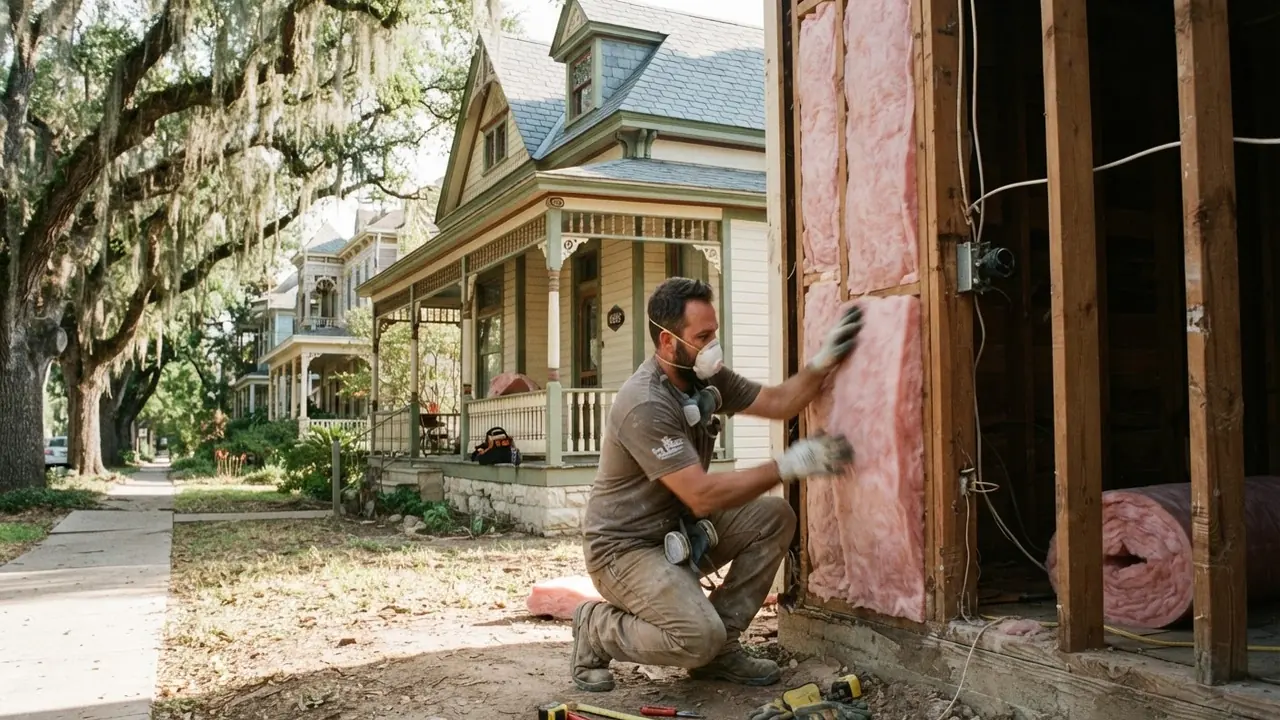
Pricing varies based on attic access, square footage, and the level of prep work required to protect historic plaster ceilings below.
Higher material costs are typical for sprayfoam retrofits, which provide superior moisture barriers in unvented roof assemblies when approved by OHP.
Essential for historic homes to remove rodent-damaged or hazardous older materials and seal structural drafts before new product application.
Typical market ranges for the Greater San Antonio area — not a quote or guarantee. Your actual price depends on scope; compare free quotes from local pros.
Comprehensive pre-inspection of the attic framing, knob-and-tube wiring checks, and existing insulation depth.
Securing necessary approvals from the City of San Antonio DSD and Office of Historic Preservation (OHP) for historic properties.
Air sealing of all bypasses, top plates, light fixtures, and plumbing penetrations to stop drafts.
Installation of high-R-value blown-in cellulose or OHP-approved spray foam insulation.
ContractorPro.Leads is a matching service and doesn't do the work itself. We pass your King William request to a few local companies that take this kind of job, and you decide whether to hire any of them.
From the stately historic mansions along the tree-lined streets of the King William Historic District to the converted industrial spaces near the Blue Star Arts Complex, thermal comfort is key to enjoying life along the San Antonio River. The local insulation specialists we connect you with specialize in retrofitting these older structures without altering their iconic exteriors. By sealing attic bypasses and adding high-efficiency blown-in or spray foam insulation, they help homeowners stay cool after a long afternoon stroll along the Mission Reach.
Connect with King William insulation professionals today to protect your historic home and lower your energy bills.
Typically, homeowners in King William invest between $1,500 and $6,500 depending on the project scope. Blown-in attic insulation for a standard historic cottage ranges from $1,500 to $3,200, whereas comprehensive spray foam insulation or hard-to-access wall retrofits can range from $2,800 to $6,500+. Factors such as structural accessibility, OHP compliance requirements, and the removal of contaminated old materials will influence the final cost. Local pros we connect you with can walk you through exact pricing and discuss available financing options.
While same-day service is rarely practical for full-scale insulation installations due to the extensive prep work required in historic attics, the local pros we connect you with can often schedule comprehensive site assessments within 24 to 48 hours. Most standard blown-in or spray foam installations are completed in a single day once the planning and permitting phases are finalized, minimizing disruption to your daily routine.
This is a classic symptom of poor or degraded insulation combined with air leaks. In King William's humid subtropical climate, hot, moisture-laden air migrates into your living spaces through unsealed attic floorboards and wall cavities. This places an immense latent load on your air conditioner. Upgrading to high-quality blown-in insulation or OHP-compliant sprayfoam seals these thermal bypasses, keeping the humidity out and the cool air in.
If your current insulation is dry, mold-free, and simply settled, local pros can often perform a top-off repair by blowing new cellulose over the existing layer. However, if you have old fiberglass damaged by pests, water stains from spring hail storms, or outdated materials containing hazardous fibers, a complete removal and replacement is highly recommended. The insulation contractors in our network can inspect your attic to provide honest guidance on the safest path forward.
Yes, because the neighborhood is a designated local historic district. While simple blown-in attic insulation may not require a full DSD building permit, any major structural alterations, wall insulation retrofits, or spray foam applications near original historic wood require coordination with the City of San Antonio Office of Historic Preservation (OHP) to ensure compliance with historic guidelines. The experienced contractors we connect you with are familiar with these local approval timelines and will help navigate the process.
