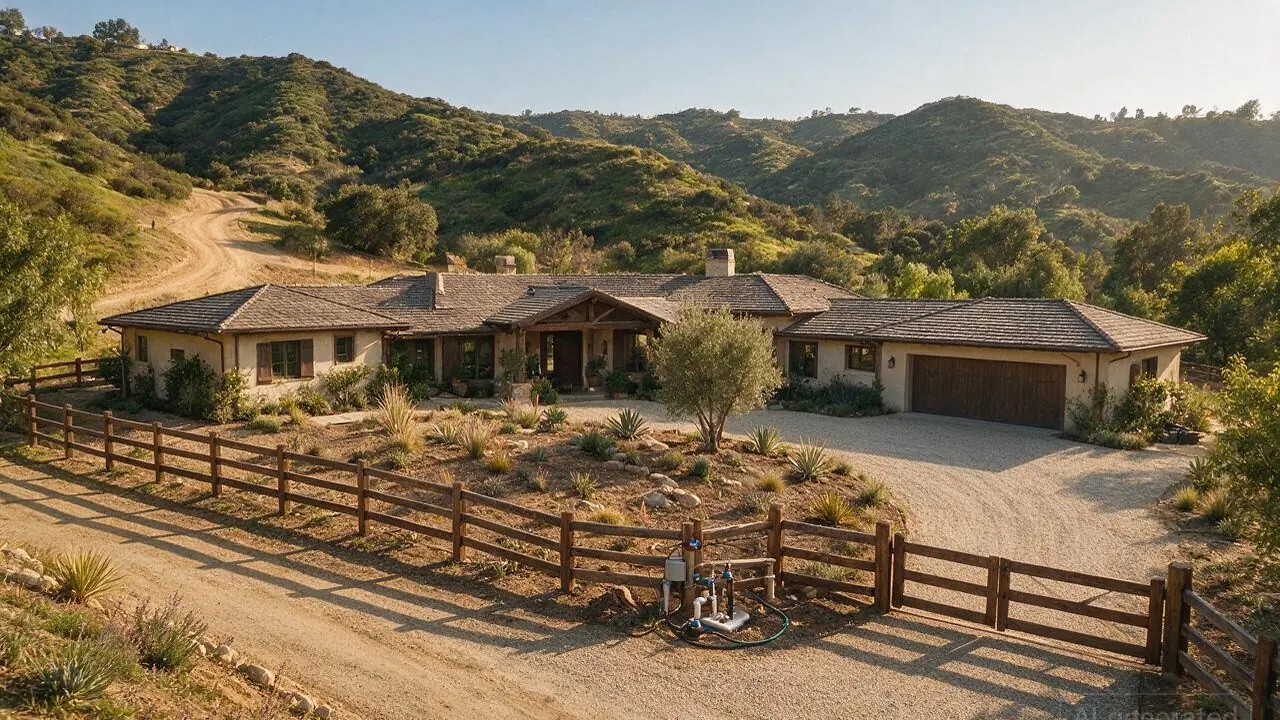
Home projects in Hidden Hills are shaped by local conditions: gated, semi-rural estate lots on rolling hills at the west end of the Valley, with private horse trails, clay and rocky hillside soils that need engineered grading and drainage, and hot, dry summers; much of the area is mapped as very high fire hazard. Most structural, electrical, plumbing, and mechanical work is permitted through City of Hidden Hills (building permits through City Hall). Serving homes near Long Valley Rd and Round Meadow Rd, we connect Hidden Hills homeowners with local pros who work in the area.
Hidden Hills features expansive properties situated on gated, semi-rural estate lots along rolling hills at the west end of the San Fernando Valley. Much of the housing stock consists of sprawling postwar ranch houses alongside newer, grand custom estates. Properties along Long Valley Rd and Round Meadow Rd often feature extensive private horse trails and large footprints. Because of the local terrain, homes are built on clay and rocky hillside soils, which often require engineered grading and specialized drainage solutions to prevent shifting. For older postwar ranch houses, homeowners frequently need to address aging infrastructure. This includes upgrading outdated electrical wiring, replacing corroded copper or galvanized plumbing, reinforcing foundations affected by soil movement, and replacing worn roofing materials to withstand the elements. Maintaining these expansive structures requires careful attention to structural integrity, especially where properties interface with the natural hillside topography.
With hot, dry summers and a very high fire hazard classification, fire mitigation and water conservation drive many home improvements in Hidden Hills. Homeowners frequently invest in a complete backyard remodel to integrate fire-resistant landscaping, concrete, and pavers that reduce dry brush risks. Because Las Virgenes Municipal Water District rules mandate strict water conservation, installing artificial turf is a common choice. To manage extreme heat, residents often upgrade to energy-efficient HVAC systems, replace older roofing with fire-rated materials, and improve insulation. Given the clay and rocky hillside soils, any major hardscape installation, room addition, or ADU construction requires specialized engineering and general construction expertise. Indoors, updating older estates often involves kitchen remodeling, bathroom remodeling, and updating old electrical systems. Regular maintenance like chimney cleaning, air duct cleaning, and dryer vent cleaning is also crucial to reduce fire risks in this high-hazard zone.
As an independent municipality, Hidden Hills maintains its own local government services separate from Los Angeles. All building permits must be secured directly from the City of Hidden Hills, with applications processed through City Hall. Homeowners planning substantial structural work, such as a room addition, ADU, or major grading on hillside slopes, must obtain the proper permits before starting. Minor alterations, including extensive electrical or plumbing overhauls, also require official approval to ensure safety. A licensed contractor typically navigates this process, submitting detailed structural plans to City Hall to ensure compliance with local building codes, fire safety guidelines, and environmental regulations.
Hidden Hills shares its scenic, rolling-hill landscape and equestrian lifestyle with neighboring Calabasas, where large estate homes are common. In contrast, nearby Woodland Hills and West Hills transition into more traditional suburban flats and master-planned neighborhoods. Residents in these areas utilize major commute corridors like the Ventura Freeway to travel across the west Valley or commute southward toward Pacific Palisades and the coast.
Type your ZIP code to jump to your neighborhood in the San Fernando Valley and nearby. Pick a service first to go straight to that page. If we do not cover that ZIP yet, you go to the request form with it filled in.
