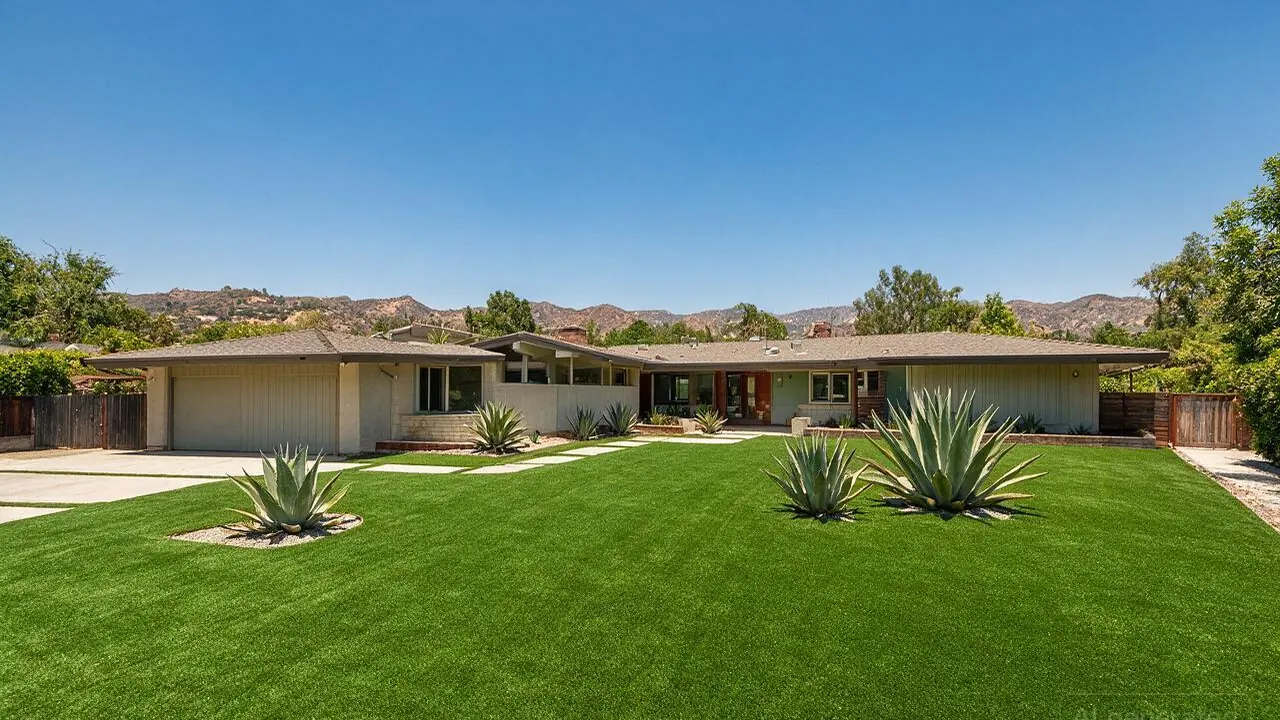
Home projects in Woodland Hills are shaped by local conditions: flat San Fernando Valley floor with graded hillside lots to the south, expansive adobe clay soil that swells and shrinks with moisture, and hot, dry west San Fernando Valley micro-climate with triple-digit summer highs. Most structural, electrical, plumbing, and mechanical work is permitted through Los Angeles Dept. of Building and Safety (LADBS). Serving homes near Ventura Blvd, Topanga Canyon Blvd, Warner Center and Westfield Topanga, we connect Woodland Hills homeowners with local pros who work in the area.
Woodland Hills features a diverse mix of housing stock, largely built during the post-World War II boom. On the flat San Fernando Valley floor, many neighborhoods contain classic postwar ranch houses and mid-century modern designs. To the south, the terrain transitions into graded hillside lots climbing toward the Santa Monica Mountains, where custom-built homes dominate. Because much of the housing stock dates back to the 1950s and 1960s, homeowners often face age-related maintenance challenges. Older properties frequently require updates to original galvanized steel plumbing and outdated electrical wiring, such as ungrounded systems or panels with insufficient capacity for modern appliances. Additionally, the expansive adobe clay soil in the area puts constant stress on concrete slab and raised foundations, leading to settling issues. Periodic roof inspections and updates to roofing materials are also essential to protect these aging structures from intense seasonal heat.
The intense west San Fernando Valley micro-climate, featuring triple-digit summer highs, makes energy efficiency and climate control top priorities. Homeowners frequently upgrade their HVAC systems and improve insulation to lower cooling bills. Due to seasonal outdoor-watering restrictions and LADWP turf-replacement rebates, many residents opt for low-water landscaping, replacing grass lawns with artificial turf, native plants, and hardscape features. These outdoor upgrades often expand into a full backyard remodel, utilizing pavers or concrete for stable patios, and adding patio covers for essential shade. Given the expansive adobe clay soil, proper grading and drainage are critical when installing any new structures. Additionally, the intense local heat and sun exposure require frequent exterior painting to protect siding and trim from UV damage. Other common home improvement projects include bathroom remodeling, kitchen remodeling, and building ADUs to maximize space.
Because Woodland Hills is a neighborhood within the City of Los Angeles, all building permits are issued by the Los Angeles Department of Building and Safety (LADBS). Homeowners must obtain permits for major structural modifications, including a room addition, ADUs, or significant structural modifications to roofing. Major electrical, plumbing, and mechanical system replacements also require LADBS approval to ensure safety and code compliance. While homeowners can sometimes apply for permits as owner-builders, a licensed contractor typically pulls the permits. Working with a licensed professional ensures that the plan submission process is handled accurately and that all completed work aligns with current municipal building codes.
Woodland Hills shares its diverse topography with neighboring West Hills and Calabasas, where properties similarly transition from flat valley floors to hillside lots. Major transportation and commercial corridors like Ventura Boulevard link the area to Tarzana and Encino, which share similar mid-century ranch-style homes. Like nearby Canoga Park, the northern flatlands of Woodland Hills feature dense suburban layouts with comparable regional micro-climates and clay soil conditions.
Type your ZIP code to jump to your neighborhood in the San Fernando Valley and nearby. Pick a service first to go straight to that page. If we do not cover that ZIP yet, you go to the request form with it filled in.
