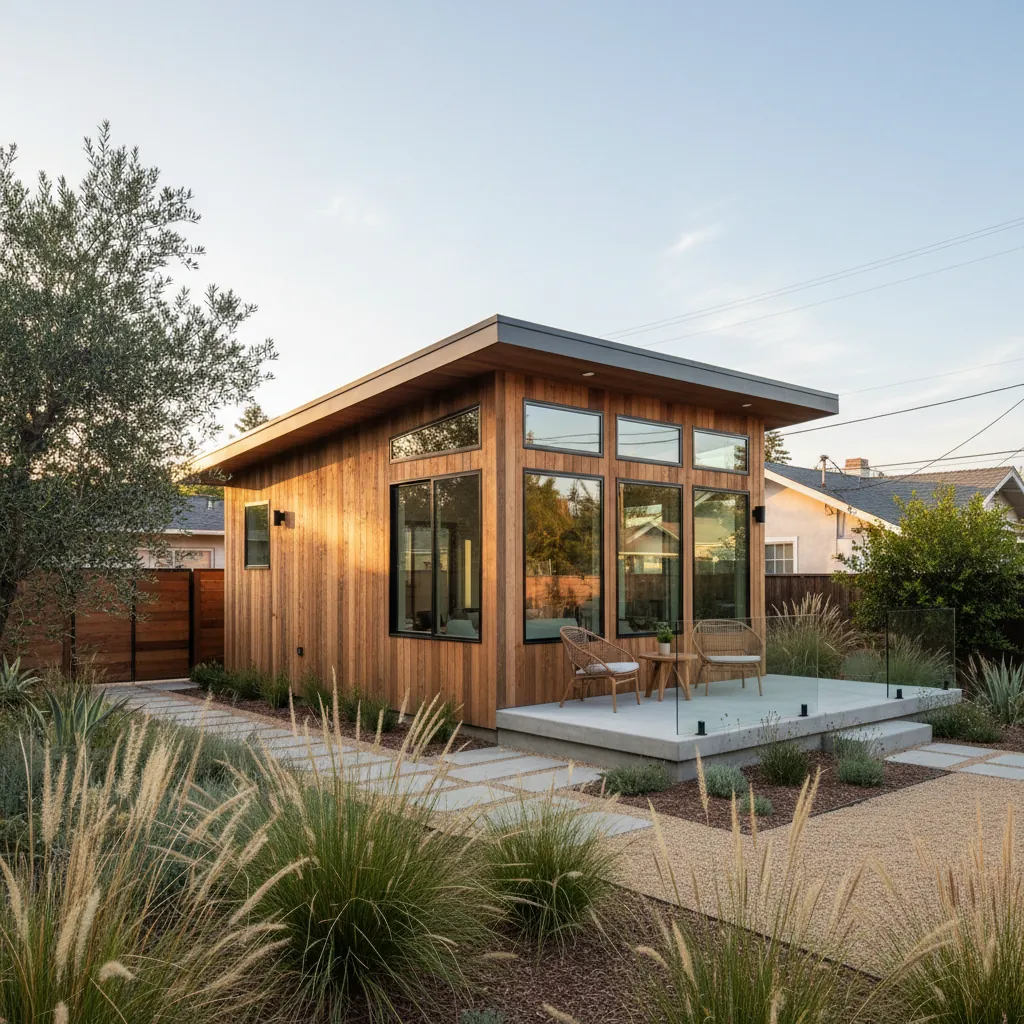
Typical Hancock Park costs, permit steps and timelines are below. When you are ready, describe your project and up to four local ADU builders serving Hancock Park will contact you. You compare and decide.
Site assessment and property line survey to map historic setbacks
Architectural drafting and Historic Preservation Overlay Zone (HPOZ) compliance review
Submission of detailed structural and energy plans to the Los Angeles Dept. of Building and Safety (LADBS)
Site excavation, utility line trenching, and foundation installation
Framing, roofing, and historic-matched exterior stucco or siding application
Interior plumbing, electrical, and final inspections by LADBS
Typical for transforming a 1920s carriage garage, requiring structural retrofitting, wall framing, and running utility lines from the primary residence.
Reflects custom architectural design matching Spanish, Tudor, or English Revival styles, high-end interior finishes, and basin soil foundation engineering.
Involves complex structural engineering for height limits, privacy screening for adjacent properties, and extensive utility main tie-ins.
Typical market ranges for the Greater Los Angeles area, not a quote or a guarantee. The price of your job depends on its scope, so ask each pro for a written estimate before you decide. Bars share one scale, so you can compare project sizes.
Adding an accessory dwelling unit to a classic Hancock Park estate requires an appreciation for the neighborhood’s rich architectural heritage. Whether your goal is to build a detached guest cottage or convert a historic carriage house, local contractors specialize in designing spaces that honor your property's original character.
Building an ADU in Hancock Park requires addressing the flat basin soils and the extensive root systems of mature neighborhood trees.
Because many 1920s period-revival homes here feature original raised foundations, matching the finished floor elevations and structural integrity of a new detached unit requires precise soil preparation and foundation engineering. Furthermore, properties within the local Historic Preservation Overlay Zone (HPOZ) must carefully navigate specific design guidelines to ensure any new structure seamlessly integrates with the streetscape.
ContractorPro.Leads doesn't do the work itself. We pass your Hancock Park project to up to four local ADU builders who take this kind of job, and you decide whether to hire any of them.
From the grand, stately properties lining Rossmore Avenue to the historic residences surrounding the Wilshire Country Club, Hancock Park is defined by its pristine 1920s architecture. Adding a modern accessory dwelling unit to these properties requires subtle, high-end design work that respects the neighborhood's scale. Local builders specialize in creating custom ADUs that look as though they were built alongside the original estate, preserving the charm and walkable character found near Larchmont Village.
Tell us what you have in mind. We'll pass it to up to four local pros, and they'll contact you to talk it through.
Permitting through the Los Angeles Department of Building and Safety (LADBS) typically takes 4 to 8 months. If your home is located within a Historic Preservation Overlay Zone (HPOZ), additional design review timelines will apply.
No. Under California state law and City of Los Angeles regulations, ADUs located within a half-mile of public transit—including the major bus corridors near Wilshire Boulevard—do not require dedicated off-street parking.
The flat basin soils in the 90004 area are generally stable but require proper compaction and grading. Contractors will test the soil to determine if a standard slab-on-grade is sufficient or if a raised foundation is preferred to match the main home's crawlspace.
Yes, homeowners can capitalize on Los Angeles Department of Water and Power (LADWP) rebates for installing high-efficiency heat pump HVAC systems, heat pump water heaters, and drought-tolerant landscaping to offset overall costs.
No. Under California tax rules, the construction of an ADU only triggers a new assessment for the value of the new structure itself. Your original 1920s home's assessed value remains unaffected under Proposition 13.
