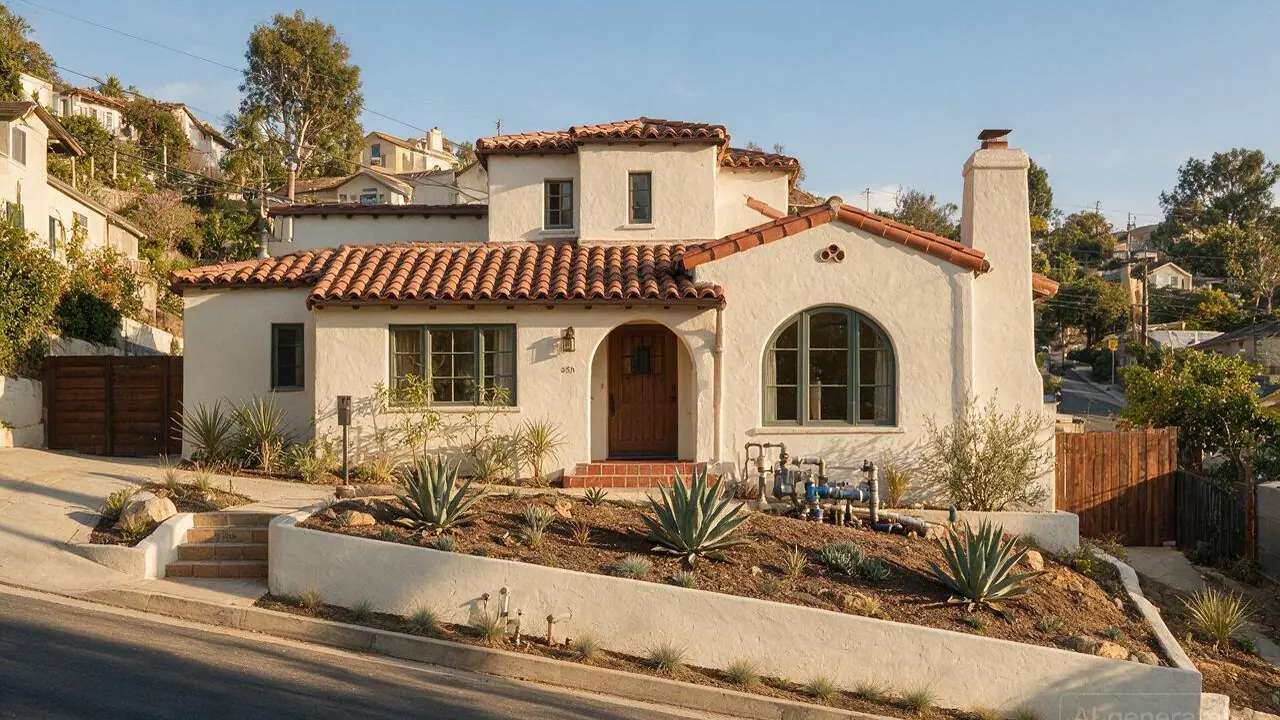
Home projects in Eagle Rock are shaped by local conditions: hilly terrain in the San Rafael Hills with many sloped lots, rocky hillside soils that often need engineered grading and retaining walls, and hot, dry summers; hillside areas lie in designated fire hazard severity zones. Most structural, electrical, plumbing, and mechanical work is permitted through Los Angeles Dept. of Building and Safety (LADBS). Serving homes near Colorado Blvd, Occidental College and Eagle Rock Blvd, we connect Eagle Rock homeowners with local pros who work in the area.
Much of the housing stock in Eagle Rock dates back to the early and mid-twentieth century, featuring many 1920s Craftsman bungalows, Spanish Colonial Revival residences, and mid-century modern designs, alongside postwar ranch houses. Because the neighborhood extends into the San Rafael Hills, many properties feature sloped lots with complex hillside conditions. For homeowners planning renovations, the age of these homes often necessitates significant updates. Older electrical wiring and outdated plumbing systems frequently require modernization to meet current safety standards. Hillside foundations may show signs of settling or cracking over the decades, demanding specialized structural inspection. Additionally, older roofs often need complete replacement to protect against seasonal rains. Updating these elements is a common starting point before tackling cosmetic interior upgrades, ensuring the home remains structurally sound and safe.
In Eagle Rock, local environmental factors heavily influence home improvement decisions. The hot, dry summers and hillside fire hazard severity zones prompt many homeowners to invest in exterior painting using fire-resistant coatings, as well as updated roofing materials. Managing the rocky hillside soils and sloped terrain of the San Rafael Hills often requires engineered grading and retaining walls, which are central to any backyard remodel or hardscape project. To comply with LADWP summer watering limits and secure municipal rebates, residents frequently replace water-thirsty lawns with artificial turf and drought-tolerant landscaping. Additionally, homeowners often build ADUs or a room addition to maximize property value on sloped lots. Structural modifications typically involve general construction, concrete work, and installing pavers for stable driveways. To keep indoor spaces comfortable, upgrading HVAC systems and improving insulation are highly popular projects throughout the neighborhood.
Because Eagle Rock is a neighborhood within the City of Los Angeles, all building permits are issued by the Los Angeles Department of Building and Safety (LADBS). Homeowners must obtain permits for major structural changes, including any room addition, ADUs, retaining walls, or significant structural concrete work. Electrical, plumbing, and HVAC replacements also require permits to ensure compliance with local building codes. While a property owner can legally obtain owner-builder permits, it is highly recommended to have a licensed contractor pull the necessary permits. A licensed professional understands the complex LADBS submission requirements, ensuring the project adheres to safety standards and successfully passes municipal inspections.
Eagle Rock shares its historic character and hilly topography with neighboring Highland Park and Pasadena, where similar 1920s bungalows line the streets. While nearby Glendale offers a mix of flat commercial zones and hillside homes, corridors like Colorado Blvd bridge these areas, making commuting and sourcing materials straightforward. Homeowners in these adjacent areas face similar microclimate conditions and architectural preservation needs.
