Typical Eagle Rock costs, permit steps and timelines are below. When you are ready, describe your project and up to four local backyard remodelers serving Eagle Rock will contact you. You compare and decide.
Required to secure slopes and create flat terraces on steep Eagle Rock lots; prices vary based on height and accessibility.
Includes soil preparation, drip irrigation, and native plants. Often offset by LADWP rebates.
Hillside decking requires deep footings, while stone or concrete pavers must be graded for proper drainage.
Crucial for retaining walls, hillside pools, or structural decks in designated fire and slide zones.
Typical market ranges for the Greater Los Angeles area, not a quote or a guarantee. The price of your job depends on its scope, so ask each pro for a written estimate before you decide.
Nestled in the scenic valleys and ridges of Northeast Los Angeles, Eagle Rock properties boast character-rich homes but often feature challenging, sloped outdoor spaces. Maximizing these yards requires a careful balance of aesthetic design, structural stability, and fire safety.
In the San Rafael Hills of Eagle Rock, backyard remodeling isn't just about aesthetics; it is an engineering task.
The rocky hillside soils require proper grading and robust retaining walls to prevent erosion, while local properties fall within designated High Fire Hazard Severity Zones. Any significant hardscaping or terracing must comply with strict City of Los Angeles structural standards and fire-safe clearance requirements.
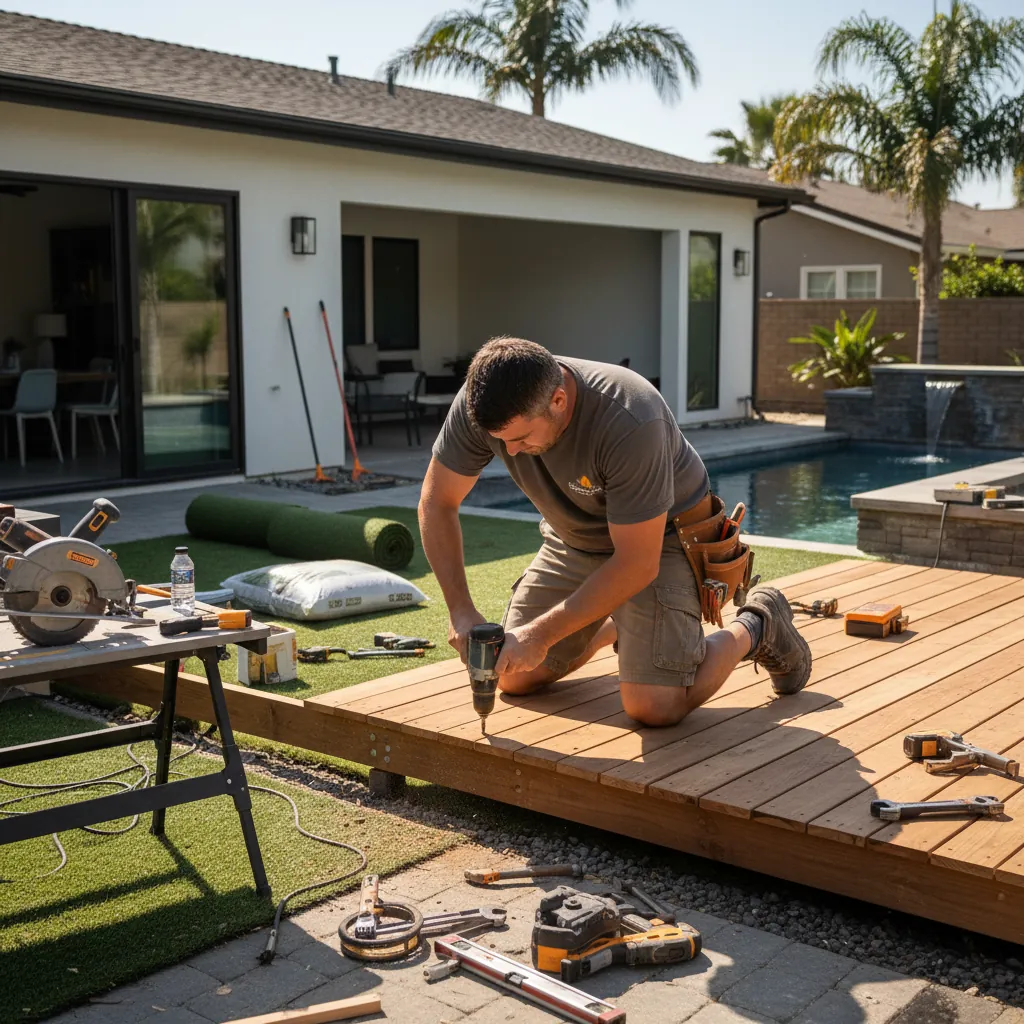
Site assessment, topographic mapping, and soil stability testing
Engineering and drafting plans for retaining walls and drainage systems
LADBS permit submission and zoning clearance acquisition
Excavation, grading, and structural retaining wall construction
Hardscape installation and smart, water-saving irrigation setup
Drought-tolerant planting, organic mulching, and final inspection sign-off
ContractorPro.Leads doesn't do the work itself. We pass your Eagle Rock project to up to four local backyard remodelers who take this kind of job, and you decide whether to hire any of them.
Whether your home sits near the bustling shops along Colorado Boulevard, the historic residential pockets surrounding Occidental College, or the winding streets branching off Eagle Rock Boulevard, local yards present unique microclimates. Local professionals design yards that honor the area's historic Craftsman and Mid-Century Modern architecture while incorporating native, drought-tolerant flora that thrives in our hot, dry summers.
Tell us what you have in mind. We'll pass it to up to four local pros, and they'll contact you to talk it through.
Yes, in the City of Los Angeles, any retaining wall over four feet high (measured from the bottom of the footing) or any wall supporting a surcharge (like a slope or driveway) requires a permit and structural engineering plans approved by the Los Angeles Department of Building and Safety.
For standard projects, plan checks can take four to eight weeks. However, because Eagle Rock has many hillside areas subject to specific grading and geologic reviews, complex structural permits may take three to six months to secure.
Since much of Eagle Rock is in a Very High Fire Hazard Severity Zone, the LAFD requires a 100-foot brush clearance zone. Your landscape design should feature fire-resistant, low-fuel plants near the home, clear defensible space, and no highly flammable trees like eucalyptus or pine close to structures.
Yes. The Los Angeles Department of Water and Power offers substantial turf replacement rebates for replacing lawn with organic, drought-tolerant landscaping, smart controllers, and rain-capture features. Your contractor must apply and receive pre-approval before removing the grass.
Experienced local contractors design tiered backyard layouts using multiple smaller retaining walls to minimize excavation. They use specialized compact equipment to navigate narrow hillside access points and drill deep footings into the rocky San Rafael Hills subsoil.
Late spring and summer are ideal for hardscaping, masonry, and grading to avoid mud and soil erosion. However, planting is best done in late fall or early winter so native plants can establish roots using seasonal winter rains before the hot summer dry spell.
