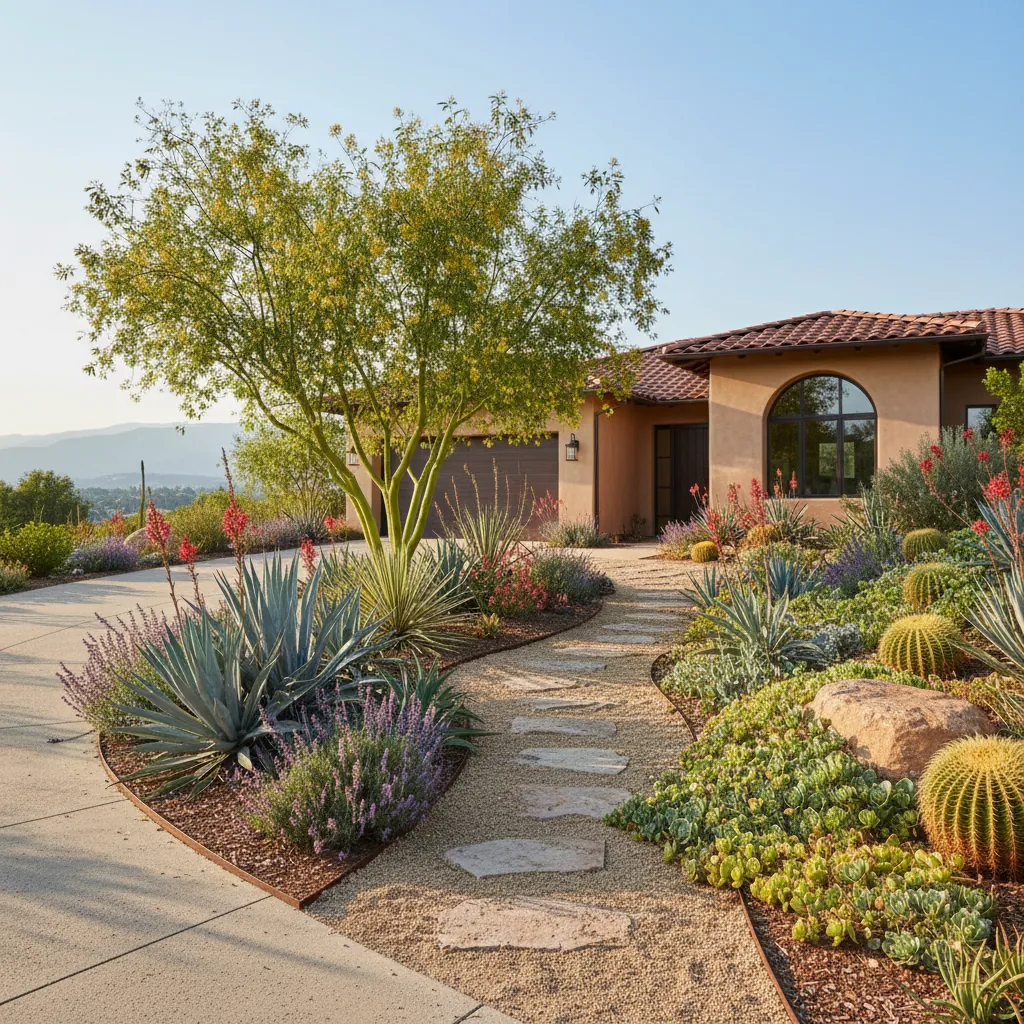
Typical La Crescenta-Montrose costs, permit steps and timelines are below. When you are ready, describe your project and up to four local landscapers serving La Crescenta-Montrose will contact you. You compare and decide.
La Crescenta-Montrose spreads across a sloping alluvial fan at the foot of the San Gabriel Mountains, with hot summers, cooler foothill nights and high wildfire risk near the mountains. Yards here are often rocky, fast-draining and sloped, so landscape installation tends to involve more grading, boulder removal and drainage work than in flatter parts of the county. Most projects combine drought-tolerant planting, drip irrigation and some hardscape, with fire-safe spacing near the house. The area is unincorporated, so structural work such as taller retaining walls goes through LA County Public Works, Building and Safety Division, and irrigation follows Crescenta Valley Water District rules. A request through this page goes to up to four local landscapers who serve La Crescenta-Montrose and contact you directly.
Landscaping on La Crescenta's sloping alluvial fan means working with highly rocky, fast-draining soil that quickly loses moisture, while managing the high wildfire risks near the San Gabriel Mountains.
Selecting fire-resistant plants and installing efficient drip irrigation are not just aesthetic choices—they are safety and conservation requirements. Additionally, major terracing or retaining wall projects must navigate the strict hillside grading standards of the LA County Public Works, Building and Safety Division.
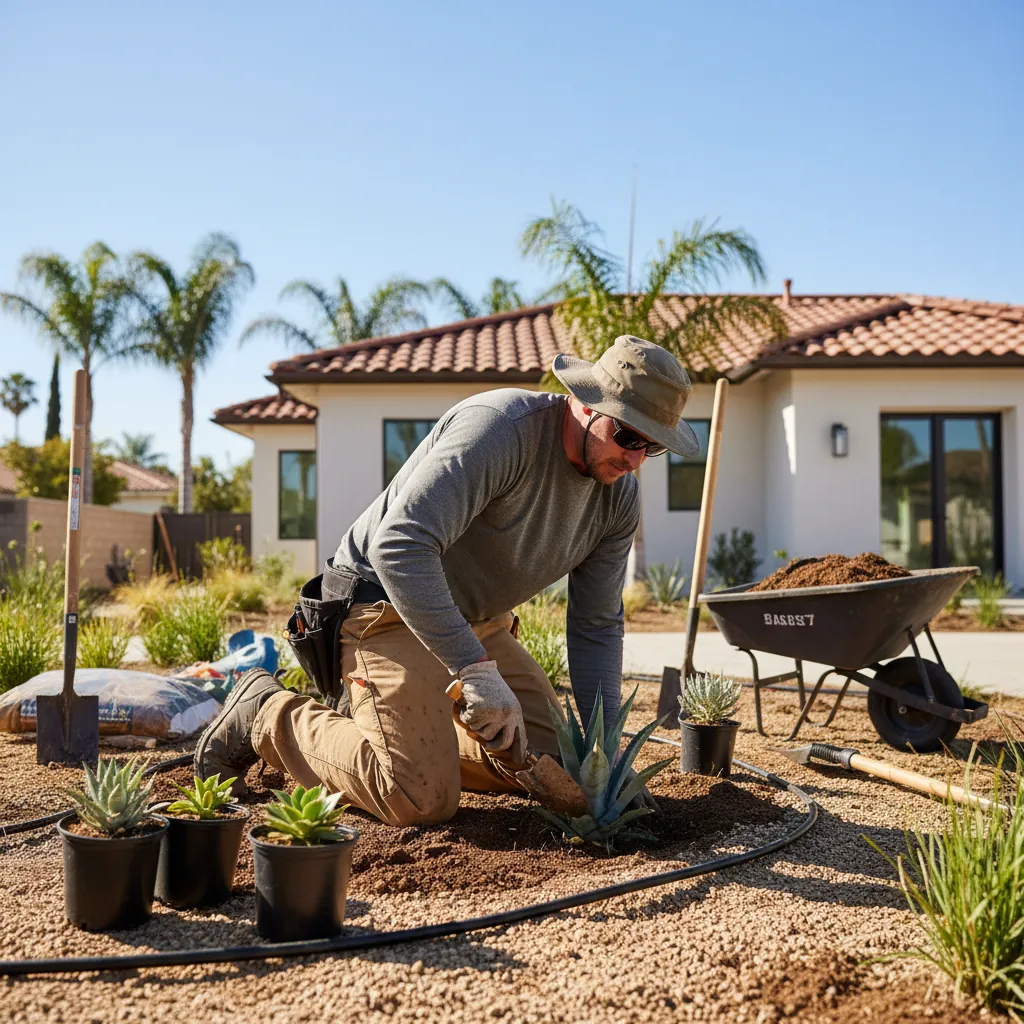
Cost varies based on lawn size and the amount of rocky soil excavation required before planting natives and spreading mulch.
Sloping terrain in La Crescenta requires structural engineering and potential permitting through LA County Public Works for walls over three feet.
Configured to meet Crescenta Valley Water District conservation guidelines, with zoned watering for sloped plantings.
Typical market ranges for the Greater Los Angeles area, not a quote or a guarantee. The price of your job depends on its scope, so ask each pro for a written estimate before you decide. Bars share one scale, so you can compare project sizes.
Site assessment analyzing slope, wind exposure, and soil composition
Drafting a fire-safe, drought-tolerant planting and hardscape plan
Checking local utility lines and verifying LA County grading permits if needed
Soil preparation, including organic amendments to help rocky soil retain moisture
Installing efficient drip irrigation and smart, CVWD-compliant controllers
Planting, mulching, and setting up initial establishment watering schedules
ContractorPro.Leads doesn't do the work itself. We pass your La Crescenta-Montrose project to up to four local landscapers who take this kind of job, and you decide whether to hire any of them.
Whether you live in a mid-century home near the mature oaks of Crescenta Valley Park or a bungalow close to the bustling shops along Honolulu Avenue, local landscape contractors understand the microclimates of the valley. Properties closer to Foothill Boulevard experience intense summer heat, while those higher up the slope encounter cooler foothill nights and fierce seasonal winds. Experienced local professionals design landscapes that respect these transitions, combining native California species with robust hardscaping that anchors the sloping earth.
All home services in La Crescenta-Montrose
More planning guides for La Crescenta-Montrose and nearby: landscaping in La Canada Flintridge, landscaping in Glendale, hardscape in La Crescenta-Montrose and backyard remodeling in La Crescenta-Montrose.
Tell us what you have in mind. We'll pass it to up to four local pros, and they'll contact you to talk it through.
A landscape contractor plans and builds the whole outdoor space: grading, drainage, irrigation, planting, lighting and hardscape such as paths, patios and low walls. On the rocky alluvial-fan soils here, a good part of the job is often soil preparation, rock removal and making sure water moves away from the house and does not wash out new planting. Ask for a plan drawing and a line-item scope before work starts.
Rocky, fast-draining soil holds little water and few nutrients, so planting holes are usually dug wider, amended with compost and paired with drip irrigation set to water deeply but less often. Large rocks can be reused as boulders, dry creek beds or wall material instead of being hauled away. On sloped lots, terracing or erosion control may be needed before planting so the soil stays in place through winter storms.
Near the mountains, the zone closest to the house is kept lean, with low, well-spaced, irrigated plants and no wood mulch or dense shrubs against walls. Further out, drought-tolerant and native plants can fill in with more spacing. Irrigation schedules follow Crescenta Valley Water District conservation rules, so a landscaper will usually recommend drip lines and a smart controller instead of overhead spray.
Yes, if the wall is over four feet tall (or over three feet if supporting a surcharge slope). Permits are issued by the LA County Public Works, Building and Safety Division, and may require structural calculations due to our sloping alluvial terrain.
The Crescenta Valley Water District (CVWD) offers rebates for turf removal and smart irrigation controllers. Local contractors can help design your landscape to meet their specific drought-tolerant plant coverage guidelines to ensure your rebate is approved.
Our local alluvial-fan soil is packed with granite cobble. Professional landscapers use heavy-duty equipment for excavation and import organic compost to amend planting pockets, ensuring young root systems can establish securely.
If your property is near the foothills or the Angeles National Forest, you are in a high wildfire risk zone. Local contractors design 'Zone 1' (within 30 feet of the home) using fire-resistant, low-growing plants and hardscaping to mitigate fire hazards.
Fall and early winter are ideal. This allows native and drought-tolerant plants to establish their root systems during the cooler foothill nights and winter rains before facing the intense heat of a La Crescenta summer.
