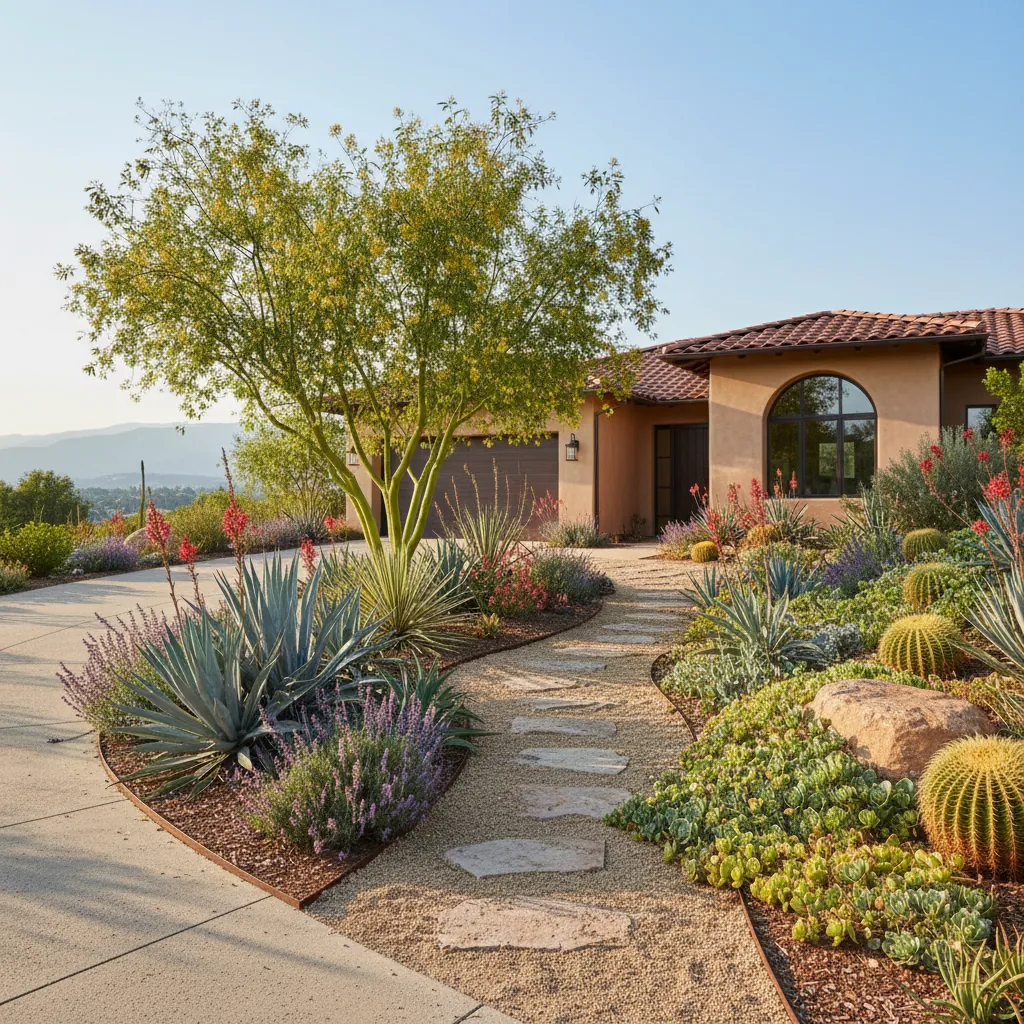
Typical Altadena costs, permit steps and timelines are below. When you are ready, describe your project and up to four local landscapers serving Altadena will contact you. You compare and decide.
Altadena sits on a sloping alluvial fan at the base of the San Gabriel Mountains, with hot, dry summers, strong downslope winds and much of the area in fire hazard severity zones. On cleared, regraded or sloped lots, hydroseeding is a practical way to get ground cover growing over a large area at once: a slurry of seed, mulch, fertilizer and tackifier is sprayed onto the soil, where it sticks and germinates with rain or irrigation. The rocky alluvial-fan soils drain fast, so soil preparation, seed choice and watering are planned together. Structural work such as retaining walls goes through LA County Public Works, Building and Safety Division. A request through this page goes to up to four local landscapers who serve Altadena and contact you directly.
Landscaping in Altadena means working with the rocky alluvial-fan soil washed down from the canyon walls and navigating a steep, sloping terrain.
Because much of the area sits in a Very High Fire Hazard Severity Zone, plantings must balance fire-resistant defensible space with protection against powerful downslope winds. Additionally, any structural changes like retaining walls or significant grading require careful compliance with the unincorporated Los Angeles County Public Works, Building and Safety Division.
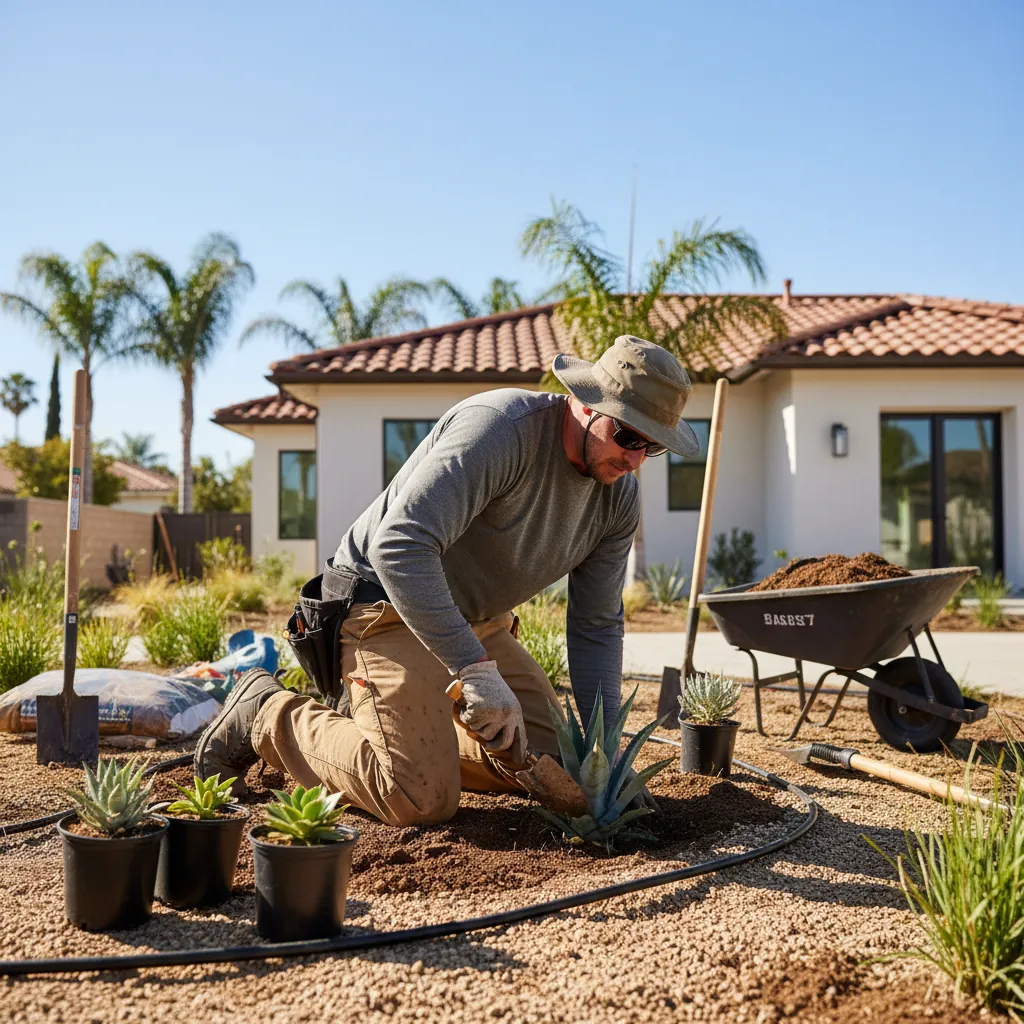
Cost depends heavily on yard size and the amount of soil prep needed to work with Altadena's rocky alluvial-fan earth.
Sloping terrain near the San Gabriels requires engineered structural support to prevent erosion, which increases labor and material costs.
Upgrading to high-efficiency drip systems helps comply with local water district limits while ensuring deep root hydration.
Typical market ranges for the Greater Los Angeles area, not a quote or a guarantee. The price of your job depends on its scope, so ask each pro for a written estimate before you decide. Bars share one scale, so you can compare project sizes.
Site assessment analyzing slope stability, soil drainage, and fire zone requirements
Hardscape design and structural planning for retaining walls, if required
Permit acquisition through the LA County Public Works, Building and Safety Division for structural work
Soil preparation, including addressing rocky alluvial-fan earth and installing grading
Installation of high-efficiency drip irrigation and fire-resistant native plantings
Final inspection and system calibration for seasonal water conservation
ContractorPro.Leads doesn't do the work itself. We pass your Altadena project to up to four local landscapers who take this kind of job, and you decide whether to hire any of them.
From the historic properties along Christmas Tree Lane to the mid-century homes bordering Altadena Dr and the active residential corridors off Lake Ave, Altadena's landscape is incredibly diverse. Properties higher up the slope face distinct drainage and erosion challenges compared to those on flatter lots, requiring specialized native planting schemes and hardscape designs that complement the natural mountain backdrop.
More planning guides for Altadena and nearby: landscaping in Pasadena, landscaping in La Crescenta-Montrose, hardscape in Altadena and backyard remodeling in Altadena.
Tell us what you have in mind. We'll pass it to up to four local pros, and they'll contact you to talk it through.
Hydroseeding fits large, open or sloped ground that needs cover quickly, such as a cleared lot, a regraded slope or bare soil that would otherwise wash in winter storms. It is usually faster and less costly per area than sod on that kind of ground. On steep areas it is often paired with erosion blankets or fiber rolls. For a small, flat front yard, planting or sod can be simpler.
Near the house, the goal is low, fire-resistant cover that stays green with irrigation, not tall grasses that dry out by summer. On outer slopes many owners choose native or drought-tolerant erosion mixes suited to the rocky foothill soil. Ask the landscaper to list each species in the mix, how tall it grows and how it fits the defensible space rules for the property.
It depends on the season and the watering. Seeding in fall ahead of the winter rains usually gives the most even result, while seeding in the hot, dry months needs steady irrigation until the cover fills in. Water lightly and often at first so the slurry stays on the slope, and keep foot traffic off the area. Ask whether the price includes overseeding any thin patches.
Yes, if your landscaping project includes retaining walls over 4 feet tall or significant grading, you must secure permits from the unincorporated Los Angeles County Public Works, Building and Safety Division.
Since much of Altadena lies in a high fire hazard severity zone, local pros design landscapes using defensible space zones. This involves spacing out plants, using fire-resistant species, and keeping highly flammable vegetation away from your home's exterior.
Yes, Altadena residents served by local water districts can often leverage turf removal rebates through the Metropolitan Water District or Foothill Municipal Water District. Be sure your contractor documents the lawn before any work begins to qualify.
Contractors experienced in the 91001 ZIP code utilize specialized equipment to handle rocky alluvial-fan soils and incorporate organic amendments to improve moisture retention. For slopes, they design tiered terraces or use deep-rooting groundcovers to hold the hillside.
Fall is the ideal planting window in our climate, allowing native and drought-tolerant plants to establish roots during the cooler, wetter winter months before facing the hot, dry summer and intense downslope winds.
