Typical North Hills costs, permit steps and timelines are below. When you are ready, describe your project and up to four local concrete contractors serving North Hills will contact you. You compare and decide.
Site assessment and marking utilities via DigAlert (811)
Excavation and removal of old asphalt, concrete, or dry turf
Subgrade preparation and compaction of aggregate base
Formwork installation and placement of steel rebar reinforcement
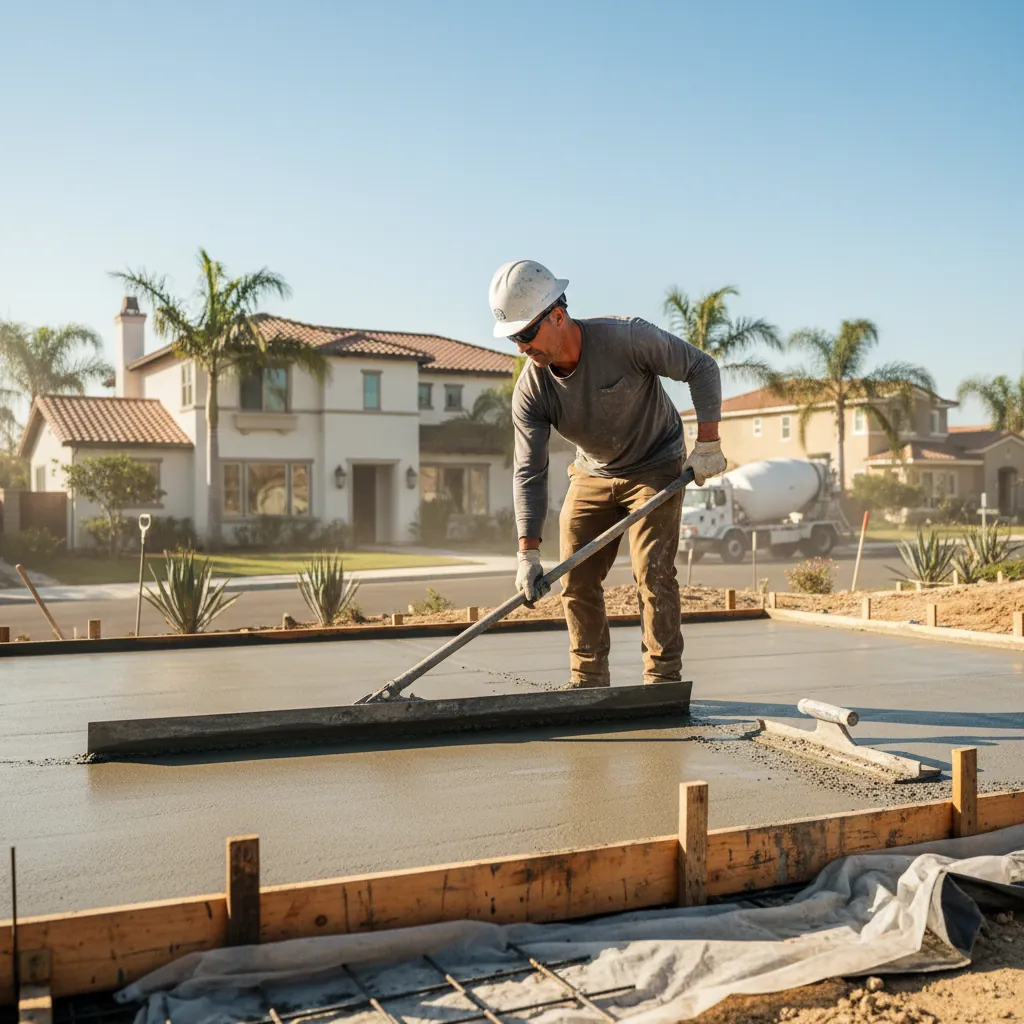
Concrete pouring, leveling, finishing, and curing-compound application
Form removal and final cleanup of the surrounding landscape
Cost depends heavily on the excavation of old concrete and the depth of the aggregate base needed to combat North Hills clay soils.
Custom textures and pigments require skilled hand-finishing, which varies based on design complexity and access to the backyard.
Smaller, winding pathways near property lines often require more manual labor and careful grading to ensure proper drainage on flat Valley lots.
Typical market ranges for the Greater Los Angeles area, not a quote or a guarantee. The price of your job depends on its scope, so ask each pro for a written estimate before you decide.
Maintaining stable driveways and patios in the North Hills area requires an understanding of our specific San Fernando Valley conditions. Homeowners from Sepulveda Boulevard to Plummer Street need durable installations that stand up to intense heat and localized soil movement. We connect you with local concrete contractors who understand these unique demands and can deliver lasting results for your property.
The flat northern Valley floor near the I-405 and I-5 corridors features alluvial soils mixed with pockets of expansive clay.
During hot, dry San Fernando Valley summers, this soil shrinks, only to swell during winter rains, which can easily crack poorly reinforced concrete. Local installations must feature proper sub-base compaction and strategic expansion joints to withstand these shifting ground conditions and meet LADBS standards.
ContractorPro.Leads doesn't do the work itself. We pass your North Hills project to up to four local concrete contractors who take this kind of job, and you decide whether to hire any of them.
Whether you own a mid-century ranch home near Devonshire Street or a newer property off Sepulveda Boulevard, your hardscaping defines your curb appeal. As North Hills homeowners adapt to LADWP summer watering limits by replacing thirsty lawns with clean concrete patios and drought-tolerant pathways, selecting the right base material becomes critical for long-term durability on our flat terrain.
Tell us what you have in mind. We'll pass it to up to four local pros, and they'll contact you to talk it through.
Yes, if you are replacing or widening a driveway apron that connects to a public street, or if you are pouring structural slabs. The Los Angeles Department of Building and Safety (LADBS) regulates these permits, and work within the public right-of-way also requires Bureau of Street Services clearance.
Simple hardscape and backyard patio slabs under certain size thresholds may qualify for express "over-the-counter" permits. For structural retaining walls or complex driveways, plan check reviews at the local LADBS Valley office can take anywhere from 2 to 6 weeks.
When summer temperatures soar past 90 degrees in North Hills, water evaporates rapidly from freshly poured concrete, which can cause premature cracking. Local pros often use chemical retarders in the mix, wet down the subgrade before pouring, or apply curing blankets to keep the concrete hydrated.
LADWP offers generous turf replacement rebates, but they require a portion of the replaced area to remain permeable or drought-tolerant. Clean, solid concrete does not qualify on its own, but you can pair decorative concrete pathways with permeable pavers or rock mulch to qualify for the program.
North Hills sits on flat alluvial soils that contain pockets of expansive clay. When the clay absorbs seasonal rain, it expands, and when it dries out in the summer, it shrinks. Without a properly compacted gravel sub-base and steel reinforcement, this constant shifting will cause concrete to crack and settle unevenly.
