Typical Valley Glen costs, permit steps and timelines are below. When you are ready, describe your project and up to four local concrete contractors serving Valley Glen will contact you. You compare and decide.
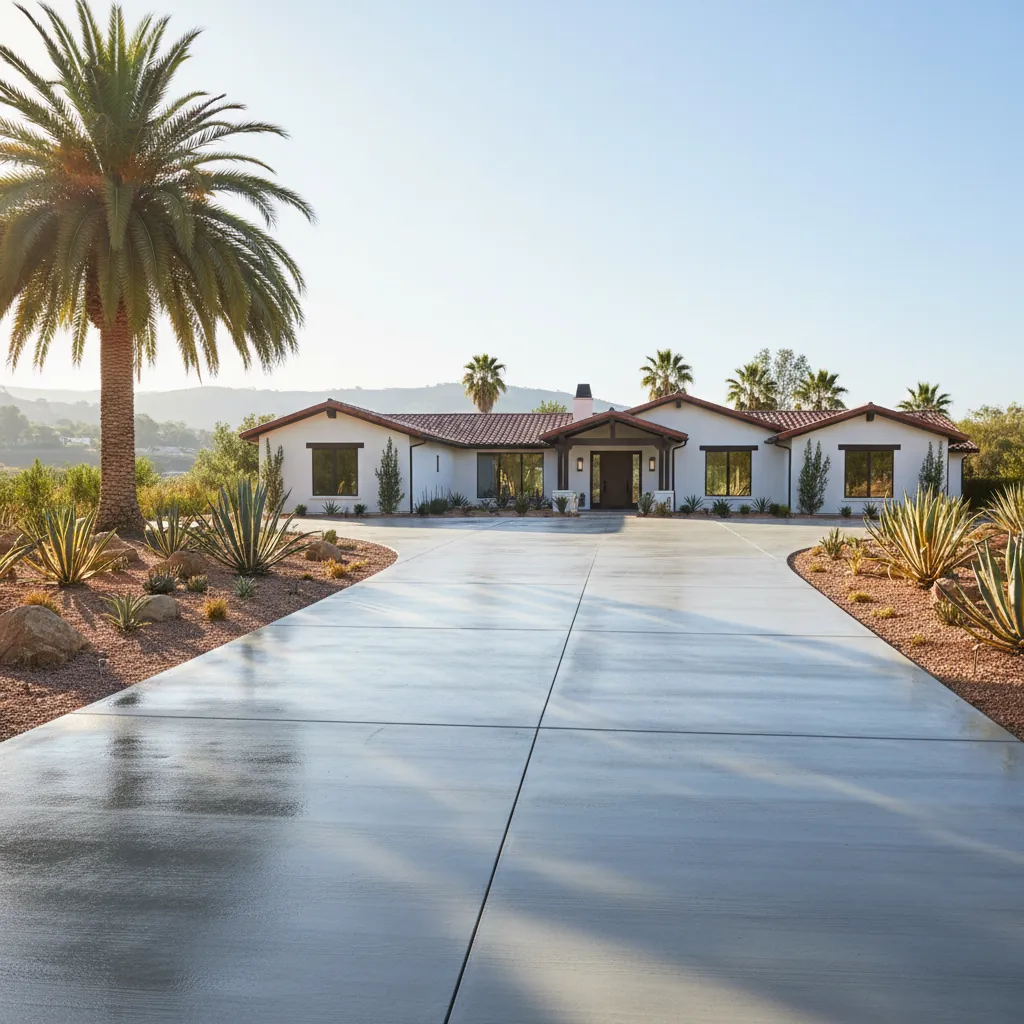
Site excavation and grading to establish proper drainage slope away from the home
Soil compaction and installation of a crushed aggregate subbase to handle shifting alluvial soil
Layout of heavy-duty wooden forms and placement of steel rebar reinforcement grids
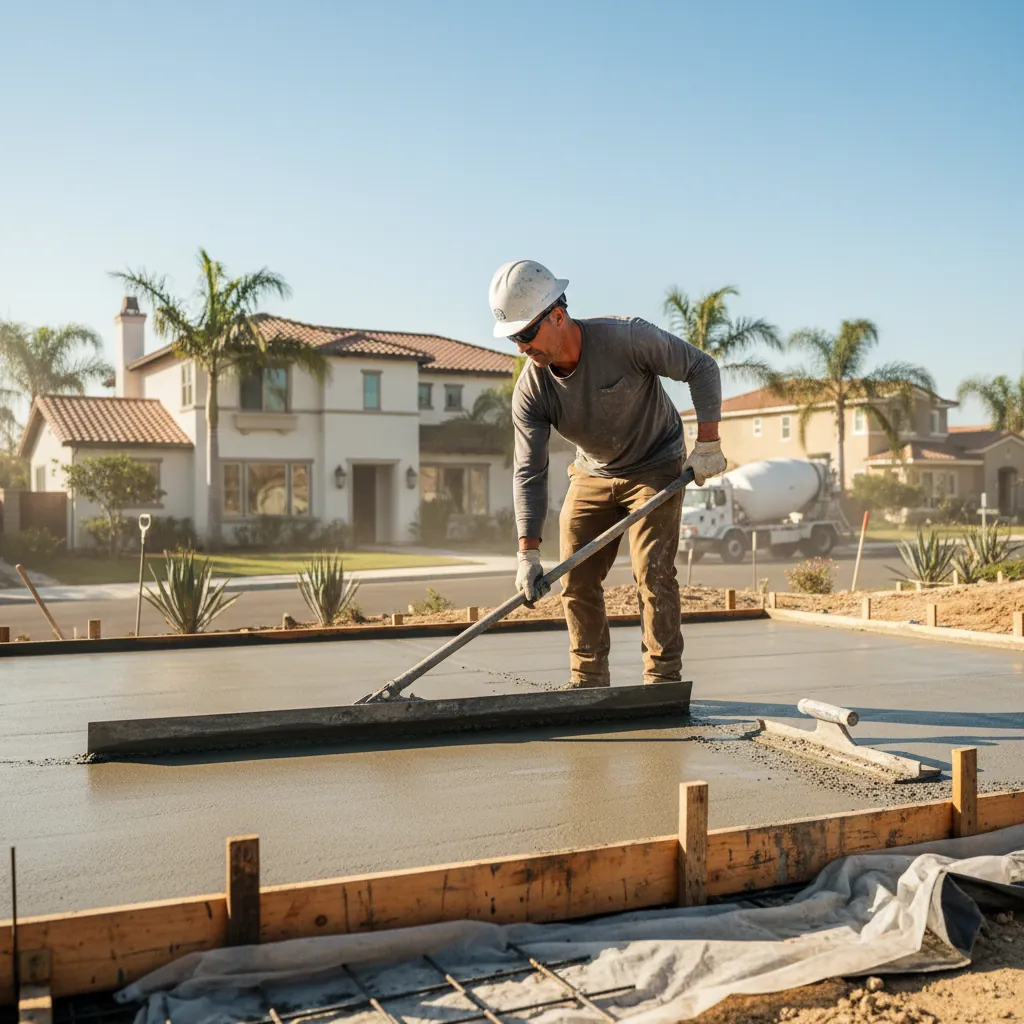
Precise concrete pouring and professional finishing (broom, stamped, or smooth)
Application of curing compounds or wet-curing blankets to protect against rapid Valley dehydration
Form removal and clean-up of the surrounding landscape
Varies depending on demolition of existing concrete, soil preparation needs, and rebar reinforcement thickness.
Intricate patterns, multi-colored stains, and accessibility of your backyard in Valley Glen drive this range.
Curving pathways or those navigating around mature tree roots require extra forming labor and root barriers.
Flatwork for ADUs or sheds requires precise grading to comply with City of Los Angeles drainage requirements.
Typical market ranges for the Greater Los Angeles area, not a quote or a guarantee. The price of your job depends on its scope, so ask each pro for a written estimate before you decide. Bars share one scale, so you can compare project sizes.
Upgrading the hardscape around your Valley Glen property requires a deep understanding of our unique San Fernando Valley environment. From durable backyard patios to reinforced driveways, local concrete professionals help you design beautiful, resilient outdoor spaces. We connect you with independent local contractors who understand the nuances of building in our flat, sun-drenched neighborhood.
Valley Glen sits on the flat central Valley floor along the Tujunga Wash, meaning the underlying ground consists of alluvial wash soils that fluctuate from loose sand to dense, clay-rich pockets.
During our intensely hot, dry summers, this soil shrinks, only to swell during winter rains, putting immense stress on unreinforced concrete. Without proper subgrade preparation, deep rebar reinforcement, and expert curing techniques to combat rapid evaporation in the Valley heat, concrete installations here are highly prone to premature cracking and lifting.
ContractorPro.Leads doesn't do the work itself. We pass your Valley Glen project to up to four local concrete contractors who take this kind of job, and you decide whether to hire any of them.
Whether you live in a mid-century ranch home near Burbank Boulevard or a quiet residential block close to Los Angeles Valley College, your property’s curb appeal relies on stable hardscaping. The proximity to the Tujunga Wash Greenway highlights the importance of managing local runoff, prompting many homeowners to consider permeable concrete options. Local contractors ensure your driveways, walkways, and patios harmonize with the flat topography and mature trees typical of Valley Glen streets.
Tell us what you have in mind. We'll pass it to up to four local pros, and they'll contact you to talk it through.
Standard backyard patios under 500 square feet often do not require a permit, but new driveways, aprons, or structural slabs require permits and inspections from the Los Angeles Department of Building and Safety (LADBS).
High heat causes water to evaporate too quickly from fresh concrete, leading to shrinkage cracks and weakened structural integrity. Local pros combat this by pouring early in the morning, using chemical retarders, and applying wet-curing techniques.
Traditional, impermeable concrete does not qualify for turf replacement rebates. However, incorporating permeable concrete or pairing your hardscape with drought-tolerant plantings can help you meet LADWP's conservation criteria.
Most residential projects like driveways or patios take 3 to 5 days, which includes excavation, form setting, pouring, and initial curing. Heavy vehicle traffic should be avoided for at least 7 to 10 days.
Because our soil near the Tujunga Wash ranges from sandy to clay-rich, contractors must carefully compact the subgrade and lay a thick gravel base to prevent the concrete from settling unevenly or cracking as the ground shifts.
