Typical Venice costs, permit steps and timelines are below. When you are ready, describe your project and up to four local room addition contractors serving Venice will contact you. You compare and decide.
Conduct a site survey and soil geotechnical investigation to assess the shallow water table.
Draft architectural plans adhering to City of Los Angeles zoning and height limits.
Submit plans to the Los Angeles Dept. of Building and Safety (LADBS) for plan check and coastal permits.
Pour engineered concrete foundations designed specifically for sandy coastal soil conditions.
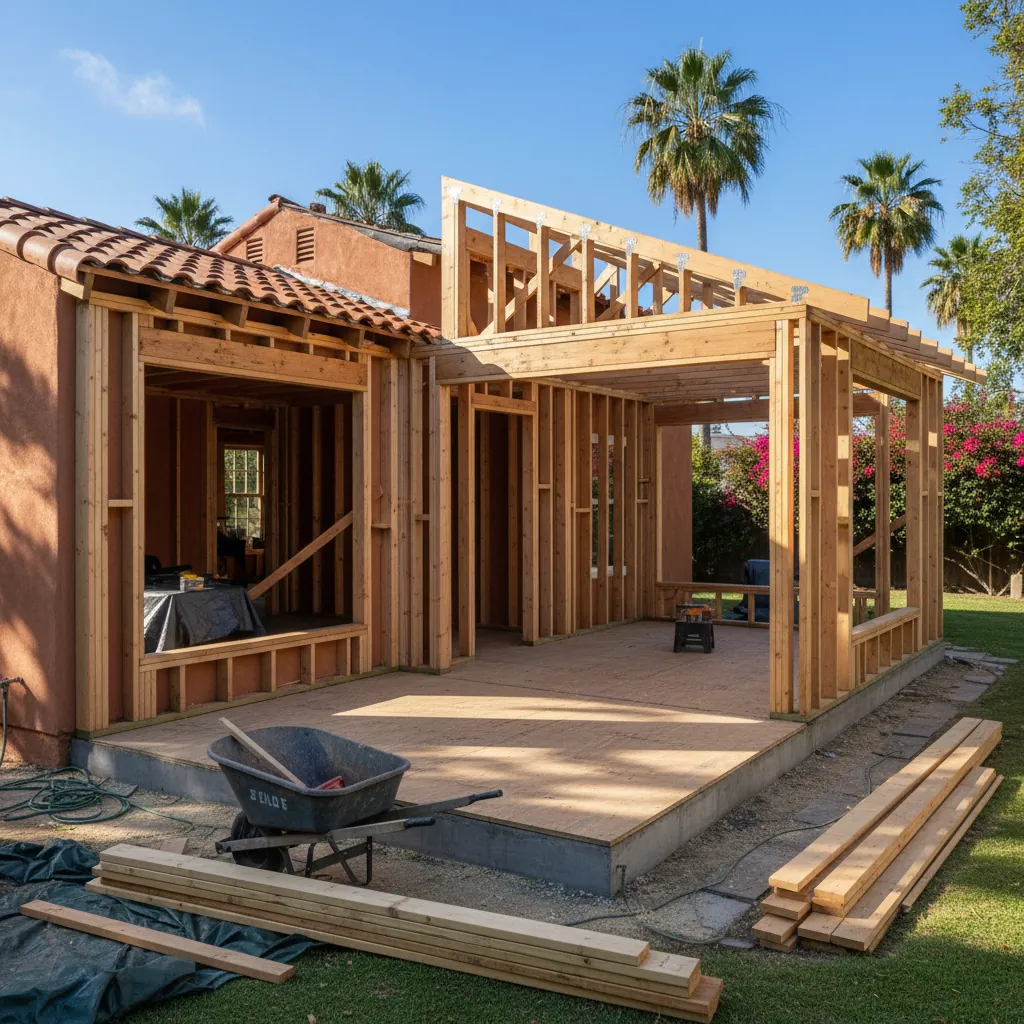
Construct framing with weather-resistant barriers and marine-grade exterior envelope materials.
Complete interior finishes and final inspections with LADBS inspectors.
Driven by the necessity of specialized foundation work in Venice's sandy, high-water-table soils and strict local structural engineering codes.
Reflects the need for structural retrofitting of the existing first floor to support the new load, plus complex LADBS coastal height limit reviews.
The Coastal Commission and LADBS plan check processes in Venice require detailed architectural drawings, environmental reviews, and engineering calculations.
Typical market ranges for the Greater Los Angeles area, not a quote or a guarantee. The price of your job depends on its scope, so ask each pro for a written estimate before you decide. Bars share one scale, so you can compare project sizes.
Preserving the unique architectural character of Venice while expanding your living space requires a delicate touch and deep municipal knowledge. Whether you are adding a second-story master suite near the canals or extending a modern bungalow, local pros can help you maximize your footprint.
Building a room addition in Venice presents distinct structural challenges due to the sandy coastal soils and a shallow water table, particularly near the beach and canals.
Contractors must engineer specialized foundation solutions, such as deepened footings or grade beams, to mitigate settling and moisture intrusion. Additionally, the marine layer's persistent salt air demands high-performance, corrosion-resistant framing hardware and exterior finishes to prevent premature weathering.

ContractorPro.Leads doesn't do the work itself. We pass your Venice project to up to four local room addition contractors who take this kind of job, and you decide whether to hire any of them.
From the historic, narrow lots near the Venice Canals to the vibrant, modern residences steps from Abbot Kinney Boulevard and the Venice Beach Boardwalk, home design here is highly individualized. Expanding a home in this dense coastal footprint requires navigating strict setbacks, coastal zone regulations, and architectural harmony. Local contractors are experienced in designing additions that respect the character of these eclectic blocks while optimizing natural light and ocean breezes.
Planning a larger project? Venice homeowners also read our nearby guides to room additions in Playa Vista and general contractors in Playa Vista, which cover permits, typical costs and timelines.
Tell us what you have in mind. We'll pass it to up to four local pros, and they'll contact you to talk it through.
Permitting through the Los Angeles Dept. of Building and Safety (LADBS) typically takes 4 to 9 months. If your property lies within the Coastal Zone, it will require a Coastal Development Permit, which can extend the timeline due to environmental reviews and neighborhood notification requirements.
Yes, because Venice features sandy coastal soils and a high water table, LADBS almost always requires a professional geotechnical soil report. This ensures your new foundation is engineered safely to prevent settling and water intrusion.
The constant salt fog and damp air require highly durable materials. Local pros recommend composite or cement-board siding instead of traditional wood, rust-resistant flashing, and premium mildew-resistant paints to prevent rapid exterior deterioration.
Yes, when adding new bathrooms or landscaping as part of your addition, you can leverage LADWP rebates. They offer incentives for installing high-efficiency toilets, low-flow fixtures, and drought-tolerant landscaping that complies with local watering limits.
Yes, but you must strictly adhere to the City of Los Angeles zoning laws, which mandate specific side-yard setbacks and height limits. Local design-build contractors specialize in maximizing vertical space while respecting these dense urban parameters.
