
Rollingwood homes nestled along the wooded hillsides near Bee Cave Road often feature custom architectural designs with extended, multi-story dryer exhaust runs. Over time, high household usage combined with Central Texas humidity causes dense lint to accumulate deep within these hidden ducts, stressing appliances and creating hidden fire hazards. We connect you with independent dryer duct cleaning specialists in the 78746 area who have the specialized tools to restore safe, efficient airflow to your laundry system.
Initial diagnostic check of line backpressure and static airflow at the dryer transition hose
Inspection of the interior transition duct for proper UL-listed rigid or semi-rigid metal piping
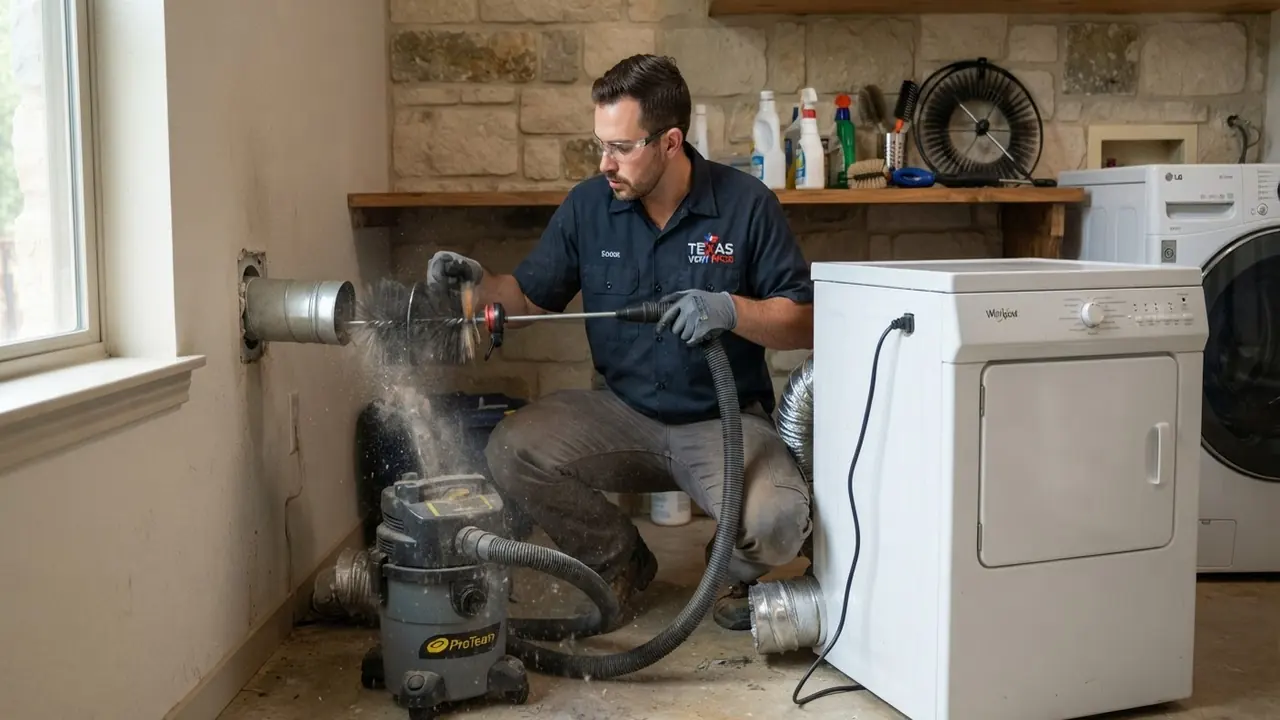
Full-length rotary brush agitation combined with high-powered HEPA negative-air extraction
Cleaning, clearing, and mechanical check of exterior wall hoods or roof-mounted exhaust jacks
Final post-service airflow measurement and safety test of the dryer connection and lint trap seal
Typical for single-story runs with direct exterior wall termination under 15 feet in length.
Common for Rollingwood two-story homes where technicians must navigate attic rafters or access steep roof caps.
Involves clearing dense packed blockages or nesting material and installing protective pest-guard termination caps.
Covers replacing damaged flexible hoses with code-compliant rigid aluminum ducting through wall penetrations.
Typical market ranges for the Greater Austin area — not a quote or guarantee. Your actual price depends on scope; compare free quotes from local pros.
Set on a hilly enclave over thin soil and solid Edwards limestone, many Rollingwood residences feature slab foundations and multi-level layouts that force dryer exhaust ducts to run long distances through attic spaces or out through second-story rooflines.
During hot 100°F Austin summers, attic temperatures superheat metal ductwork, baking moist lint into dense, flammable obstructions along horizontal elbows. Furthermore, springtime humidity and heavy pollen from surrounding live oaks can gum up exterior louvers, trapping moisture and lint inside walls where it can trigger mold or severe mechanical backpressure.
ContractorPro.Leads is a matching service and doesn't do the work itself. We pass your Rollingwood request to a few local companies that take this kind of job, and you decide whether to hire any of them.
From the quiet estates bordering Western Hills to properties perched above Eanes Creek just minutes from Zilker Park, Rollingwood is defined by mature tree canopies and distinct custom architecture. These spacious properties require tailored maintenance approaches, especially when long exhaust lines run through complex framing and finished ceilings along the Bee Cave Road corridor.
Connect with an experienced local dryer vent cleaning pro in Rollingwood today to protect your home and restore peak laundry efficiency.
Pricing in Rollingwood is primarily determined by duct length, access difficulty, and termination location. Custom homes with vertical exhausts exiting through high-pitched tile or metal roofs require specialized roof-access safety gear, while long horizontal runs traversing finished ceilings take more time and high-pressure rotary equipment to clear properly.
Routine cleaning and basic transition duct maintenance do not require a permit. However, if your contractor is rerouting exhaust lines, cutting new exterior penetrations, or executing major mechanical modifications, plans may need to be filed with the City of Rollingwood Building Dept. to ensure compliance with local building and fire codes.
Most households in 78746 benefit from an annual professional cleanout. If you have a large family, wash heavy bedding often, or have a duct run that exceeds 25 feet with multiple 90-degree turns, scheduling service every 9 to 12 months helps maintain optimal appliance safety.
Key warning signs include clothes taking more than one cycle to dry, the top of the dryer or the laundry room feeling unusually hot and humid, a musty odor on freshly washed garments, or the exterior vent flap failing to open when the dryer is actively running.
Yes. A lint-choked duct restricts exhaust flow, forcing the dryer’s heating elements and blower motor to run significantly longer to dry each load. Removing the obstruction restores designed air volume, shortening cycle times and reducing energy consumption during hot Central Texas months.
