Typical Pacific Palisades costs, permit steps and timelines are below. When you are ready, describe your project and up to four local concrete contractors serving Pacific Palisades will contact you. You compare and decide.
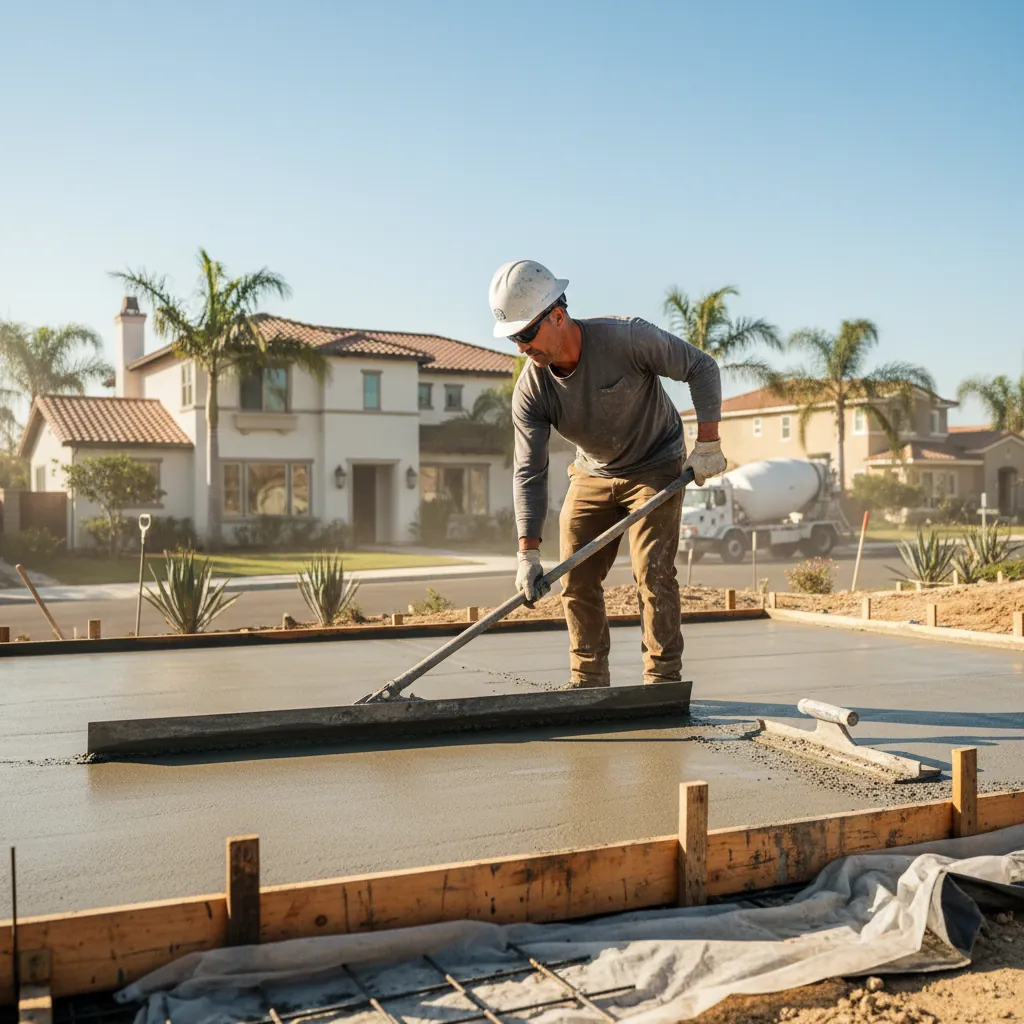
Site survey and assessment of slope stability and soil conditions
Acquisition of necessary LADBS permits, including structural calculations for retaining structures
Excavation and deep grading to establish a stable, well-compacted subgrade
Placement of heavy-duty steel rebar reinforcement tailored for coastal bluff movements
Pouring of high-strength concrete mix designed for marine/coastal exposure
Controlled curing and professional sealing to prevent salt-air penetration and cracking
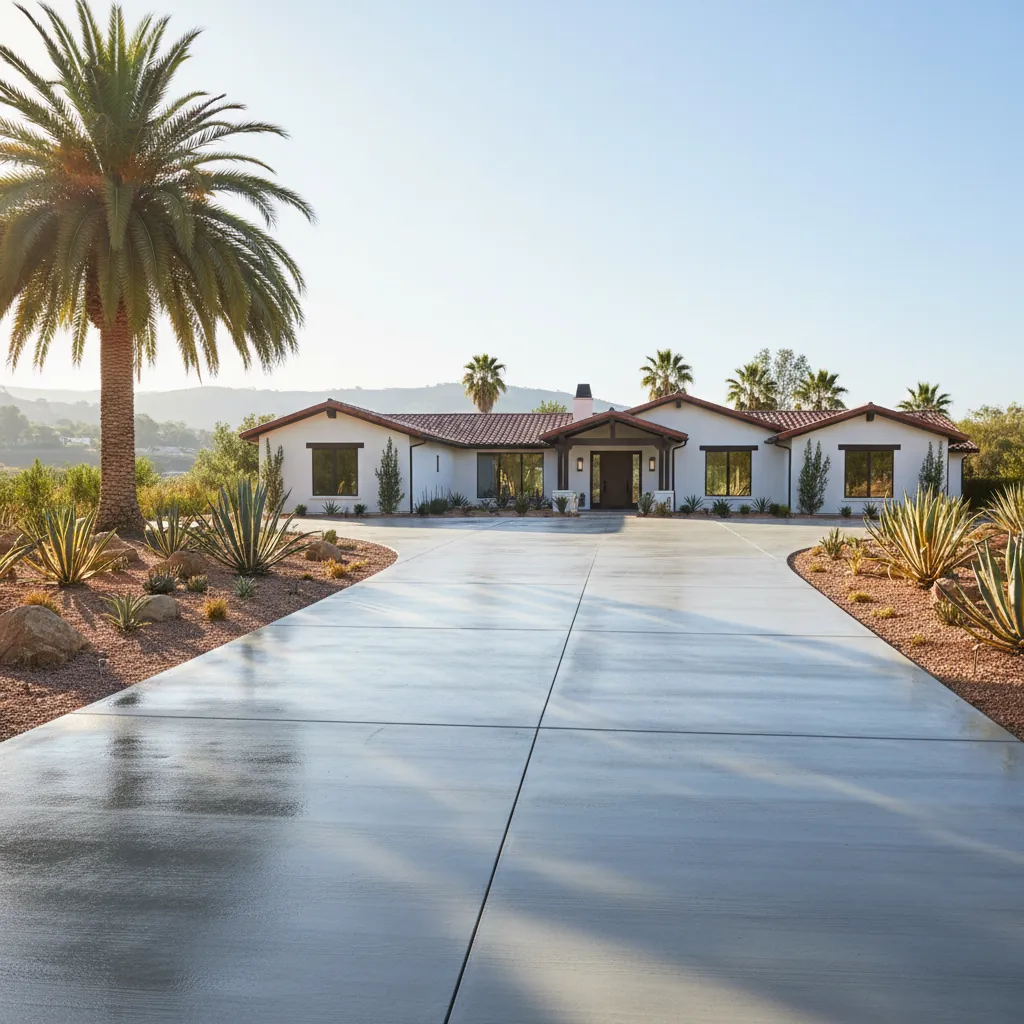
Basic pricing covers flat surfaces; Palisades driveways with steep grades or requiring extensive grading and LADBS-mandated retaining borders will fall on the higher end.
Steep slopes and canyon terrain require deeper footings, extensive steel rebar, and formal engineering plans to meet City of Los Angeles seismic and landslide safety codes.
High-end finishes matching the coastal-modern architecture near Palisades Village require skilled craftsmanship and specialized curing sealants to protect against marine humidity.
Typical market ranges for the Greater Los Angeles area, not a quote or a guarantee. The price of your job depends on its scope, so ask each pro for a written estimate before you decide.
Maintaining a home along the coastal bluffs and canyons of Pacific Palisades requires concrete installations that balance aesthetic elegance with structural integrity. Whether you are updating a driveway off Sunset Boulevard or securing a hillside patio, local contractors understand how to navigate our unique coastal terrain. We connect you with qualified local concrete specialists who have.
The coastal bluffs and steep canyon slopes of the Palisades are prone to shifting, particularly in landslide-sensitive zones between the Santa Monica Mountains and the Pacific.
Because soil expansiveness can threaten the longevity of standard concrete pads, structures here demand rigorous soil preparation, deep footings, and often custom structural engineering. Furthermore, concrete mixes must resist coastal salt-air exposure and adhere to the strict fire-safe building standards required in local Very High Fire Hazard Severity Zones.
ContractorPro.Leads doesn't do the work itself. We pass your Pacific Palisades project to up to four local concrete contractors who take this kind of job, and you decide whether to hire any of them.
From the busy corridors of Palisades Village to quiet residential enclaves near Temescal Canyon, concrete projects must complement the high architectural standards of the area. Driveways curving down toward Sunset Blvd must handle both heavy vehicles and steep grades without cracking. Local contractors specialize in finishes that blend with the natural beauty of the coastal mesas while standing up to the micro-climatic demands of the canyon floor.
Tell us what you have in mind. We'll pass it to up to four local pros, and they'll contact you to talk it through.
For simple flatwork, permits can often be obtained quickly over-the-counter or online. However, if your project involves structural retaining walls on a hillside, plan check reviews through the Los Angeles Department of Building and Safety (LADBS) can take anywhere from 4 to 8 weeks, as they require structural engineering and geotechnical approval.
Yes, any retaining wall in the City of Los Angeles that is over 4 feet tall, or any wall on a steep slope supporting surcharged soil, requires professional engineering plans and an LADBS permit due to our landslide-prone bluff and canyon soils.
The moist, salty marine air of the Pacific Palisades slows the evaporation of water during curing, which can actually help concrete gain strength if managed properly. However, contractors must use specific mixes with low permeability and coated reinforcement steel to prevent salt from corroding the internal rebar over time.
LADWP does not offer rebates for traditional impermeable concrete. However, if you choose permeable concrete or integrate hardscaping with native low-water planting zones, you may qualify for turf replacement rebates under LADWP's water-saving guidelines, provided you adhere to their specific watershed management requirements.
Because much of the Palisades lies within a Very High Fire Hazard Severity Zone, concrete is highly favored as a non-combustible defensive barrier. Local pros ensure that concrete perimeter paths and retaining walls act as effective firebreaks, conforming to LAFD and LADBS wildfire safety standards.
