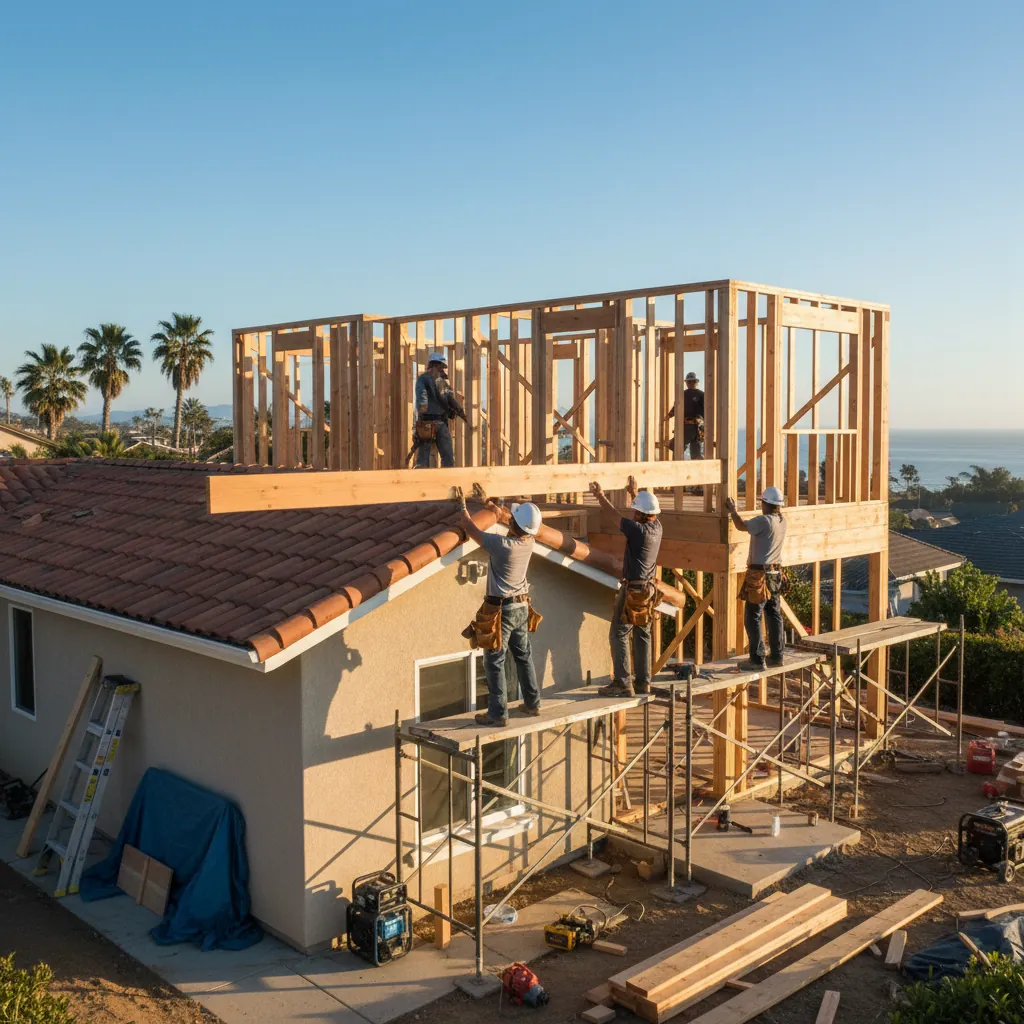
Home projects in Tujunga are shaped by local conditions: foothill community in the Crescenta Valley with steep sloped lots, rocky, decomposed-granite foothill soils; slope-stability concerns, and hot, dry summers; a Very High Fire Hazard (WUI) zone. Most structural, electrical, plumbing, and mechanical work is permitted through Los Angeles Dept. of Building and Safety (LADBS). Serving homes near Big Tujunga Wash, Verdugo Mountains and Foothill Blvd, we connect Tujunga homeowners with local pros who work in the area.
Much of the housing stock in Tujunga reflects its history as a scenic foothill retreat. You will find many 1920s Craftsman bungalows alongside mid-century postwar ranch houses built during the area's suburban expansion. Because of the steep sloped lots climbing into the Verdugo Mountains, many residential properties sit on terraced or uneven terrain. This hillside topography means that older foundations often require structural stabilization or seismic retrofitting. For homeowners managing these vintage properties, aging infrastructure is a primary concern. Upgrading outdated electrical systems, replacing corroded galvanized plumbing, and repairing older roofing materials damaged by intense sun exposure are common maintenance needs. Additionally, properties built on the decomposed-granite foothill soils often require careful evaluation of retaining walls and foundations to prevent shifting. Balancing the historic charm of these homes with modern safety standards requires a thorough understanding of local building challenges.
Living in a Very High Fire Hazard Severity Zone in the Crescenta Valley shapes home improvement priorities. Many local projects focus on fire-wise landscaping and clearing defensible space using concrete and pavers to reduce flammable vegetation. Homeowners frequently utilize LADWP rebates to transition to low-water yards with artificial turf and drought-tolerant hardscape. Given the hot, dry summers, upgrading outdated HVAC systems and installing new insulation are critical for energy efficiency. The steep terrain of the Verdugo Mountains requires specialized general construction for any room addition or backyard remodel. Additionally, the dry climate makes exterior painting and chimney cleaning essential preventative tasks, while homeowners also frequently invest in roofing upgrades to replace aging materials with fire-resistant options. Inside, updating plumbing and kitchen remodeling remain popular ways to modernize these foothill properties.
Because Tujunga is a neighborhood within the City of Los Angeles, all building permits are issued by the Los Angeles Department of Building and Safety (LADBS). Due to the steep sloped lots and slope-stability concerns in the foothill soils, structural projects like a room addition, ADUs, or heavy retaining walls require rigorous review. Routine work, including major plumbing repiping, electrical panel upgrades, and new roofing, also requires a permit from LADBS. It is highly recommended that a licensed contractor pull these permits, as they possess the necessary liability insurance and technical expertise to navigate the complex local building codes.
Tujunga shares its rugged foothill topography and historic housing styles with neighboring Sunland and La Crescenta-Montrose along the Foothill Boulevard corridor. While nearby Shadow Hills features larger equestrian lots, Tujunga offers a similar rustic feel on steeper slopes. Many residents commute through these communities toward Burbank and Sun Valley, enjoying a shared transition between the steep Verdugo Mountains and the flatter areas of the eastern San Fernando Valley.
Type your ZIP code to jump to your neighborhood in the San Fernando Valley and nearby. Pick a service first to go straight to that page. If we do not cover that ZIP yet, you go to the request form with it filled in.
