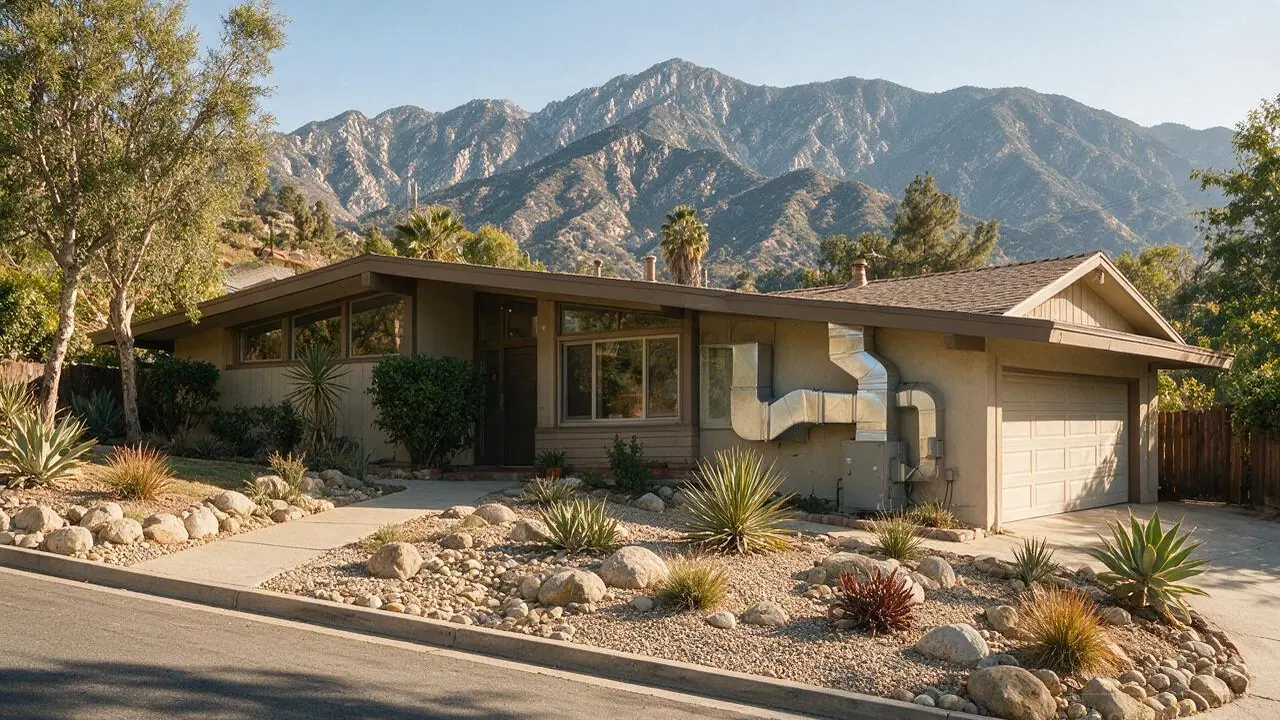
Home projects in Sunland are shaped by local conditions: foothill community against the San Gabriel Mountains, many sloped lots, rocky, decomposed-granite foothill soils, and hot, dry summers; a Very High Fire Hazard (WUI) zone. Most structural, electrical, plumbing, and mechanical work is permitted through Los Angeles Dept. of Building and Safety (LADBS). Serving homes near Sunland Park, Big Tujunga Canyon and Foothill Blvd, we connect Sunland homeowners with local pros who work in the area.
Sunland features a diverse range of housing stock, developed gradually along the foothills of the San Gabriel Mountains. Much of the neighborhood consists of mid-century properties, including postwar ranch houses, while many older sections contain 1920s Craftsman bungalows and rustic cabins. Because Sunland is a foothill community, homes are often situated on sloped lots with challenging, uneven terrain. This topography, combined with age, means homeowners frequently face specific maintenance and structural issues. In older homes, original plumbing and electrical systems often require complete upgrading to meet modern safety codes. Foundations on sloped lots can shift over time due to soil movement, requiring inspection and stabilization. Furthermore, older roofs are highly susceptible to weathering from intense mountain sun, making regular inspections and eventual replacement a priority. Homeowners planning a remodel must carefully evaluate these structural baselines before beginning any major interior or exterior upgrades.
Living in a foothill community against the San Gabriel Mountains brings unique environmental challenges. The hot, dry summers and the designation of Sunland as a Very High Fire Hazard Severity Zone make fire safety and water conservation major priorities. Homeowners frequently use LADWP rebates to transition to fire-wise, drought-tolerant landscaping, often incorporating artificial turf, pavers, and concrete to reduce water usage. Given the rocky, decomposed-granite soils, projects like hardscape installation and general construction require specialized grading. Homeowners often invest in a complete backyard remodel, adding patio covers to shade outdoor living areas. Interior climate control is also critical; high summer temperatures drive demand for updated insulation, new hvac systems, and regular air duct cleaning. For those expanding their living space on sloped properties, building adus or a room addition demands careful planning, while fire-resistant roofing protects against embers from Big Tujunga Canyon.
Because Sunland is a neighborhood inside the City of Los Angeles, all building permits are issued by the Los Angeles Department of Building and Safety (LADBS). Homeowners must obtain permits for major structural changes, including a room addition, adus, electrical rewiring, and major plumbing overhauls. Due to the local foothill terrain and hillside grading challenges, LADBS requires detailed plans for any significant soil movement or foundation work. A licensed contractor normally pulls these permits on behalf of the homeowner, ensuring that all work complies with the City of Los Angeles building codes and local wildland-urban interface safety regulations.
Sunland shares its rugged foothill terrain and winding roads with neighboring Lake View Terrace and Shadow Hills, where equestrian properties and sloped lots are common. In contrast, nearby Sun Valley and Pacoima occupy flatter terrain of the San Fernando Valley. These areas are all connected by key transportation corridors like Foothill Blvd, making it easy to share local resources and design styles across these adjacent foothill and valley communities.
Type your ZIP code to jump to your neighborhood in the San Fernando Valley and nearby. Pick a service first to go straight to that page. If we do not cover that ZIP yet, you go to the request form with it filled in.
