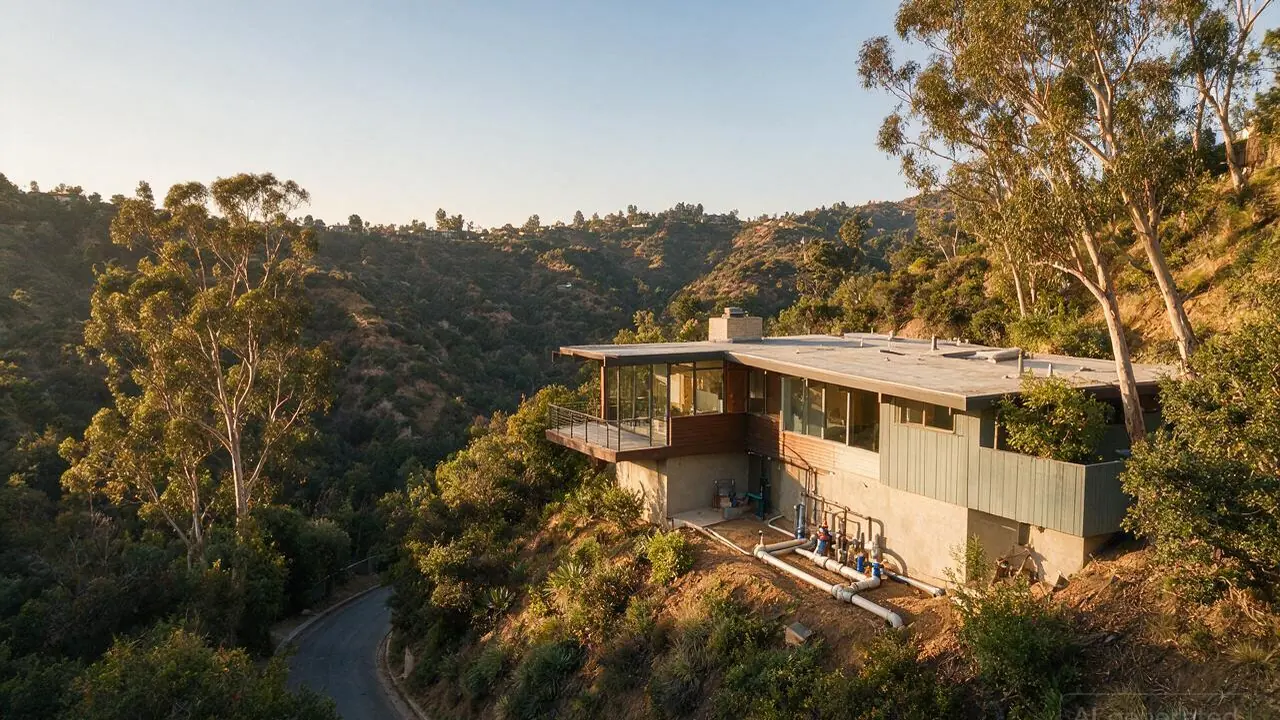
Home projects in Hollywood Hills are shaped by local conditions: steep hillside lots on narrow winding streets, hillside soils and bedrock that usually require geology reports and engineered foundations, and warm, dry summers, mild winters, and high fire danger in fall winds. Most structural, electrical, plumbing, and mechanical work is permitted through Los Angeles Dept. of Building and Safety (LADBS). Serving homes near Lake Hollywood, Beachwood Canyon and Mulholland Dr, we connect Hollywood Hills homeowners with local pros who work in the area.
The Hollywood Hills housing stock is highly varied, reflecting different eras of architectural development. Many properties in areas like Beachwood Canyon or along Mulholland Dr are historic 1920s Spanish Colonial Revival homes or mid-century modern residences situated along narrow winding streets. Much of the local housing sits on steep hillside lots that present unique structural demands. For homeowners, the age and location of these properties mean that routine maintenance and repairs often require specialized attention. Older electrical wiring and legacy plumbing systems frequently need modern upgrades to meet current safety standards. Foundations resting on hillside soils and bedrock require careful monitoring for settling or shifting, which can affect the integrity of the entire structure. Additionally, aging roofs must be kept in prime condition to withstand the intense sun. When planning a project, addressing these foundational, structural, and system elements is often the necessary first step before undertaking aesthetic improvements.
Living in the Hollywood Hills, homeowners frequently tailor their properties to withstand the local climate and unique terrain. High fire danger during dry fall winds makes fire-resistant materials essential, driving demand for updated roofing, exterior painting with fire-retardant coatings, and regular chimney cleaning. Because of steep hillside lots and strict LADWP watering limits, many residents opt for artificial turf, drought-tolerant landscaping, and concrete or pavers to manage water runoff. To maximize limited space, projects like a backyard remodel, patio covers, and hardscape installations help create functional outdoor areas. Indoor upgrades are also common, with general construction projects often focusing on kitchen remodeling, bathroom remodeling, electrical upgrades, and new flooring. Homeowners also invest in modern HVAC systems, insulation, and air duct cleaning to maintain indoor comfort during warm, dry summers, while others expand their living space by building ADUs or a room addition.
Because the Hollywood Hills is a neighborhood within the City of Los Angeles, all building permits are issued by the Los Angeles Department of Building and Safety (LADBS). Due to the steep hillside terrain and complex soil conditions, structural projects like a room addition or deep foundation work require extensive plan checks, often involving geology reports. Standard projects such as electrical upgrades, plumbing re-piping, and major structural changes also require permits from LADBS. It is highly recommended that a licensed contractor pulls these permits, as they possess the expertise to navigate local hillside ordinances and ensure all work complies with the complex municipal building codes.
The Hollywood Hills share historic architectural styles and hillside terrain with neighboring Los Feliz to the east. In contrast, flatland neighborhoods like Studio City to the north and West Hollywood to the south offer a different topographical profile but serve as key destinations connected by major canyon passes. Residents frequently traverse these mountain corridors to commute between the hills and these surrounding commercial centers.
