Typical La Cañada Flintridge costs, permit steps and timelines are below. When you are ready, describe your project and up to four local room addition contractors serving La Cañada Flintridge will contact you. You compare and decide.
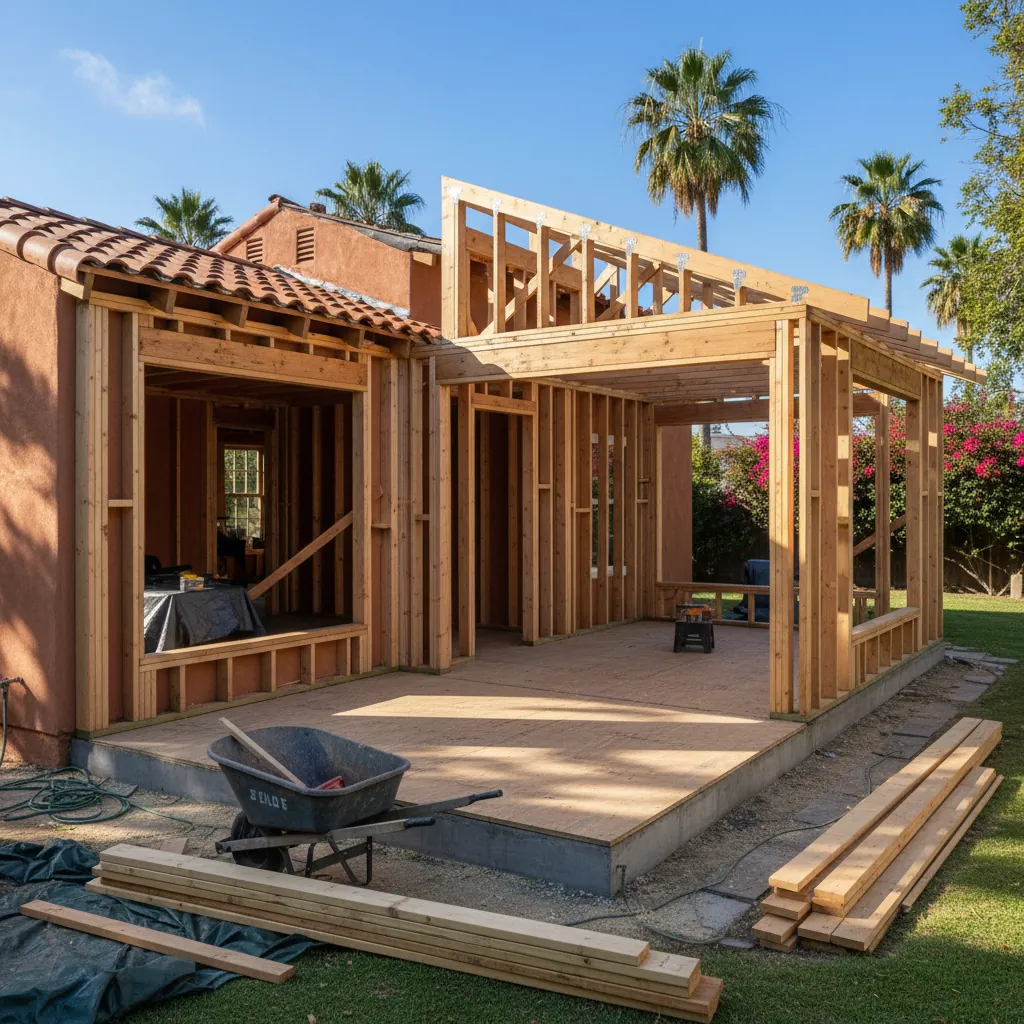
Initial site assessment and property boundary verification
Geotechnical soil testing and structural engineering layout
Architectural drafting and integration of fire-resistive (WUI) designs
Plan check submission to the City of La Cañada Flintridge Building & Safety
Site excavation, grading, and foundation pouring
Framing, utility rough-ins, and final structural inspections
Covers standard bedroom or family room extensions on flat or mildly sloped terrain with basic utility tie-ins.
Reflects the necessity of specialized foundation work, retaining walls, and seismic retrofitting required for rocky alluvial soil and sloped lots.
Includes structural reinforcement of the existing first floor, staircase integration, and roof reconstruction.
Typical market ranges for the Greater Los Angeles area, not a quote or a guarantee. The price of your job depends on its scope, so ask each pro for a written estimate before you decide.
Nestled in the shade of the San Gabriel Mountains, homes in La Cañada Flintridge often require thoughtful expansion to accommodate growing families without losing their signature mid-century or ranch-style charm. Adding a master suite, family room, or second-story loft allows you to stay in this highly desirable community while custom-tailoring your home's footprint to your lifestyle. We connect you with local contractors who understand how to design and build seamless home extensions in the 91011 ZIP code.
Building an addition in La Cañada Flintridge requires careful engineering due to the rocky alluvial and hillside soils typical of the San Gabriel foothills.
Excavation must account for subterranean granite deposits, while structural engineering must satisfy stringent seismic codes and wildfire-resistant building standards near the Angeles Crest forest interface. Additionally, grading plans must manage stormwater runoff effectively on sloped canyon lots to prevent erosion.

ContractorPro.Leads doesn't do the work itself. We pass your La Cañada Flintridge project to up to four local room addition contractors who take this kind of job, and you decide whether to hire any of them.
Whether your property sits on a quiet, oak-canopied lot near Descanso Gardens or occupies an elevated hillside tract close to Angeles Crest Highway, room additions must blend seamlessly with the natural landscape. Local design standards favor preserving mature trees and managing sightlines to maintain the serene, semi-rural character of our neighborhood. Most architectural planning also incorporates drought-tolerant landscaping along our residential corridors just off Foothill Blvd to comply with local water district conservation rules.
Tell us what you have in mind. We'll pass it to up to four local pros, and they'll contact you to talk it through.
The plan check process through the City of La Cañada Flintridge Building & Safety typically takes 8 to 12 weeks. Complex designs, hillside properties, or additions requiring zoning variances or oak tree preservation permits may require additional review cycles.
Yes. Because of the rocky alluvial soils and steep canyon terrain in La Cañada Flintridge, a geotechnical report is almost always required to determine foundation requirements and seismic safety.
Properties near the Angeles Crest Highway or adjacent canyon brush are within the High Fire Hazard Severity Zone. Additions here must use ignition-resistant materials, tempered dual-pane windows, and non-combustible siding to meet strict California Building Code Chapter 7A standards.
Yes. Any new landscaping or hardscaping associated with your room addition must comply with local water district conservation rules, utilizing drought-tolerant native plants and efficient drip irrigation systems.
While framing can happen year-round, starting excavation and foundation work in the late spring or summer is ideal. This avoids the risk of winter canyon rains causing soil erosion or instability on sloped lots.
